

The Red Hangar at the Berlin International Film Festival
A Resonating Story
By: Susan Hall - Feb 19, 2026
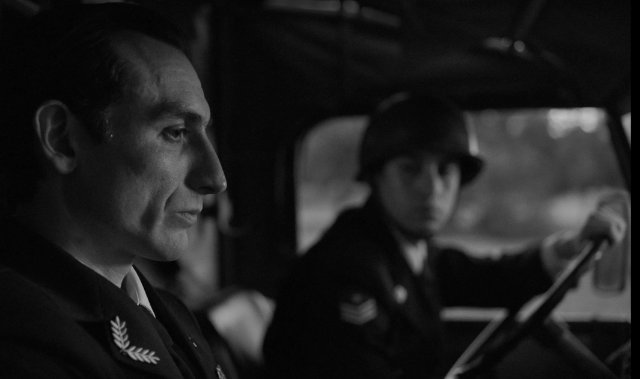
The Red Hangar (Hangar Rojo), a 2026 Chilean historical thriller directed by Juan Pablo Sallato, is being shown in the Perspectives section at the Berlin International Film Festival.
Captain Jorge Silva is forced to choose between obeying orders and listening to his conscience. This uncomfortable dilemma does not arise only in the present moment of the 1973 Chilean military coup, but also from his past.
Silva is regarded with suspicion by his superiors. In 1970, he discovers a high-level military conspiracy involving officers from the Air Force, Navy, and Army who plan to assassinate President-elect Salvador Allende before he can take office. Silva reports the plot, helping to save Allende’s life and allowing the democratic transition to proceed. That earlier act of conscience — where obedience to command collided with personal morality — continues to haunt him.
Under immense pressure, Captain Silva again decides to do what he believes is right.
The production required an Air Force training school and air base that preserved a genuine 1970s aesthetic. El Bosque Air Base, where the real events occurred, would have been perfect, but permission to film there was denied. The film was instead shot at an air base in Mendoza in just 18 days. That tight schedule yields a powerfully close portrait of a man in conflict.
Shot in black and white, the film underscores the stark alternatives before Captain Silva — black and white, legal and illegal, loyalty and betrayal. The close-ups stay on Silva’s face — brilliantly acted by Nicolás Zárate — and keep us wondering where he will land on the horns of his dilemma. The film is highly dramatic and entertaining, while also tapping into our own sense of responsibility and our capacity to act in the face of corruption.
The dilemma faced by anyone forced to choose between doing what is right and saving your own skin is palpable throughout.
The film also stirs memories of Chile’s copper industry and the role of American corporations such as Anaconda Copper and Kennecott Copper. The United States opposed Allende in part because he nationalized the copper industry, disrupting those powerful interests. The involvement of companies like International Telephone & Telegraph reminds us how economic power and political intervention often intertwine.
From there, it is not a great leap to consider contemporary U.S. involvement in Venezuela. Venezuela possesses oil reserves estimated to exceed even those of Russia in pure volume. Is that part of why the current U.S. administration involves itself in Venezuelan political affairs?
While some Venezuelans welcome economic relief and the release of hundreds of political prisoners, many view the U.S. presence as an occupation.
Looking at The Red Hangar, viewers are reminded of the American role in Chile’s painful history — and of later U.S. interventions in Latin America. The film asks us to consider our own responsibility in the face of immoral actions carried out by our government. Is there anything we can do?