

The Dishwasher Dialogues, I Have Seen Four People Die
Running with the Bulls
By: Greg Light and Rafael Mahdavi - Feb 26, 2026

Rafael: We sometimes talked about death during those Chez Haynes dinners.
Greg: Oh yes, death. I will grant you that as a topic of conversation it surfaced easily. Sometimes too easily. It was a side dish for any and every subject. Mainly, I think, because it was mostly an abstract idea. Although the last person put to death in France (and by Guillotine) happened during our watch, in 1977.
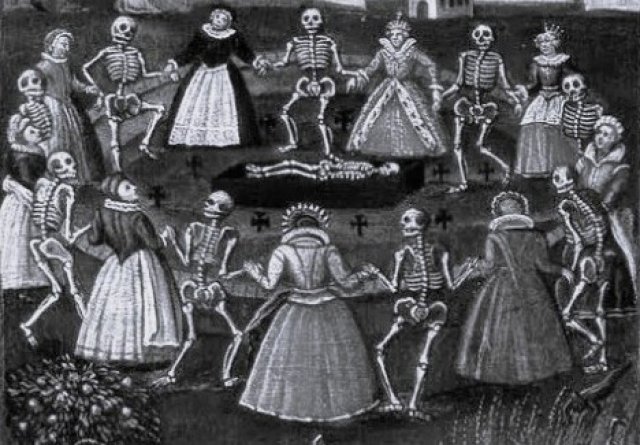
Rafael: We were all creative people, and for me, death and creativity go hand in hand; it seemed normal to discuss our attitude and thoughts about the grim reaper. Eros and Thanatos. Love and death. And I’ll add Techne and Thanatos. Art and death. Fearsome foursome.
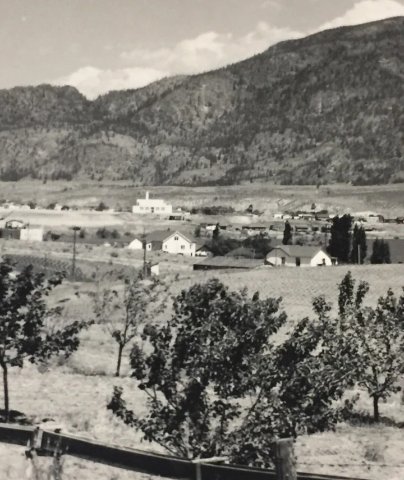
Greg: Foursome? You counted death twice? Maybe not so surprising. It was a bit of an obsession for you. That may be why you took delight in a particular story, a true story, about my grandmother, which I told at the Chez Haynes dinner table one evening. Elderly and suffering from dementia, one very hot summer day Gramma walked off into the southern British Columbia hills to find her childhood farm. It was days before her body was found, by which time her head was missing, presumed taken by wolves. It was not until the following winter that trappers or hunters came across her head, much further into the hills and across the U.S. border. I think it was less the international dimension of her demise and more its macabre manner that enthralled your death-laden sense of humor.
Rafael: At the time, I was twenty-nine, and as I said earlier, I was immortal––of course.
Greg: Yes, of course. We were all immortal then. Like every hale and hearty young person short on life experience. Nevertheless, late at night around the dinner table, we recognized there would come a time when we would no longer be immortal. And then the laughter came quickly.
Rafael: Not all of us at the dinner table were atheists, and we discussed God along with death. That, too, seemed obvious.
Greg: That did sound obvious. But it did not protect us. Although, I was not an atheist back then. More agnostic with a lean towards Einstein’s deity; not a believer in life after death. But I was always up for an on-going dinner seminar about God and death, and creativity with a bottle of Leroy’s house reserve. Like any good Trinity, these three phenomena were conjoined in some meaningful way. Or so we thought. Although, we did not always agree. It changed from night to night and week to week. We poured over the distinctions in more detail and more often than I now feel it necessary, or have the passion, to endure. I think I have come to a truce with the universe: Creativity is overblown, death is inevitable, and God is the little elf that lives down the lane. But my time will come and, dementia permitting, I may undergo a conversion.
Rafael: I told my close friends that since the age of ten, I had thought about death at least once a day, and on other days sometimes twice a day or more. I carried death around with me like a circus monkey on my back, or maybe like an addiction. That’s what they called hard drug addiction in American slang. They said feed the monkey on your back. I mainlined my gorilla all right.
Greg: That is not so normal. ‘Shooting-up’ death sounds hardcore. Although that is precisely what a hardcore addiction is. In your case I was always surprised the monkey put up with you going straight to death without the prior accoutrement of needles, shots of after-shave or race-car driving. I mean even the monkey must have standards.
Rafael: This makes me think of the few times Leroy would take me aside and say ‘that guy at the bar, he’s a junkie. Next time he comes around let me know, and I’ll throw him out, I don’t want him around, you can see it in their eyes, man, take a good look at him, you gotta learn to spot them, next thing you know they’ll have their fucking dealers in here.’ Leroy would go up to the junkie and tell him to leave. And the junkie would quietly walk out. It helped me understand that to open a restaurant and bar in Pigalle you had to be physically strong, make it known you weren’t a wimp, a pushover. And Leroy, as you remember, was a big, strong man, period.
Greg: I don’t think I ever learned to spot the junkies as well as you. Maybe you and Leroy had thrown them all out or had given Chez Haynes such a bad reputation for drug deals that they had stopped coming. More likely, I was happily serving them drinks in total oblivion. But we certainly had our fair share of night creatures come through the red curtain. They rarely got further than the bar, had a drink or two, fed a few coins to Genghis, and left. Death was seldom overtly on the menu. (Except for livestock. Then, it was the menu.)
Rafael: My own death monkey was cute some days, and other days it was an orangutan clawing at my neck. I feared death, and the thought of it made me take risks as if in defiance, but it also kept me lucid.
Greg: Taking risks without death lurking in the picture somewhere, hardly counts as risk. And death without lucidity is unfortunate.
Rafael: Why did I do self-destructive and dangerous things, the drugs, and the booze? I’ll only talk about myself here. Sorry about that.
Greg: No problem. Self-destruction is a solo business.
Rafael: The classical answer here, or the philosophical explanation, is that I wanted to risk my life so I could appreciate it more. Lame? I know, but that’s the best I can come up with.
Greg: Not so lame. When you don’t know how you are going to land, life can get exciting. Sometimes painful, sometimes exhilarating. Is the first self-destructive? Depends on the rage, denial, frustration, and nihilism that ignited it. On the other hand, mere curiosity also killed the cat.
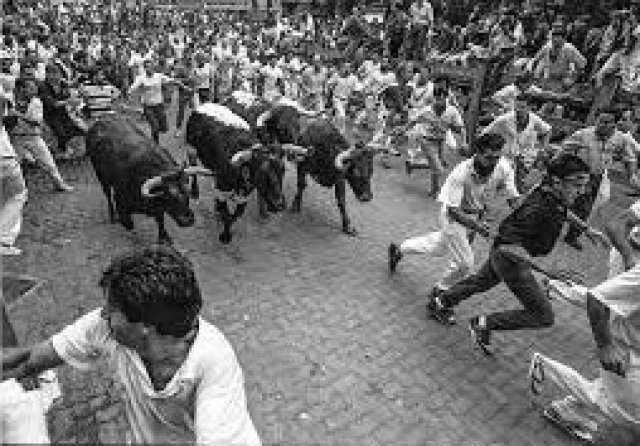
Rafael: If and when I hit ninety-one, then maybe I’ll go back to all those things that aren’t good for me, I’ll even run with the bulls in Pamplona again. And I’ll do drugs again, and drive fast, drink, and get stoned. This sounds pretty lame too, I know. And these days it smacks of machismo. It doesn’t matter.
Greg: I am going to go out on a limb here and say that running with the bulls in your 90s would be more of the self-destructive vintage. Less being and more nothingness. Unless you have an overwhelming curiosity to learn what it’s like to be gored, flipped 7 or 8 feet in the air and trampled by a dozen or so bellowing hooves. Makes sense now why you might want to wait until your nineties for that experience. Although, your ninety two-year-old self may have different thoughts.
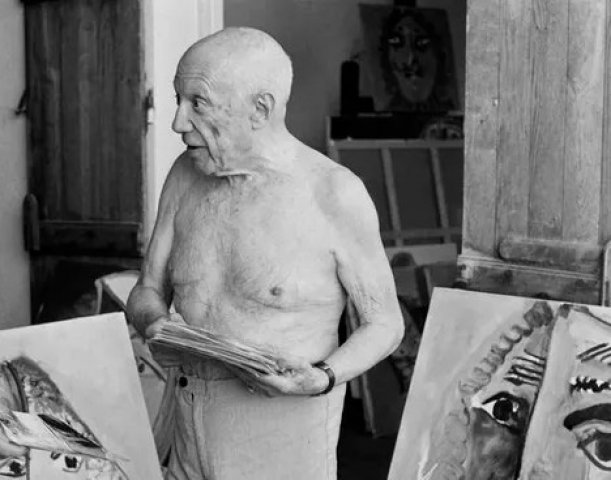
Rafael: Why ninety-one? Picasso died at ninety-one.
Greg: Then you want to hang on until ninety-two. Picasso set scores of impossible achievements to surpass. He shouldn’t get age as well. Even Shakespeare was humble in that regard. Only fifty-two. We shattered that achievement years ago. Although Beckett was eighty-three.
Rafael: I never stopped painting or writing during that time, through the ups and downs. By that I mean since I high tailed it out of Detroit, diploma in hand, and came to Paris for the first time in 1968. There were lean years and––well, forget about the fat years. There weren’t any.
Greg: Not during our time at Chez Haynes. Although it was pretty fat on experience. Somehow, we survived self-destruction and rash curiosity back then, as well as their recurrent echo over the years. We entered the “settling down” phase of life—jobs, homes, relationships, kids. Now I suppose it’s time to “bubble up” if that is a phase, or even a phrase. And do so before full senescence grabs us. Then all bets are off.
Rafael: So, all in all, the very fact that we’re talking now, that we’re still alive in our seventies means that we’ve been fortunate.
Greg: I would concede that. Although I still hesitate to call the hair loss, the few extra pounds around the middle, and the loss of flexibility in the knees, fortunate.
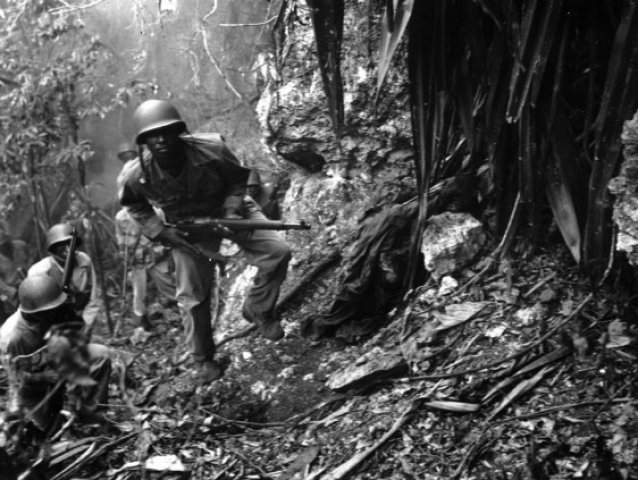
Rafael: Call it fate or destiny, or rusty joints, what you will. What did I know about death? I hadn’t seen people blown up in battle and their limbs severed. I hadn’t seen children dying of hunger or of the plague. Leroy had seen hard times as an African American in Georgia and Chicago, and later with army intelligence in the war. He sometimes told us bits of his life, and about the fighting in the Pacific. He saw plenty of death, and people wasting away of disease, infection, and sheer violence. In all my time at the bar, he must have talked about the war only two or three times. He never dragged out his stories, he told them as if he were reporting on the events.
Greg: Sometimes he embellished—usually with drama, humor and sorrow. Our stories will always pale in comparison to Leroy’s. However much we took risks and defied fortune to do its worst. And sometimes it did. Reality often rushed at us headlong in our own personal Pamplona; its hooves kicking back wildly, and frequently landing on us with a raw thud. But Leroy? His was a much more painful reality which we, through fate as you say, or good luck, avoided and could never fully understand.
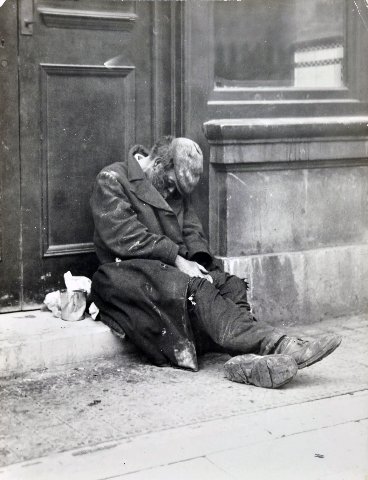
Rafael: I have seen four people die in my life so far, that’s it. I want to recount this. The first man I saw die drowned off a beach in Mallorca. When they hauled him out, he was still alive and foaming at the mouth, as if he’d swallowed soap and not seawater. He died a few minutes later. I was eight years old. The second drowning was at the Lac de Vincennes, east of Paris, a young man it was, dressed in a suit face down in the water, and a doctor appeared and tried to resuscitate him, but it didn’t work. I saw my third death when I was washing my hands in the toilet of a fancy bistro on the Champs, and an elderly man fell down the steep stairs and landed headfirst on the faucet of the sink. He was stuck there you could say. Awful, blood gushing from his forehead. The fourth death happened when I was driving at night in Mallorca. I saw some lights twinkling on the asphalt. I understood they were shards of a broken windshield. Two cars were in the ditch, both upside-down. The light inside was on and I saw a man with his neck gashed open. I told him I was going for help. He said, ‘hurry up, date prisa’, in Spanish, but when I got back fifteen minutes later, he was dead.
Greg: I have never seen anyone die. Not directly. (Or so I thought? See note at end.) The recently dead? Yes, of course I have seen them. My younger brother, which was tough. Tougher than I expected. It still lingers to this day. Other deaths I have witnessed at various funerals—but not my parents. Their coffins were closed. No one took their last breath while I looked on. I know it happens every minute of every day: in hospitals, on battle fields, in streets, in homes, on the highway. And now, even as we write, the pandemic is sweeping millions of lives into death. But I have mainly seen death mediated by time and through an electronic screen of some sort. I have not intentionally avoided it, but it has avoided me. I know it will not continue to do so. I am told it is a natural part of our being on this planet. Even when it is grotesquely unnatural and unfair. If I am lucky, I may witness the moments during which I pass, the few seconds just before it ends. Or maybe that would not be lucky. I have no idea. Despite the continuous irregular beat of my Paris-altered heart, I am, at 70, in reasonable health and all things being equal (which they never are) the sacred world of statistics gives me a few more decent years.
Rafael: Now at seventy-five, I still think about death, but it doesn’t scare me as much anymore. I’ve been extremely lucky. I’ve had a good run, should it end now. I have wonderful children, good friends, and I’ve said most of the things I wanted to say in my work. Of course, at the time, those years at Chez Haynes, I was taking everything for granted. A career? Security? The future? Never thought about it in earnest. Do all young people feel like that? I never asked myself if being a bartender was respectable, or where would I go from there? I didn’t care what others thought of me. In a way I can’t define, Paris was good for that kind of attitude. That doesn’t mean that I liked Paris; it was a city that was hard but forgiving. There was the glitz of the Faubourg Saint Honoré, and the mean squalor of Barbès. To this day, I have a love-hate relationship with Paris. But the Paris I knew, and we knew, was not the Paris of Scott Fitzgerald and the Plaza Hotel, even if some of the clients at Chez Haynes stayed at the Plaza or other expensive hotels when they came to Paris.
Greg: Neither was it the Paris of George Orwell, even if we served their drinks and washed their dishes.
Rafael: And few people, rich or not, asked me what I did besides tend bar, and looking back, why should they have? For me George Orwell and Henry Miller knew what it was to have little money. I know Henry Miller is considered a sexist writer today, not at all politically correct but there were some late nights in Paris when I would read him in bed and laugh out loud, his ranting and musings and digressions gave me hope and courage and a renewed will to live.
Greg: As is running with the ghosts of Paris in these pages.
(A brief footnote. Harry reminded me (Greg) recently that I did see someone die. A few weeks after arriving in Paris, Harry and I saw a man beaten to death in front of us on the sidewalk in the Latin Quarter. He had suddenly bolted out of a cafe or bistro chased by two other men who caught him on the street and was then clubbed in front of us. Apparently to death. I had completely blanked on it.)