

BSO Announces BSO 2026-27 Season
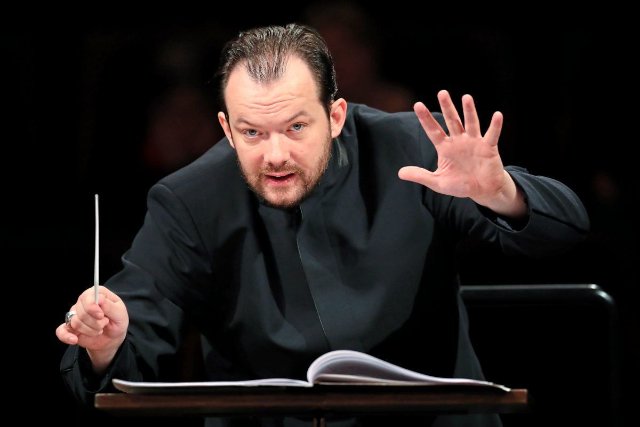
Andris Nelsons at the Podium
By: BSO - Apr 07, 2026
|
The Boston Symphony Orchestra and Music Director Andris Nelsons announce their 2026–27 subscription season — the orchestra’s 146th — running from September 18, 2026, through May 9, 2027. Subscriptions (fixed and flexible “choose your own” packages) are available now, and single tickets may be purchased starting July 31. To open his 13th and final season as Music Director, Nelsons leads a non-subscription gala concert on September 17 with special guest Yo-Yo Ma. Over the course of the season, Nelsons conducts 15 of the 25 subscription programs. Highlights include a monthlong Tchaikovsky celebration in January featuring all six numbered symphonies and The Queen of Spades opera. Supporting humanities events explore the composer’s inner world through a contemporary lens. And in another rare cycle, Nelsons conducts Stravinsky’s three early revolutionary ballet scores over two consecutive weeks in February. Other composer-focused programs led by Nelsons include those devoted to works by Mahler, Prokofiev, Rachmaninoff, Strauss, and Beethoven. The season features some of Nelsons’ most important collaborators, including Kristine Opolais, Håkan Hardenberger, and Lang Lang. Over two weeks in March, the BSO and Nelsons embark on a four-city tour in Europe with Lang Lang (dates and venues to be announced later this spring). As previously announced, the BSO makes its annual trip to Carnegie Hall in April with two programs featuring guests Yo-Yo Ma and Himari. The BSO and Himari also perform with Washington Performing Arts at the Music Center at Strathmore in North Bethesda, MD. For his final Boston program next April, Nelsons leads Mahler’s Symphony No. 3 with mezzo-soprano Tamara Mumford, the Tanglewood Festival Chorus (TFC), and the newly launched BSO x NEC Honors Children’s Chorus. Continuing the BSO’s unparalleled legacy of collaborating with contemporary composers and premiering new music, the 2026–27 season offers three world and two U.S. premiere performances. The first, led by Nelsons in September, is a posthumous world premiere by Sofia Gubaidulina, who passed away in 2025, and Elena Firsova, titled Prologue for orchestra. In October, Nelsons leads the U.S premiere of Francisco Coll’s Piano Concerto with soloist Kirill Gerstein as well as Composer Chair Carlos Simon’s new Double Concerto Suite for Violin and Cello with Hilary Hahn and Seth Parker Woods in his BSO debut. October also offers the world premiere of already and not yet by visionary composer and inventor Tod Machover of the MIT Media Lab along with supporting humanities events exploring Technology & Our Humanity. That program, led by conductor Kent Nagano, also includes the U.S. premiere of the young Argentine composer Alex Nante’s Ein feste Burg. November brings the world premiere of Osvaldo Golijov’s Creation, a BSO commission with libretto by David Henry Hwang, with Eric Jacobson conducting. The TFC is joined by vocalists Cécile McLorin Salvant and Davóne Tines, percussionist Cyro Baptista, and kamenchehist Kayhan Kahlor. A performance of Haydn’s The Creation, also with the TFC, is presented the week prior, placing the two works in dialogue and bookending a two-week Creation Festival with supporting humanities events as part of the multi-season Faith in Our Time theme. In addition to these premiere works is a program dedicated to one of America’s most influential modern composers, Philip Glass, whose 90th birthday is in early 2027. Throughout the season, world-class soloists perform great works from the classical canon as well as those by contemporary composers. Cellist Alisa Weilerstein, a MacArthur Foundation “genius grant” winner and the 2026–27 artist in residence, performs in Prokofiev’s Sinfonia Concertante. Along with debuting cellist Woods, another exciting young artist making their BSO subscription debut next season is Japanese prodigy Himari in Prokofiev’s Violin Concerto No. 2. Celebrated returning guest soloists are: pianists Emanuel Ax (in Mozart), Seong-Jin Cho (Rachmaninoff), Alexandre Kantorow (Brahms), Lang Lang (Beethoven), Jan Lisiecki (Mendelssohn), and Jean-Yves Thibaudet (Gershwin), cellist Gautier Capuçon (Saint-Saëns), violinists Joshua Bell (Bruch) and Renaud Capuçon (Philip Glass), and trumpeter Håkan Hardenberger (Unsuk Chin), as well as BSO Principal Viola Steven Ansell and Principal Cello Blaise Déjardin (together in Strauss). The Boston Pops and Keith Lockhart present their third annual Day of the Dead cultural celebration with Mexican rock band Enjambre, followed by Halloween performances of Disney and Pixar’s Coco in Concert Live to Film. Lockhart also leads the Pops’ first-ever Lunar New Year celebration, which introduces Mongolian band Anda Union in early February, and Celtic Night, which returns in mid-March. The Boston Symphony Chamber Players performs four Sunday concerts at NEC’s Jordan Hall with a chamber repertoire that complements adjacent BSO programs. The annual BSO Youth and Family Concerts led by Thomas Wilkins take place in late March. Public Open Rehearsals and special High School Open Rehearsals are offered several times during the season. Concert for the City, a free BSO concert involving community performers, returns next season (date and details to be announced). |
|
Technology & Our Humanity (Oct. 2026) As a first step toward a deeper exploration to come, this thematic preview considers one of the most urgent questions of our time: How is technology reshaping not only music, but also our understanding of ourselves and one another? The week-long focus is anchored by already and not yet, an innovative BSO world premiere that incorporates live AI technology, created by Tod Machover, visionary composer, inventor, and AI pioneer who serves as faculty director of the MIT Media Lab. Alongside a small constellation of talks and select non-orchestral offerings, these thought-provoking events signal the BSO’s long-term commitment to engaging with the shifting relationship between technology, creativity, and the human experience. These events are presented in parallel with the 40th anniversary celebration of the MIT Media Lab. |
|
Creation Festival (Nov. 2026) Continuing its multi-season exploration of Faith in Our Time, the BSO surveys music that seeks to answer one of humanity’s oldest and most enduring existential questions: How did we come to be? The focal point of this inquiry is Creation, a world premiere BSO-commissioned companion piece to The Creation, Haydn’s exalted choral masterwork. Written by GRAMMY-winning collaborators composer and Tanglewood Music Center alumnus Osvaldo Golijov and librettist David Henry Hwang, Creation is a momentous new work that draws on jazz, Arabic, and Brazilian music as it explores Darwinian theory, randomness in the cosmos, and theories of the universe. Through the festival’s two large-scale symphonic works, chamber concerts, talks, and multidisciplinary offerings across Boston, creation is depicted as more than just a moment in time, and instead as a continuing story that unfolds through sound, drama, and collective listening. |
|
Tchaikovsky Symphony Cycle & Opera (Jan. 2027) Over four weeks in January, the BSO and Nelsons perform all of Tchaikovsky’s six numbered symphonies — a cycle the BSO has never performed in a single season — along with a concert-opera staging of The Queen of Spades (Pique Dame) in collaboration with Boston Lyric Opera. Soprano Kristine Opolais stars in the title role. January’s four weeks of orchestral performances are complemented by a series of talks illuminating the composer’s inner life and legacy through contemporary lenses. Together, music and dialogue invite audiences to encounter Tchaikovsky not as a distant Romantic icon, but as an artist whose struggles with visibility, belonging, and emotional honesty continue to resonate powerfully today. The Boston Symphony Chamber Players’ January program features Tchaikovsky’s Souvenir of Florence along with works by Russian composers Liadov and Gubaidulina. |
|
Stravinsky Ballets (Feb. 2027) Over two consecutive weeks in February, the BSO and Andris Nelsons perform Stravinsky’s three groundbreaking ballet scores, written within a span of only three years for Diaghilev’s Ballets Russes in Paris. Stravinsky soared to the forefront of modern music with the magically colorful Firebird (1910), which was quickly followed by the energetic delight of Petrushka (1911). The infamous riot that ensued at The Rite of Spring’s premiere in 1913 may be a testament to this radical masterpiece, which cemented the composer’s place as a leading voice of his time. February’s Boston Symphony Chamber Players’ concert also features several works by Stravinsky. |
|
Premieres and Commissions The BSO has long stood as one of the world’s most prolific commissioners of new music, and its stages have premiered important works by many of classical music’s most celebrated composers (see list of all commissions). The coming season offers three world premiere commissions by Sofia Gubaidulina and Elena Firsova, Osvaldo Golijov, and Tod Machover, two U.S. premiere co-commissions by Francisco Coll and Alex Nante, and a 2026 double concerto by BSO Composer Chair Carlos Simon. |
|
Alisa Weilerstein, Artist in Residence One of the foremost artists of her generation and a winner of a MacArthur Foundation “genius grant,” cellist Alisa Weilerstein takes up the mantle as the BSO’s artist in residence in 2026–27. Raised in a musical family that includes her parents, New England Conservatory and Juilliard faculty Donald and Vivian Hornick Weilerstein, and her brother, conductor, violinist, and “Sticky Notes” podcaster Joshua Weilerstein, Alisa made her BSO at age 26 in 2009. Most recently, she performed Hadyn’s Concerto for Cello with conductor Karina Canellakis and the BSO at Symphony Hall in 2024 and FRAGMENTS 2 in Ozawa Hall at Tanglewood in 2023. (Weilerstein created the innovative FRAGMENTS project during the pandemic; it integrates all of Bach’s cello suites with 27 new commissions in original multi-sensory productions, to make six programs, each an hour long, for solo cello.) As artist in residence, she performs as soloist with the BSO in February in addition to performances of other solo and chamber works throughout the season and at Tanglewood in summer 2027. She also will work with local students in master class settings. |
|
BSO Programs, Week by Week In the season’s first subscription program, Nelsons welcomes back Emanuel Ax, a beloved BSO guest and one of the great pianists of his generation, to perform one of Ax’s own favorite pieces, Mozart’s Piano Concerto No. 22, K.482. Berlioz’s epic five-moment self-portrait of youthful love and obsession, Symphonie fantastique, follows (Sept. 18 & 19). The centerpiece of the next Nelsons program is Mahler’s Symphony No. 7. The five-movement “Song of the Night” progresses in tone from dark to light over about 80 minutes without intermission. The least often performed of Mahler’s nine great symphonies, it is the only one that Nelsons has not yet conducted with the BSO. The program opens with Prologue for orchestra, a posthumous world premiere co-commission with the Gewandhaus Orchestra Leipzig by the late Sofia Gubaidulina and Elena Firsova (Sept. 24–26). Pianist Seong-Jin Cho, one of today’s foremost interpreters of the Romantic repertoire and a frequent Nelsons collaborator, returns to the Symphony Hall stage for the fourth straight BSO season to perform Rachmaninoff’s Rhapsody on a Theme of Paganini, a work well-suited to showcase Cho’s technical brilliance and emotional depth. Nelsons leads the orchestra in another Romantic masterwork, Rachmaninoff’s Symphony No. 2 with its lush orchestration and iconic clarinet solo (Sept. 30–Oct. 3). Virtuoso pianist Kirill Gerstein joins Nelsons the following week in the U.S. premiere of Francisco Coll’s Piano Concerto, a technically demanding work written expressly for Gerstein. The premiere of this BSO co-commission marks the first time that the BSO has performed a work by Coll, a young Spanish composer-conductor and a protégé of composer-conductor Thomas Adès. (Adès himself conducted a piece by Coll in 2018 during his tenure as the BSO’s artistic partner and has a deep creative collaboration with Gerstein.) Two works by Beethoven round out the program: the Coriolan Overture, one of his most admired short orchestral works, last performed at Symphony Hall in 2007, and Symphony No. 7, which Wagner called “the apotheosis of the dance” (Oct. 8–10). The next week, Nelsons leads a dance-themed program that includes a new BSO co-commission: Composer Chair Carlos Simon’s 2026 Double Concerto Suite for violin and cello combines the highly anticipated return of Hilary Hahn and the BSO debut of her frequent musical partner Seth Parker Woods, a three-time GRAMMY nominee. Anticipating both January’s Tchaikovsky symphony cycle and February’s focus on the Stravinsky ballets, two dance works by Tchaikovsky (Polonaise from Eugene Onegin and The Nutcracker, Act II) complete the final Nelsons-led program of the fall (Oct. 15–17). A world premiere BSO commission by composer and inventor Tod Machover, faculty director of the MIT Media Lab, anchors the season’s first humanities focus, Technology & Humanity, running that week. Seiji Ozawa protégé and new music champion Kent Nagano conducts Machover’s new work (already and not yet). The premiere piece incorporates a live AI system to emphasize the individuality of each BSO musician while also creating surprising links and blends across the orchestra, providing what the composer calls a “possible, positive vision” for the future of democracy. The program, which opens with Mendelssohn’s The Hebrides Overture (Fingal’s Cave), pairs Mendelssohn’s Symphony No. 5, Reformation, with its references to Martin Luther’s hymn “Ein feste Burg ist unser Gott,” with a U.S. premiere by the young Argentine composer Alex Nante titled Ein feste Burg, based on the same hymn tune (Oct. 22–24). The season’s second humanities focus, a Creation Festival that is part of the multi-season Faith in Our Time theme, unfolds over the first two weeks of November. The first of two paired orchestral programs brings Swiss conductor Philippe Jordan (Music Director of the Orchestre Nationale de France in the 2027-28 season) to lead the BSO in Haydn’s choral masterpiece The Creation, inspired by Milton’s Paradise Lost, depicting the creation story as told in the Book of Genesis. Soprano Louise Adler, tenor Bogdan Volkov, and bass-baritone David Steffens (all three in their BSO debuts) join the Tanglewood Festival Chorus in the BSO’s first performance of the great oratorio since 1998 (Nov. 5–7). The Creation Festival continues the next week with the world premiere of Osvaldo Golijov’s Creation, a BSO commission with libretto by Tony Award-winning playwright David Henry Hwang (M. Butterfly). (A prior Golijov-Hwang collaboration, the opera Ainadamar was commissioned by the BSO and premiered by the Tanglewood Music Center Orchestra in 2003; its 2006 recording won two GRAMMY Awards.) Eric Jacobsen, artistic director and co-founder of The Knights as well as music director of the Virginia Symphony and Orlando Philharmonic Orchestra, makes his BSO conducting debut. Along with the Tanglewood Festival Chorus, Golijov’s Creation features GRAMMY Award-winning jazz vocalist Cécile McLorin Salvant, pathbreaking bass-baritone Davóne Tines, legendary Brazilian-born percussionist Cyro Baptista, and Kurdish kamancheh player Kayhan Kalhor, who won a 2017 GRAMMY with the Silkroad Ensemble and collaborated with Golijov on Francis Ford Coppola’s Youth Without Youth (Nov. 12–14). French conductor Samy Rachid, whose three years as a BSO assistant conductor come to an end after the 2026 Tanglewood season, returns to lead the exciting young Canadian pianist Jan Lisiecki in Mendelssohn’s Piano Concerto No. 1, which the composer himself premiered in 1831 at age 21. Lisiecki, who at 18 won the Leonard Bernstein Award and became the youngest-ever recipient of Gramophone’s Young Artist Award, made his BSO in 2018 at age 23. The program opens with the Overture to Weber’s opera Oberon, where the mysterious sound of a horn foretells the opera’s story of a magic horn. The concert concludes with Schumann’s Symphony No. 1, Spring, whose 1841 premiere his close friend Mendelssohn conducted with the Gewandhaus Orchestra in Leipzig (Nov. 19–21). The BSO plays its final performances of 2026 on the Friday and Saturday after Thanksgiving. Japanese conductor Kazuki Yamada (Music Director of the City of Birmingham Symphony Orchestra and Chief Conductor and Artistic Director of the Deustches Symphonie-Orchester Berlin) makes his Symphony Hall debut in a program featuring celebrated French pianist Jean-Yves Thibaudet in Gershwin’s Concerto in F. The program also includes Ravel’s Pavane for a Dead Princess and two tone poems by Respighi that are part of his Roman Trilogy, Fountains of Rome and Roman Festivals (Nov. 27 & 28). The BSO’s monthlong celebration of Tchaikovsky opens the new year with Nelsons conducting all six of the composer’s numbered symphonies during the first three weeks of January. The first program pairs Symphonies No. 1, Winter Daydreams, and No. 6, Pathétique (Jan. 7–9 & Jan. 12), followed by a program with No. 3, Polish, and No. 4 (Jan. 14–16 & Jan. 19), and concluding with No. 2 and No. 5 (Jan. 21–23). The month’s fourth and final Tchaikovsky program offers the BSO’s first full performance of his dramatic and lyrical opera The Queen of Spades since Seiji Ozawa performed and recorded it in 1991. Presented in collaboration with the Boston Lyric Opera, the production includes the Tanglewood Festival Chorus, the Boston Lyric Opera Chorus (Brett Hodgdon, chorus director), and the BSO x NEC Honors Children’s Choir. The superb cast stars: soprano Kristine Opolais (Lisa); tenors David Butt Philip (Hermann) and Chad Shelton (Chekalinsky); mezzo-sopranos Maria Barakova (Polina) and Elena Zaremba (Countess); baritones Vladislav Sulimsky (Tomsky) and Andrey Zhilikhovsky (Yeletsky), and bass-baritone Anatoli Sivko (Surin) (Jan. 29 & 31). February opens with the Symphony Hall debut of the eminent Estonian conductor-composer Paavo Järvi, music director of the Tonhalle-Orchester Zürich, artistic director of the Deutsche Kammerphilharmonie Bremen, and the founder and artistic director of the Pärnu Music Festival and its Estonian Festival Orchestra. Artist in Residence Alisa Weilerstein is the soloist, performing Prokofiev’s Sinfonia Concertante for cello and orchestra. Järvi, who recorded all seven Sibelius symphonies as music director of the Orchestre de Paris (2010-16) and earned the Sibelius Medal in 2015, also conducts Sibelius’ Symphony No. 2 (Feb. 4–6). The following week brings an all-Philip Glass program in tribute to the iconic composer, whose 90th birthday is next January. Dennis Russell Davies, chief conductor of the MDR Leipzig Orchestra and the Brno Philharmonic, leads Renaud Capuçon in Glass’ Violin Concerto No. 1 along with Days and Nights in Rocinha and Symphony No. 11. Davies conducted the world premieres of all three works. The symphony premiered at Carnegie Hall in 2017 with Davies conducting the Bruckner Orchestra Linz, which commissioned the work for Glass’ 80th birthday (Feb. 11–13). Nelsons returns in February to lead the three great Stravinsky ballet scores composed for Ballets Russes founder Serge Diaghilev in consecutive programs over the last two weeks of the month. The cycle begins with The Rite of Spring, whose 1913 premiere in Paris, conducted by Pierre Monteux and featuring the great Russian dancer-choreographer Nijinsky, famously triggered a riot for its references to pagan rituals and its radically modern sound. The Rite’s cutting-edge syncopations and metric shifts established Stravinsky as one of the most innovative composers of the 20th century. In a nod to Nelsons’ foundational training as a trumpeter, the program also includes the celebrated South Korean composer Unsuk Chin’s new Trumpet Concerto with longtime Nelsons collaborator Håkan Hardenberger as soloist (Feb. 18–20). The next week, Nelsons conducts Stravinsky’s first and second ballets, The Firebird (complete ballet) and Petrushka (1947 version). Based on a Russian fairytale, The Firebird opened to rave reviews in 1910 in Paris; it was last performed by the BSO in its entirety in 2018. Stravinsky and Diaghilev followed The Firebird’s success the next year with Petrushka, which the composer described as the story of “a puppet, suddenly endowed with life” (Feb. 25–27). The first week of March offers two slightly different all-Beethoven programs with Lang Lang performing Beethoven Piano Concertos (Concerto No. 1 on Tuesday and Wednesday evening and Concerto No. 2 on Friday and Saturday evening) and Nelsons conducting the Symphony No. 5 in all programs. The 2026 Tanglewood Music Center Conducting Fellows make their BSO debuts in these programs. Louisiana native Lauren Smith conducts the Egmont Overture (March 2 & 3), and Warsaw’s Julian Gilewski conducts the Leonore Overture No. 3 (March 5 & 6). Following the to-be-announced four-city European tour (March 11–20), and the annual BSO Youth and Family Concerts led by Thomas Wilkins, BSO Artistic Partner for Education and Community Engagement, during the week of March 22, Nelsons returns in April to conduct an all-Prokofiev program marking the Symphony Hall debut of 15-year-old Japanese prodigy Himari in the effervescent Violin Concerto No. 2. The concerto, which was given its American premiere by the BSO in 1937, is paired with Prokofiev’s Symphony No. 5, a work that also had its American premiere with the BSO, in 1945 under Music Director Serge Koussevitzky. (April 1, 3, & 4) The all-Prokofiev program with Himari travels to the Music Center at Strathmore with Washington Performing Arts (April 12 in North Bethesda) and to Carnegie Hall (April 13 in New York). In the second week of April, Nelsons leads an all Strauss-program featuring BSO Principals Blaise Déjardin (cello) and Steven Ansell (viola) as soloists in Don Quixote. Inspired by Cervantes’ great comic novel, the score casts the cello as the titular knight-errant and the violin as his skeptical servant Sancho Panza. The program also offers An Alpine Symphony, Strauss’ monumental tone poem performed with more than 140 players, including wind and thunder machines, cowbells, and offstage horns, trumpets, and trombones. Both Strauss works were on the BSO’s 2022 Strauss joint recording project with Nelsons and the Gewandhaus Orchestra. (April 8–10). The BSO takes An Alpine Symphony to Carnegie Hall the following week, coupled with Elgar’s Cello Concerto with Yo-Yo Ma as soloist (April 14 in New York). Following the BSO’s mid-April performances at the Strathmore and Carnegie Hall, Nelsons returns to Boston for his final Symphony Hall concert as music director. This non-subscription concert features mezzo-soprano Tamara Mumford, the Tanglewood Festival Chorus, and the BSO x NEC Honors Children’s Choir in Mahler’s Symphony No. 3, the composer's profound meditation on the joys and mysteries of life and the natural world. It is a personal favorite of Nelsons, who led the BSO in this work to great acclaim in 2018 in Boston, at Tanglewood, and on tour in Europe. The season’s three remaining Symphony Hall programs are led by three prominent European guest conductors: Finn Susanna Mälkki, Chief Conductor Emeritus of the Helsinki Philharmonic where she was Chief Conductor from 2016 until 2023, and former Principal Guest Conductor of the Los Angeles Philharmonic from 2017 until 2022; Czech Jakub Hr?ša, Chief Conductor of the Bamberg Symphony, Music Director of The Royal Opera, Covent Garden, and Chief Conductor and Music Director Designate of the Czech Philharmonic (from 2028); and German Joana Mallwitz, Chief Conductor and Artistic Director of the Konzerthausorchester Berlin since 2023, the first woman to lead one of Berlin’s major orchestras. Mälkki leads a French-themed program with French cellist Gautier Capuçon in Saint-Saëns' Cello Concerto No. 1. The program includes Paul Dukas’ The Sorcerer’s Apprentice, familiar to many from its use in Disney’s Fantasia, Saariaho’s Oltra Mar, for chorus and orchestra, and Ravel’s Daphnis and Chloé, Suite No. 2. The Tanglewood Festival Chorus joins for the Saariaho and the Ravel (April 22–24). Hr?ša leads the electrifying young French pianist Alexandre Kantorow in Brahms’ youthful Piano Concerto No. 1, which the BSO has not performed at Symphony Hall since 2016. The program also marks the first BSO performance of Scherzo fantastique, composed in 1905 by the great Czech composer Josef Suk, who was one of Dvorák’s favorite students and married his daughter. The program also includes Czech composer Bohuslav Martin?’s Symphony No. 6, Fantasies symphoniques, dedicated to Charles Munch for the BSO’s 75th anniversary in 1955. The BSO has a long history of performances of music by Martin?, dating from 1927. In 2004, the orchestra was awarded the Martin? Medal for sustained advocacy of the composer's work over many decades (April 29–May 1). Returning after her auspicious debut in November 2023, Mallwitz closes the BSO’s Symphony Hall 2026-27 season with the acclaimed American violinist Joshua Bell, one of the BSO’s most frequent and popular guests, as soloist in Bruch’s Violin Concerto. The program offers Mahler’s Symphony No. 1, which the composer revised extensively over about 15 years as he mastered his craft (May 6–9). |
|
The Boston Pops For the third year, Keith Lockhart and the Boston Pops present their very popular Day of the Dead event, a musical celebration of the Mexican tradition of remembrance and reverence. Mexican indie rock band Enjambre is this year’s special guest (Oct. 26, 7:30 p.m.). For Halloween, Lockhart leads the Pops in performances of Disney and Pixar’s Coco in Concert Live to Film featuring Coco’s musical score by Oscar® and GRAMMY®-winning composer Michael Giacchino performed live along to the film (Oct. 30 at 7:30 p.m. and Oct. 31 at 1:30 p.m.). Organist Brett Miller returns solo to accompany the 1920 silent horror film The Cabinet of Dr. Caligari in a 9:00 p.m. screening on Halloween night. Miller’s performance is without an orchestra. Lockhart also leads the Pops’ Lunar New Year celebration featuring the Mongolian ensemble Anda Union (Feb. 7) and Celtic Night with special guests to be announced (March 18). December’s Holiday Pops season and post-Christmas and New Year’s programs will be announced in early September. The Spring Pops 2027 season will be announced in early 2027. |
|
Boston Symphony Chamber Players Founded in 1964, the Boston Symphony Chamber Players (BSCP) combines the talents of BSO principal players and renowned guest artists to perform chamber music repertoire that complements adjacent BSO concerts and themes. Concertmaster Nathan Cole serves as music director of the ensemble. The BSCP again offers four Sunday afternoon concerts at New England Conservatory’s Jordan Hall (Oct. 25, Jan. 24, Feb. 14, and May 2). The May program includes soloist Alexandre Kantorow. Program details are available in the press kit and on bso.org. |
|
Youth and Family Programs The BSO’s 2026–27 Youth and Family Concert Series led by BSO Artistic Partner for Education and Community Engagement Thomas Wilkins takes place during the week of March 22. The schedule includes a sensory-friendly matinee performance designed for audiences of all ages with autism spectrum disorder or sensory sensitivities. The annual Family Concert features the winner of the annual BSO Concerto Competition for high school students. The 2026–27 season also offers two annual programs with the Boston Youth Symphony Orchestra (BYSO): Prokofiev’s beloved Peter and the Wolf with conductor Federico Cortese and the Boston Ballet School (Nov. 21) and the popular Music and Magic program featuring magician Matt Roberts, led by conductor Marta ?urad (April 10). Both BYSO concerts are at 12 p.m. |
|
BSO x NEC Honors Children’s Choir As part of the recently announced BSO x NEC Alliance to formalize and expand the artistic collaboration between the two institutions, a new tuition-free Honors Children’s Choir is being formed this spring. The new choir will bring together talented young singers ages 8 to 13 from across Greater Boston to receive training through NEC Prep. They will perform in future BSO performances that require a children’s choir, starting with Holiday Pops 2026. The choir also participates in Tchaikovsky’s The Queen of Spades opera and Mahler’s Symphony No. 3 for Nelsons’ final Boston concert. |
|
Open Rehearsals, Community Chamber Concerts, and Tanglewood Learning Institute Events Open rehearsals, both for the general public and specifically for high school students, continue in the 2026–27 season. Ticketed open rehearsals for general audiences are planned on Oct. 15, Nov. 19, and April 8, and April 29. All public Open Rehearsals take place on Thursdays at 10:30 a.m. and include pre-concert talks starting at 9:30 a.m. High School Open Rehearsals will be offered to school groups at a discount through Group Sales. Boston Public School groups are admitted free of charge. (Dates to come.) Free Community Chamber Concerts performed by BSO musicians take place at venues across Greater Boston. Dates and programs to be announced in the fall. Concerts of all types and other events offered through the Tanglewood Learning Institute continue next fall, winter, and spring in the Linde’s Center Studio E at the Tanglewood Center for Music and Learning in Lenox. Details and programs to be announced in late summer. |