

The Met, Money, and New York Times
Adam Nagourney Meets Peter Gelb
By: Susan Hall - May 21, 2026
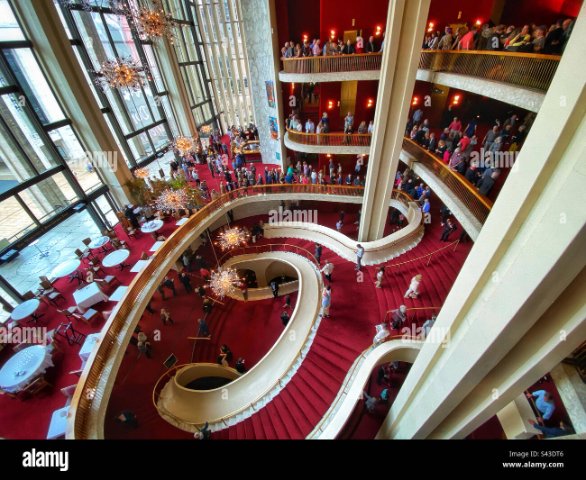
Before a recent in-depth look at Peter Gelb by Adam Nagourney, only Jeffrey Arlo Brown of VAN was able to get an interview. Mr. Gelb wanted to talk about Ukraine, a subject he has subsequently dropped. Brown, a strong candidate, was cut in the first round of applicants for the culture job at the Times because he has been frank about productions at the Met.
Now the Times has come up with Adam Nagourney as a way of reaching Mr. Gelb, and it looks as though this has worked. Yet Mr. Nagourney does not raise the real question about the Met’s survival. It is not Peter Gelb’s diplomacy, but whether New York still possesses the institutional imagination to sustain high culture.
The Times has hired with an eye to kind words about Lincoln Center. Is this nepotism at work? Look at the backgrounds of Mr. Gelb and Mr. Nagourney. Both men’s fathers were prominent Times employees. Mr. Gelb’s father’s last job was as Managing Editor.
Mr. Nagourney’s father ran the New York Times Books publishing arm. He was a wonderful editor. If you were reputable and had a good idea, you had a book contract in a day. Mr. Nagourney was sporty. He drove a red convertible around the countryside.
Like Peter Gelb, Mr. Nagourney was attracted to Russia. But for Mr. Nagourney this came in the form of Zanita, the nom de plume of a young Russian publishing groupie. Famously, Zanita accompanied Mr. Nagourney to the Frankfurt Book Fair one year. Before takeoff, a flight attendant asked Mr. Nagourney what the bulge was in his pocket. Zanita referenced Mae West: “Oh, he’s just glad to see me.” Mr. Nagourney and Zanita were removed from the plane and arrived a day late at the Frankfurt Book Fair. And so it goes. Mr. Nagourney admired his son Adam.
Peter Gelb was an usher at the Met when he started. He was kind to poor Columbia students, whom he would move to better empty seats if he could. He then aided the Russian pianist Vladimir Horowitz and was in Moscow the day Putin invaded Ukraine.
It may take this knd of deep connection for Mr. Gelb to open up. Yet it is refreshing to see money and culture explored. Mr. Gelb’s determination to continue seeking an alliance with powerful interests in another country is risky. Saudi Arabia is known for its human rights abuses, so it is perhaps fortunate that the deal did not go through.
Other solutions are near at hand. They may be less sexy, but they certainly warrant examination.
One is real estate. A hundred years ago, when the Lyric Opera House burned down in Chicago, the Lyric Board built a new opera house with offices over it. The revenue from those offices still helps support the Lyric. Air rights are not available to the Met because it operates under a 99 year lease with Lincoln Center for the Performing Arts, Inc. (LCPA). On the other hand, LCPA cannot exercise their air rights without an agreement with the Met until the lease expires in over forty years. This is a tricky proposition, and certainly we would hear yells and screams from landmark interests if the Met got permission from LCPA to build upward from the top of the stage.
There is another option: building underground. They do this in Tokyo. There are many Japanese architects in New York who know exactly how to make such spaces beautiful and exciting. Look at the subterranean plazas of Tokyo Station, or Ginza line stations.
Japanese architects cannot be hired outright because New York licensing laws are strict and overhead is astronomical. But allied with a New York firm, they could advise and consult. If it were argued that the land under the Met is owned by LCPA, perhaps the Met could negotiate with the New York City Parks Department to build offices under their clearly owned 2.34 acres at the corner of 62nd Street and Amsterdam Avenue and immediately adjacent to Met Opera House. Exercising above ground Park Department air rights requires rigorous review processes, including environmental reviews and state legislation or public land alienation acts. A tough process.
Underground opportunities exist. These complex real estate workarounds are necessary because civic support for high culture has waned.
The question is really: what is our commitment to high culture?
When Lincoln Center was built, its mission was to be one of the high-culture hubs of the world. Because one of the prime movers, Robert Moses, was close to Met board member Ruth Baker Pratt, the Met got a highly advantageous license. The New York Philharmonic does not have one, and one of many hurtful results has been the retreat of a great music administrator, frustrated by the Philharmonic’s relationship with the umbrella organization LCPA.
Amyas Ames, who succeeded John D. Rockefeller 3rd as head of LCPA, worried about the organization becoming involved in programming. The current LCPA looks to its own survival by doing this, disturbing the constituents and certainly making life harder than it already is for the Met.
Then there is education. Anyone who heard Barbara Hannigan at her recent performances with the New York Philharmonic saw that half the audience was under twenty, and they went wild at every performance. They were “papered,” but exactly the kind of paper high culture needs to attract young people to these forms.
Why doesn’t the Met paper? Let’s stop talking about selling seats. You can’t. The house is much too big for current audiences. But at a recent dress rehearsal of the compelling Asmik Grigorian as Tatiana in Eugene Onegin, the teenage audience was enthralled. After Onegin rejects Tatiana’s offer of love, the girls were furious. The boys thought it was right on. But when Onegin regrets his mistake at a ball in St. Petersburg and Tatiana rejects him, the girls cheered and the boys were slinking around the Met’s Grand Tier.
My students attending Macbeth loved the blood and gore. Get someone over the Met Opera threshold and they can be hooked. Let the Met paper for teens. Get regular educational support for this from foundations.
We are proposing, as opposed to dubious international alliances, that the Met embark on a real-estate campaign and a teenage “papering” program funded as education by foundations, creating both a new audience and a continuous revenue stream.