

Florida Arts Funding
Fewer Non Profits Get Support
By: Jay Handelman - Jun 01, 2026
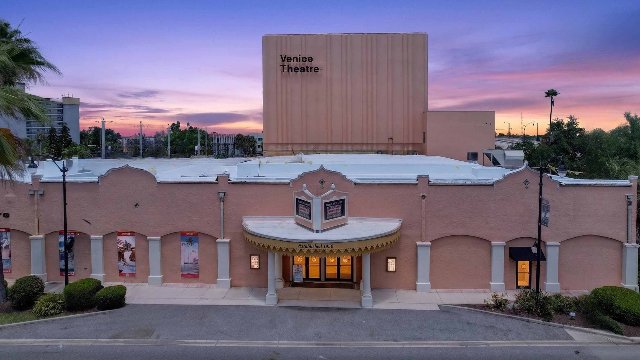
Gov. Ron DeSantis has signed off on $20 million in programming support to arts and cultural organizations across the state in his final $117.6 billion budget, but he vetoed slightly more than $3 million for grants to small nonprofits and individual artists. He also vetoed a $250,000 grant to support Venice Theatre’s hurricane rebuilding plan.
Unlike two years ago, when he vetoed all program funding in the Cultural and Museum Grants category, DeSantis approved the general program support money, even though there is still a question about where some of it will go.
The budget, approved in May by the state legislature, included $12.4 million to be divided among 121 arts and cultural organizations that were recommended by Secretary of State Cord Byrd. The list included just eight organizations in
Another $7.5 million has been set aside to provide funds for other groups recommended by the Florida Council on Arts and Culture. Jennifer Jones, executive director of the Florida Cultural Alliance, which lobbies for arts funding, said there is no word yet on a secondary list and how those funds will be divided.
Before signing the budget at a ceremony in
Those grants are $25,000 or less and go to smaller organizations and individual artists, like
Among the hundreds of line items vetoed was $250,000 earmarked for Venice Theatre to turn its temporary
In an email to Florida Cultural Alliance members, Jones said the veto is “terribly disappointing and surprising as the Secretary had recommended the entire list of passing applications submitted by the Florida Council on the Arts and Culture.”
In 2024, DeSantis vetoed all $32 million arts and culture program grants because the list included funds to support the Orlando Fringe Festival and Tampa Fringe Festival. He said such events presented “sexual” material that was inappropriate for state support. Because the grants make up one line in the budget, he was unable to cut only the fringe funding, and instead eliminated money to hundreds of museums, theaters and other local arts organizations around the state.
In
Another 19
Five organizations in
In Charlotte County, grants could go to the Military Heritage Museum could receive $115,000; the Peace River Botanical and Sculpture Gardens hoped to receive $150,000; the Port Charlotte Chorale, which qualified for $14,750 and the Charlotte Players, which was in line for $25,000.
Last year, the state provided a total of $18.3 million for arts-related grants, including $15.8 million for cultural and museum grants, the largest pool of money. That money was shared by organizations that scored at least 95 points out of 100 by judging panels in different arts fields. Another $1.5 million was set aside for a secondary list of organizations and $1 million went to fund programs associated with the
The new budget also includes $6.6 million for specific cultural and museum grants, and $38.3 million to support building and expansion projects. The largest grants include $9.5 million for a new library in
To learn more and donate visit ArtsBeat.org.