

Christopher Nolan's Odyssey
Homer Goes Hollywood
By: Charles Giuliano - Jul 23, 2026
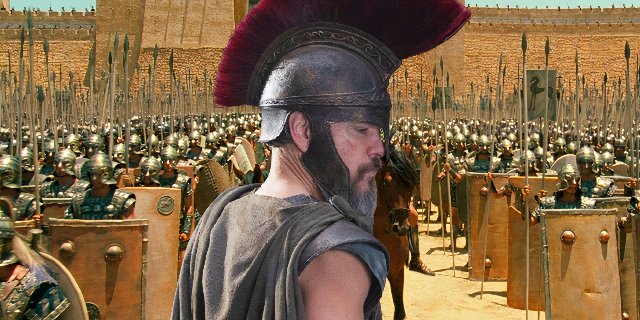
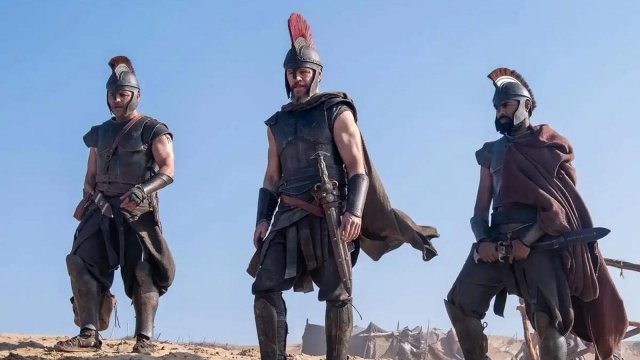
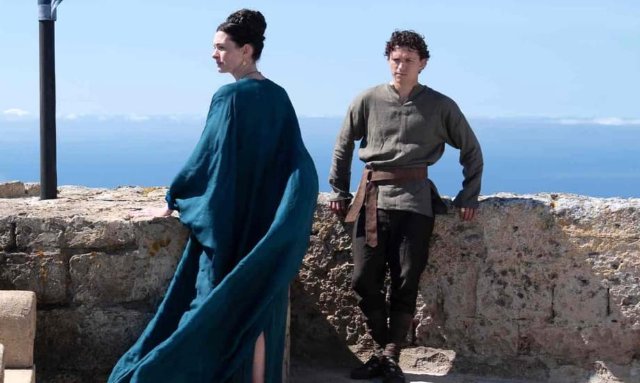
On the opening weekend of Christopher Nolan’s three hour epic The Odyssey, co produced with his wife Emma Thomas, the Saturday matinee was sold out. We returned to the freshly renovated Images Cinema in Williamstown on a Monday with a less than full house. The new seats were comfortable but the duration of the film was not. It was cruel and unusual punishment not to provide an intermission.
While wildly entertaining, as a former professor of Humanities, blatant bladder discomfort was not the only issue that pissed me off. The vast majority of those cramming theatres to view this Homeric epic are unlikely to have read The Iliad and Odyssey. While focused on the most cinematic highlights of the 3,000-year-old epic from the Bronze Age Nolan has been fast and loose and hardly a stickler for scholarly details.
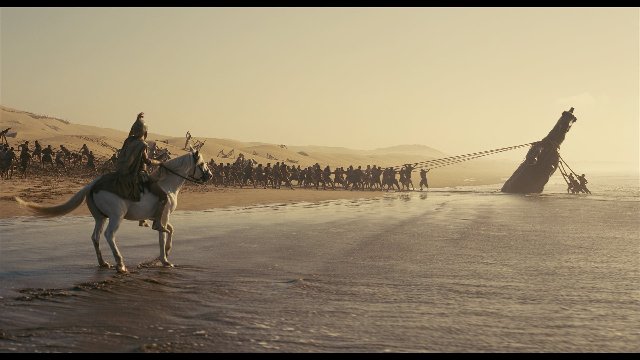
The iconic Trojan Horse, for example, is a huge but roughly created monumental sculpture. It was crudely hammered together by warriors rather than artisans and craftsman. The horse is generally described and illustrated as a monster on wheels, the better to roll it into the city. In this version it is an enormous, exquisitely designed and crafted art deco object half buried in sand. Deceived that it has been left as a Greek gift to the gods the entire population turns out to laboriously drag it over roller/ logs into the city.
Homer tells us that being given this token of victory evoked a wild celebration. In the middle of night Odysseus and his comrades exit the horse and open the gates to the Greek army. Instead of being taken drunk and by surprise Nolan stages a touch and go battle to open the gates.
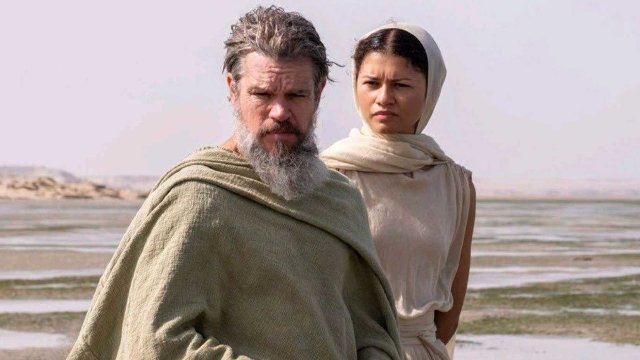
In my freshman humanities class at Brandeis we read The Iliad. As a sophomore elective I enrolled in a course of Greek classics with the remarkable Thalia Howe. We read the T.E. Shaw (Lawrence of Arabia) translation of the Odyssey. She discussed the many ways in which it was more advanced than the Iliad. While not the greatest warrior, leave that to Hector and Achilles, Odysseus (Matt Damon) was the smartest and most crafty.
His weapon was bow and arrow which could be used from a distance. If he was successfully it was because the beloved Athena guided it to its mark. There is no success without the favor of the gods. Yet Odysseus defied them with hubris. Not content just to blind the Cyclops he insulted him enraging Poseidon the god of the sea.
As Odysseus it was an odd choice to cast Matt Damon who is more of an everyman than a romantic leading man. Here we see an ordinary bloke as one of the iconic characters of history. Similarly, Lupita Amondi Nyong'o is a stunning and gifted actress but hardly what one images as Helen the face that launched a thousand ships. Now back home with her husband Menelaeus, a rough looking Jon Bernthal, Nolan doesn’t give her much to work with.
Basing the script on a poem rather than an ancient play has given Nolan the option of invention. He exploits spectacular cinematography to convey a sense of realism to the telling of elaborate and complex mythology. The signature events are depicted with a faux cinéma vérité but without the complex rules, spells, and traditions that inform them.
The tale of the sorceress Circe (Samantha Morton) is one of many such botched scenes. In this version she lives alone with her flock of pigs. She feeds her visitors tainted pork which transforms them into swine. At the point of a blade she is forced to turn them back and in the process garbles something about how the men of Odysseus are really just pigs.
There are constant flash backs. It starts in the Ithaca palace of Odysseus. In a room behind a metal screen Penelope (Anne Hathaway) weaves a tapestry which she undoes at night. Her son Telemachus (Tom Holland) is too young and weak to hold off the ravenous suitors. One of them stands on a table and pounds his staff reciting from an epic poem. This is Nolan’s device to connect us to the notion of literature.
It is now some 30 years since Odysseus departed and is assumed dead. The war took ten years and Agamemnon, Menelaeus and others are long since home. Odysseus took the scenic route with the intention of exploring, adventure and pillaging. While Penelope has been faithful to him rushing home to her is not the plan.
On pursuing the road less traveled Odysseus comments that he has had enough of following Agamemnon.
There is a seven year dalliance with Calypso (Charlize Theron). With a promise of immortality she feeds him lotus blossoms which induce amnesia. Her charm, beauty and hospitality are palpable.
The greatest travesty of this film is the treatment of Polyphemus (Bill Irwin). The starving men explore his home looking for provisions. The one-eyed giant returns to his cave each night rolling back an enormous stone. He snacks on one or two Greeks before setting down to sleep. Using a sharpened log from the fire Odysseus blinds him.
Reading Homer we have empathy for the Cyclops. Instead we have noting but compassion for Irwin who was tasked to play him. His face is truly grotesque and not at all what one might imagine. He raises giant goats and feels the top of them before letting them out to graze. Odysseus instructs the men to cling underneath them and thus escape.
Not being able to have goats on the scale of the Cyclops, Nolan came up with plan B having Odysseus shoot Polyphemus in the face as the men race helter skelter to their ship. Homer has them escape with Odysseus yelling an insult heard by Poseidon. Polyphemus hurls a giant boulder and almost sinks the ship. Nolan vividly depicts the storms that Poseidon conjures.
Given all the troubles that Odysseus has brought on them the men are mutinous. This cuts to the heart of Homeric epics. Agamemnon, for example, was but a king among kings. He presides over a confederation of rulers. Similarly, Odysseus rules only when thing go well and with the consent of his men. In the end he cuts a deal with the gods and is the sole survivor.
He eventually reaches home disguised as a beggar and veteran of the Trojan War. Homer created a fitting end which Nolan has needlessly embellished.
Penelope has invented a contest. She will marry the man who can string her husband’s bow and hit a target through a row of stacked axes. They all fail until the beggar accomplishes the task. He and Telemachus then cut down the suitors.
Again, for the purpose of the film, Nolan makes it more of a nip and tuck contest. While the room is sealed he has the bad guys chop through the ceiling of a room of weapons. They drop them down to the battling suitors.
Though Odysseus is wounded Nolan gives us a happy ending. The royal couple sails west while Telemachus is left to rule Ithaca and restock the wine cellar.