

From Holding a Mirror to Becoming Clear Glass
Not Blocking the LIght
By: Cheng Tong - Oct 06, 2026
Part 2 of 4.
In the early stages of cultivation, we rely heavily on scaffolding. We learn where to place our feet in a Taiji stance, trace the subtle pathways of the meridians in TCM, memorize classical passages of the Tao Te Ching, and navigate the psychological terrain of the 49 Barriers. We repeat movements on the red deck until muscle memory takes over, using physical structure to quiet a noisy mind.
This formal study is essential—it builds the vessel. But for those who have completed this curriculum and received their Daoist Practice Name in the LanLu family, the vessel is built. The work must now move inward.
The transition from student to lineage practitioner is fundamentally a shift from learning the form to living the principle.
As students, it is natural to treat practice as a sanctuary—a quiet haven away from the friction and demands of the world. We step onto the red deck or sit on the cushion, close the door behind us, and cultivate stillness. In this quiet space, practice acts like a mirror. We look into it to examine ourselves, polish our posture, adjust our breath, and observe our thoughts. The mirror serves a vital purpose during training: it provides feedback and shows us where we are tense or out of alignment.
Yet, if our cultivation remains confined to the sanctuary, it becomes an illusion. If we can only find peace when conditions are quiet and controlled, we have not cultivated stability—we have merely sought shelter.
As named practitioners, your relationship with practice must evolve. You can no longer leave the principles behind when you step off the red deck. The goal is no longer to hold up a mirror to examine yourself, but to become like clear glass.
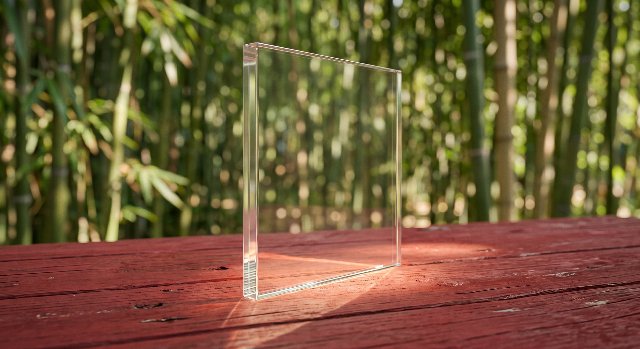
Clear glass does not hold onto what touches it. It does not reflect its own ego, nor does it block the light. It simply allows life to pass through completely unimpeded, revealing the world clearly without distortion.
To live the principle as clear glass means applying the core truths of your training directly to the raw, mundane moments of everyday life:
- Zhong Ding (Central Equilibrium): Finding physical balance in a Taiji stance is relatively simple. The real test of central balance is when you are stuck in gridlocked traffic or caught in an unexpected delay. An interruption on the road is no longer an annoying distraction from your practice; maintaining your center in that moment is your practice.
- Wu Wei (Effortless Action & Connection): It is easy to discuss non-striving and compassion while reading classical texts. It is quite another to practice them at the grocery store. When you take a moment to look at a cashier’s name badge and genuinely ask, “Hello [Name], how are you doing today?”—treating them as a fellow human being rather than an obstacle in your errand—you ease their daily burden just a bit. That simple act of presence is Wu Wei in action.
- Y?n and Yáng in Harmony: Traditional Chinese Medicine teaches us that health lies in dynamic equilibrium, not rigid control. Living this principle means listening to the subtle rhythms of your own body and spirit—knowing when to act and when to yield, when to speak and when to remain quiet.
When you embody these principles, your daily life becomes your primary practice space.
The true mark of a LanLu practitioner is not found in esoteric displays or complex choreography. It is seen in the quiet grace, warmth, and presence you extend to those around you when no one is evaluating your form.
You have spent years acquiring the forms. Now, give yourselves permission to dissolve the curtain between “practice time” and “ordinary life.” It is time to step into the full depth of your training by living what you have learned. Be the clear glass through which presence and human kindness flow into the world.