

Berlin Philharmonikker at Carnegie Hall
Painting Italy in Sound
By: Susan Hall - Oct 09, 2026
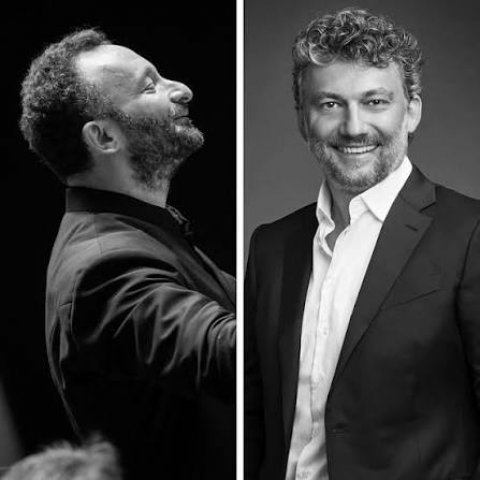
The Berlin Philharmoniker painted soundscapes in Carnegie Hall to open their season. Collaborating with their chief conductor Kirill Petrenko, Rome and Italy came alive in New York. Tenor extraordinaire Jonas Kaufmann joined in to offer a grounded view of the struggles and passions of every person.
Opening with the Overture from Verdi’s La forza del destino, remarkable attention to detail was heralded by the trombones. While the opera that follows and the tragic songs sung by Mr. Kaufmann might suggest a downward thrust for the evening, the music was uplifting even in tragic situations. Maestro Petrenko’s upward-thrusting body portrayed this feeling, bringing the instrumentalists of the orchestra and their music with him. Instrumentalists, grounded in their chairs, levitated notes to match his gestures. Details like the singing flute of Emmanuel Pahud were heard throughout the evening, making music from nature’s sounds as the Maestro made sure that we could appreciate all the fine details of this score. These details rooted the music’s monumental architecture and polished its tones. Without being heavy, Petrenko and the Berlin Philharmoniker offered romantic weight and symphonic complexity. The passion brought to this mission deliciously infected the music and the audience. Mr. Petrenko and Berlin were irresistible, showing just what music should be.
Jonas Kaufmann was in fine form. His dramatic voice, now richer and fuller-bodied, was particularly satisfying when he sustained his high notes breathlessly. He sang selections from Pagliacci, with both Tonio’s and Canio’s arias bracketing an Intermezzo from the opera.
The orchestra then bracketed his arias from Francesco Cilea and Umberto Giordano with Ottorino Respighi’s tone poems depicting Rome’s Fountains and Pines. Maestro Petrenko captured the sweep of the Respighi while highlighting the Russian harmonies of his own homeland, the impressionism of Debussy, and the Italian melodic style that he demonstrated for years at the Bayerische Staatsoper before arriving in Berlin. The melodic emphasis he conveyed with the Philharmoniker held every work together and made them accessible. The physical soundscapes of the playground in the first movement of Pines were amusing, depicting children at play with tin drums, marching toy soldiers, and imitating birdsongs. Levity relieved the intensity of the evening, providing pure joy.
The trust that these artists have in each other was clear. Maestro Petrenko barely took his eyes off the orchestra except when turning to make sure he gave the singer the space he needed, and Mr. Kaufmann appeared completely comfortable on the Carnegie stage.
In the last movement of Pina di Roma, Maestro Petrenko turned from the orchestra to the audience, hands and arms raised high, leaping to the conclusion of a supremely satisfying evening. Classical music can thrive if concerts are all like this one.
You can enjoy a free 7 dayfree trial of the Philharmoniker's performances on Digital Concert Hall, their website.
(digitalconcerthall.com)