

Hermitage Artist Retreat Still Awaits County Repairs
Two Years Post Hurricane and No Action
By: Carrie Seidman and Jay Handelman - Oct 15, 2026
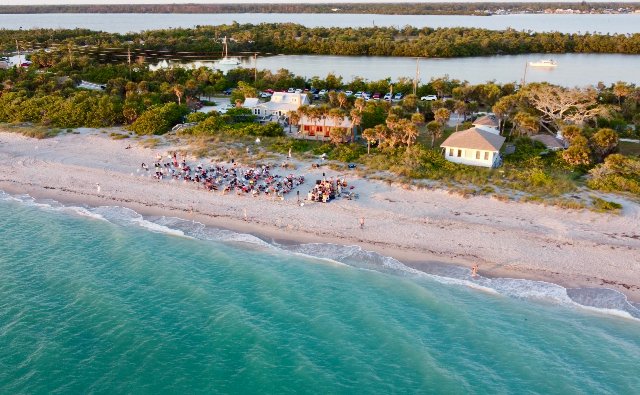
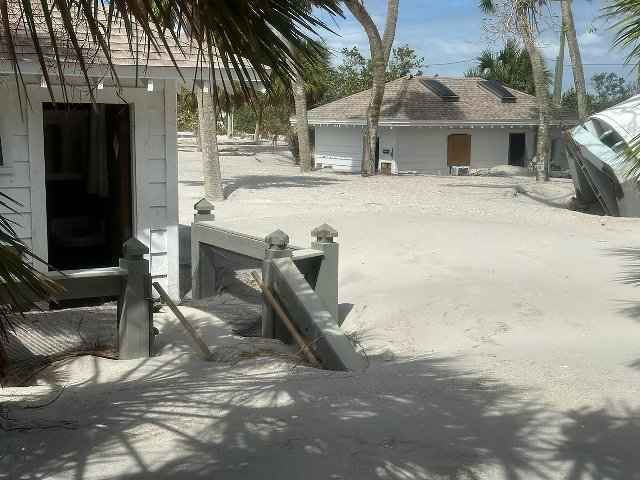
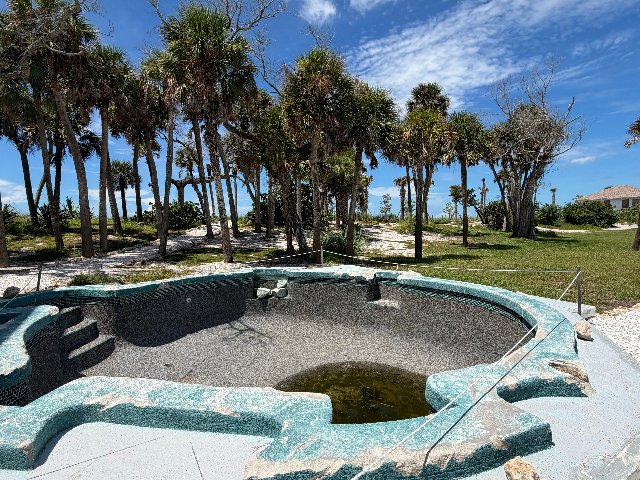
It has been more than two years since the one-two punch of Hurricanes Helene and Milton left the nine-acre property on Manasota Key the Hermitage Artist Retreat leases from Sarasota County buried under several feet of sand, its historic buildings ravaged by wind, rain and storm surge.
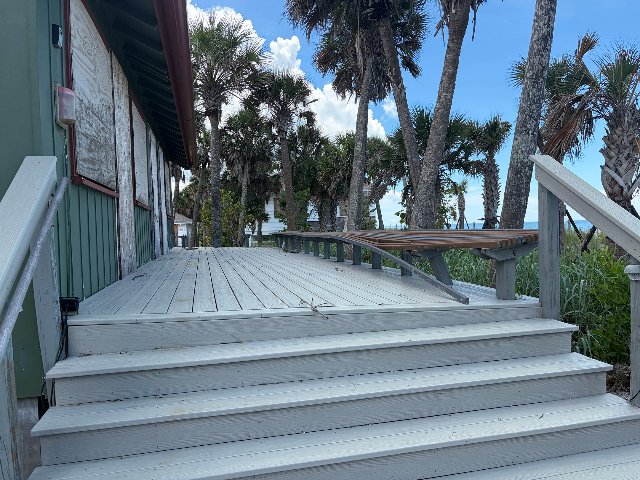
Today, the mountain of sand, and debris left in the storms’ wake has been removed. Gone too (due to delays in unburying it) is the giant banyan tree under whose sweeping branches visitors once gathered to hear Hermitage fellows talk about the plays, art, music, dance or other new work they were creating during their residencies there. The second floor of the contemporary Palm House, set back farthest from the shoreline, is once again serving as the organization’s administrative offices; the lower level, not fully enclosed, is a crammed storage area.
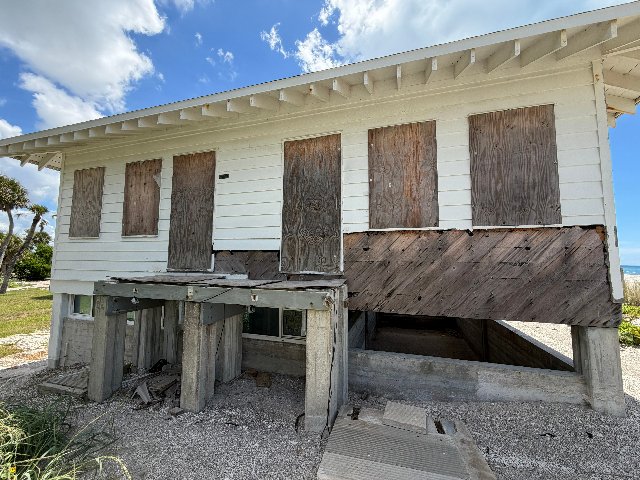
But the central campus’s historic structures – built in the early 1940s by naval architect Alfred Whitney as a bachelor’s retreat adjacent to a nudist resort – remain unrepaired and unusable. A giant gecko skittering through an empty door frame is the only living occupant of the Whitney House, which has no staircase to reach a second floor that hasn’t been accessed since it was boarded up in fall of 2024.
The prolonged delay is the result of a dispute between the county and the Hermitage – which has rented the property for a nominal fee since 2002 in return for caretaking and maintenance – over how those repairs could most expeditiously and economically be completed, and who should be responsible for making them.
Last fall, a full year after the storms, the Hermitage extended two offers: To contract for, complete and pay for all the repairs itself; or to purchase the property from the county outright, with a clause that would hand it back without recompense should the organization ever cease operating. Either way, restoring the campus would allow it to more quickly return to its mission of providing accomplished artists with the time, space and solitude to create original works across creative disciplines, and to share them with local residents.
The county refused both offers. Instead, it took the lead on restoration itself, which it deemed to be in the best interest of protecting taxpayer funds to the greatest degree.
Today – another year and another hurricane season later – no progress has been made. The historic structures, some of which are partially open to the elements, remain in the same condition as they were just after the storms. Moreover, the county says it is unable to provide a start date for repairs to begin, a timetable for the restoration process, or a completion target date.
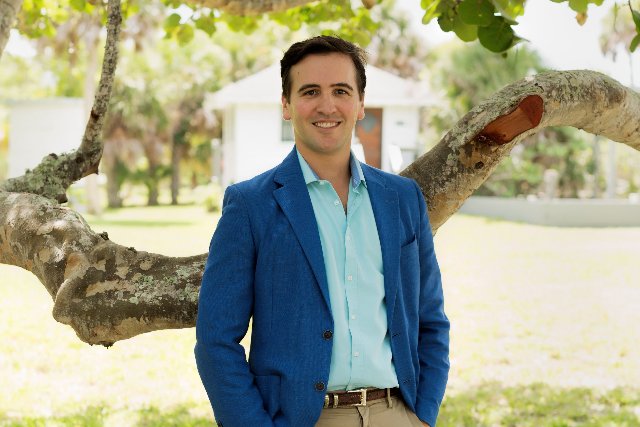
“It’s been two years now, and it’s become a bit absurd at this point,” says a clearly frustrated Andy Sandberg, the Hermitage’s artistic director and CEO. “I’d say comical, but none of us are laughing at the gross negligence that has left these historic buildings in jeopardy for no good reason.”
A tangled history
To understand how this situation came to be, it’s necessary to go all the way back to late September of 2022 and the aftermath of Hurricane Ian, which came onshore near Fort Myers, but brought a share of its damaging wind and rain to the Hermitage campus. As tenants responsible, according to its lease with the county, for “caretaking and maintenance,” of the property, the organization stepped up and assumed full responsibility for completing and paying for repairs. At the time, they got no push back from the country in doing so.
“What we learned is in a situation like that, understandably, county government can get busy,” says Sandberg. “So our philosophy was to offer to take care of it as the tenant, to dive in and rip the Band-aid off. None of us came to the Hermitage to work at the Red Cross, but that’s what we did. And within a matter of weeks, we were able to get back to normal.”
Fast forward two years to Helene and Milton, by which time the Hermitage had renewed and extended its lease, adding language (at its own request) stipulating that, in the event of a natural disaster, the county would take the lead, but would “work collaboratively with the Hermitage” to restore the property —, something which would open the door to reimbursement from Federal Emergency Management Agency (FEMA) flood insurance funds.
Just as after Ian, Sandberg says his organization’s immediate reaction after Helene and Milton was “How do we fix this as quickly as possible and get back to normal?”
Receiving no direction or plan from the county, the Hermitage decided to move forward as it had after Ian. It began removing sand and debris, got authorization from its board of up to $1 million to cover expenses, and enlisted a bid from a contractor previously approved and sanctioned to work on the property, who said the repairs could be completed in 45 to 60 days, pending county permitting.
“We were making great progress when we got an aggressive notice from the county to cease and desist,” Sandberg says. “It was both aggressive and nasty in tone, to be candid. A bit shocking.”
Thereafter, Sandberg says, he was warned “by various officials, including commissioners” to “be careful with our tone” toward the county, saying it was inviting discord and incivility toward county staff, and to avoid interacting with the press on the subject.
A tug of war
According to Scott Moranda, division manager for beaches and water access for Sarasota County Parks, Recreation and National Resources, that cease and desist was necessary to protect the county from possible legal action, comply with environmental, historic preservation and other regulations and ensure the maximum potential reimbursement from FEMA.
“We didn’t know the scope of what the repairs would be,” Moranda says. “These are county assets and to just say a blanket yes to a contractor or repairs would make the county susceptible to liability. We knew that as the owner of the property, if everything was not documented properly, we would not be in a position to be reimbursed.”
Reluctantly, the Hermitage backed off. In March of 2025, it received permission to begin landscaping on campus – with the caveat, Sandberg says, that the county could “rip it all up if need be.” It cleared new paths, worked on drainage and began restoring some of the lost landscaping.
But with its programming, which had been in a growth phase, stymied by the inability to use all the campus’ buildings, in August 2025 it appealed to the County Commission, proposing to purchase the campus for a total of $2.6 million (including money already spent on improvements) and assume all stewardship, with a “reverter” clause that would return the property to the county if the organization ever ceased operating.
“This will alleviate an unnecessary financial and administrative burden on the county and its taxpayers while protecting the public beach access and enriching Hermitage programs that benefit the citizens and visitors of Sarasota County,” the organization wrote in its proposal.
The offer drew a quick and unequivocal “no” from county commissioners, with all but Commissioner Mark Smith refusing to consider relinquishing beachfront property.
Nor did the county accept a Hermitage offer to pay for all the repairs (which the organization estimated at $400,000) and complete them within their contractor’s estimate of two months. They even engaged the national law firm Baker Donelson, experts in FEMA claims, who determined that even if the county got a maximum FEMA payout on the property, the repairs would still cost more than the Hermitage estimate. Only Commissioner Smith voted in favor of that proposal.
An alternate offer
Instead, the county offered an alternative: It would pay the Hermitage a nominal sum of about $175,000 (money the county “would have been responsible for anyway” outside of FEMA claims according to Commissioner Ron Cutsinger) if the organization would agree to accept responsibility for all repairs and caretaking on the campus “in perpetuity” – including after any future natural disasters. The other terms of the lease agreement would remain unchanged.
In an email to Commissioners, Hermitage Board Chair Carole Crosby turned down that offer, saying that it would leave the Hermitage with all the risk and expense but, as a tenant, without the ability to obtain hazard insurance.
“The Hermitage Board was offering the County two options that – separately and together – could have (a) expedited the overdue Hermitage repairs, (b) avoided a similar situation in the future, and (c) saved Sarasota County taxpayers considerable dollars, both in the immediate future and for many decades to come,” Crosby wrote.
“This new proposal came with the stipulation that included a liability we, as a tenant, could not reasonably agree to accept, asking us to essentially waive a key aspect of your landlord responsibility and our tenant rights. The requirement that the Hermitage would be fully responsible going forward for all repairs of the County's property is not a reasonable financial risk for our donors to assume. Without property ownership and the ability to have our own hazard insurance, this option simply is not viable for our organization.”
Another year of inaction
According to Sandberg, since the county continued to proceed with its own contractor last fall “no real work has been done.” The Hermitage House, which suffered the least damage, has been restored to a level where the organization can still provide limited housing for a few visiting fellows. But the four historic structures – the Whitney House, the Dignam studios, the Pumphouse and the 3-D building -- remain untouched.
A year-long tense volley of emails between Sandberg and Moranda’s department has not resulted in visible progress or any update on a timeline for full restoration of the property, which the Hermitage continues to request.
“I feel they have de-prioritized the Hermitage and blocked us from helping ourselves,” Sandberg says. “We could have been fully reopened by the end of 2024 if they had allowed us to proceed … And that’s unfortunate, because all we’re doing is good for the community. At this point, a lot of our constituents are asking, does the county want to see these buildings destroyed?”
According to Moranda, the county’s accomplishments on the property thus far include clearing the sand, debris and roadway; repairing broken water lines and the lift station; and restoring utilities, potable water and electrical lines and panels. He said he doesn’t “have any concerns” about additional damage to the historic buildings as time goes by because, “they’ve been boarded up where needed.”
To date FEMA has done multiple inspections of the site, but the county is still negotiating with the agency to reach a settlement on the financial claim. The ongoing design process and the fact that the site is in an environmentally sensitive coastal area and also includes historic structures – both of which require additional approvals – means permitting has also not been finalized.
However, of the nine South County coastal projects awarded to Miami-based contractor A2 (A Squared) after the hurricanes, Moranda says “the Hermitage is the furthest along” of all the properties included in the contract.
“And that was the intent from the beginning,” he says. “All I can say is we’re working diligently, following all the regulations we have to, to get this work done.”
That’s not good enough for Mark Smith, the only commissioner, Sandberg says, who “voted on logic and not political machinations.” Contacted for a comment about the two-year delay, Smith says that even given a bureaucracy he has become all too familiar with during his time as a commissioner, the situation at the Hermitage has now become “absolutely ridiculous.”
“If the goal was to get those historic buildings repaired and back in use on county property, yeah, I’d say that was bungled nicely,” Smith says. “Whatever it would have cost to repair them has quadrupled from what it would have cost originally because it’s been that much longer. I know government is slow and FEMA is ridiculous, but that doesn’t excuse the county and the contractor.”
As distressed as he is about seeing an organization with a mission that benefits the community being deprived of its facility, as an architect, he’s even more concerned about the fate of the buildings that have been listed on the U.S. Register of Historic Places since 2002.
“What if we lose those buildings, because of incompetency or bureaucracy?” he says. “It makes you wonder if the county should even have any historical buildings if they can’t take care of them.”
. To learn more and donate visit ArtsBeat.org.