

Sarasota Opera House Centennial
Celebrations
By: Jay Handelman and Sarah Gobel - Apr 03, 2026
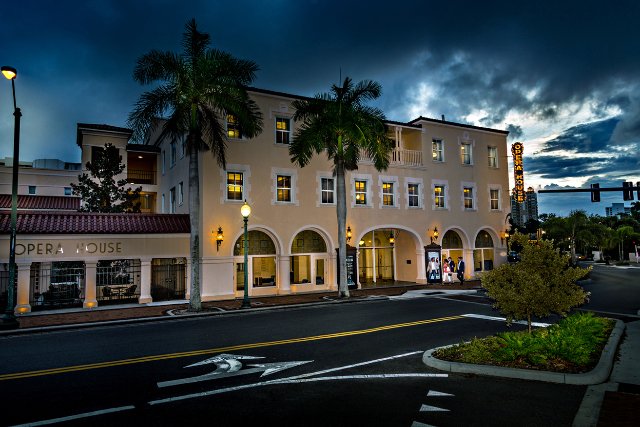
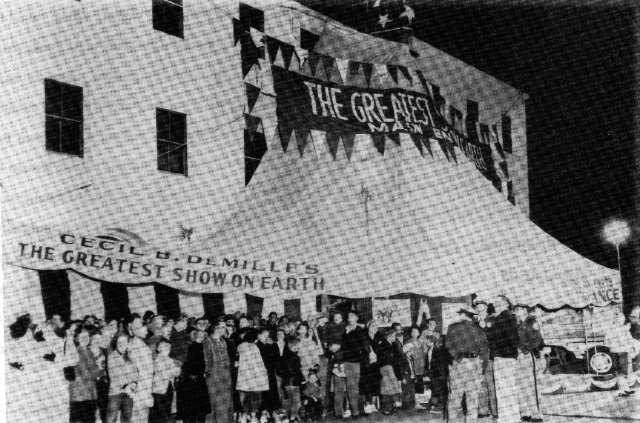
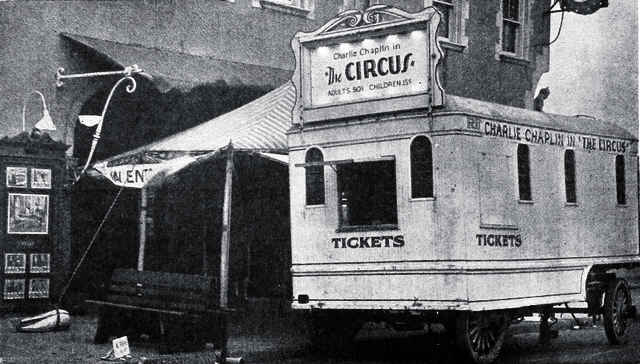
In 1956, around the time that Elvis Presley was first called the “King of Rock and Roll,” he stepped on the stage of what is now the Sarasota Opera House for four shows that apparently attracted relatively small crowds. Just four years earlier, the theater was packed and the streets outside were crowded for the star-studded premiere of “The Greatest Show on Earth,” Cecil B. DeMille’s look at the circus world that had been partially filmed in
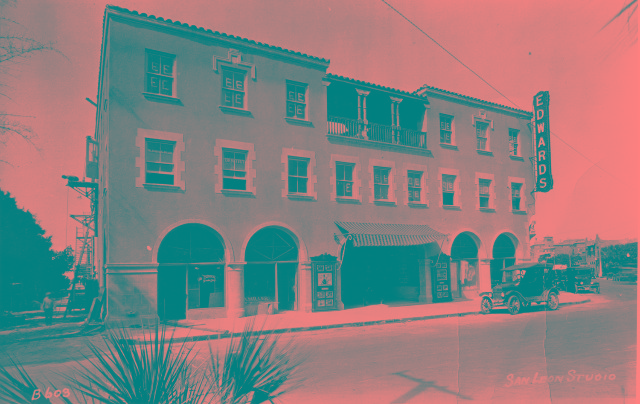
The building has changed a lot as a home to vaudeville, movies, concerts, community events and now opera since it opened as the
That history began with real estate developer Arthur B. Edwards, who created more than just a performance space.
“The magnificent, multi-purpose Mediterranean Revival building offered live entertainment as well as motion pictures and housed offices, apartments and retail establishments,” Sarasota historian Jeff LaHurd wrote in his 2025 book “The People and Places That Made Sarasota a Paradise.”
As a real estate entrepreneur involved in many projects, Edwards wanted to create a building that might help promote the growing city of
“He felt very strongly that if there were this beautiful arts venue to advertise the city, it would be a great selling point for people to move here,” said Martha Collins, a former opera singer who is now a stage director and the director of education at Sarasota Opera.
When it opened,
In addition to movies, they would come to see band leader Tommy Dorsey, fan dancer Sally Rand, comedian and political commentator Will Rogers and the Ziegfeld Follies.
The building, like the community has grown and adapted to changing times over the years. Screenings of silent films gave way to talkies and vaudeville performances. A powerful hurricane tore the roof off the building, and reports at the time indicated the storm sent parts of the pipe organ into
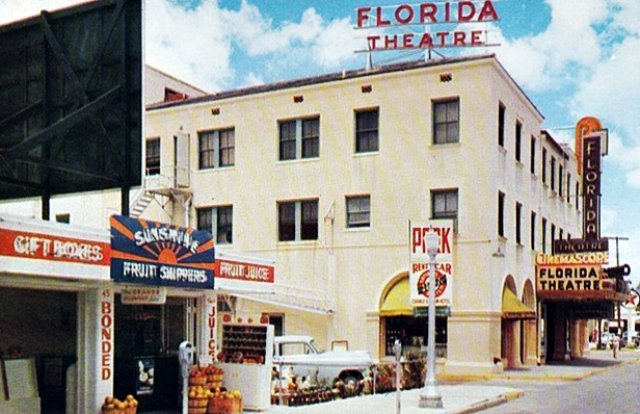
Edwards sold the building in the early 1930s. Its name was changed to the Florida Theatre and it continued operating for both films and live performances until it closed in 1973.
In an essay about the building, Sarasota Opera General Director Richard Russell said it “was a day away from demolition — the wrecking ball already in the parking lot next door” when it was purchased for the Radio Engineering Institute.” For a time, the Asolo Opera Guild, a forerunner of Sarasota Opera, rented office space in the building.
The guild, which had been presenting opera performances at the Historic Asolo Theter on the grounds of the
It reopened on Jan. 21, 1984 as the Florida Theatre for the Arts with a production of “Eugene Onegin,” led by Victor DeRenzi, who is stepping down this spring after 44 years as artistic director. The building’s name was later changed to the Sarasota Opera House.
Russell said he has frequently remarked, somewhat jokingly, that “I get on my knees every day and thank the people who preceded us,” including Deane Allyn, the company’s first executive director, and her successor, Susan Danis, who led the company for 13 years before leaving in 2012. Danis oversaw a $20 million renovation that began in 2007 and improved production facilities, expanded the size of the orchestra pit to accommodate 80 musicians, and added lobby spaces and lounges. Musical
“Deane was brilliant in taking an opportunity to buy this theater,” Russell told ArtsBeat in an interview. “And then Susan undertook this major renovation that expanded what we can do.”
Russell said he “thought I knew everything about this opera house” before he began researching more for the centennial activities.
He noted the building was “derelict and was not in good shape” when the company took over. “But this building made the fortunes of this company. We would not be the company we are today if we had to be fighting for time at the Van Wezel (Performing Arts Hall). We would not be able to do what we’re doing. We’re one of the luckiest opera companies in the country.”
The building’s transformation into the opera house also “started the renovation and the rejuvenation of downtown
The neighborhood surrounding the Opera House at Five Points in downtown
Retired Sarasota Herald-Tribune architecture writer Harold Bubil recalled the movie theater in the 1960s.
“On summer Wednesday mornings, the children of
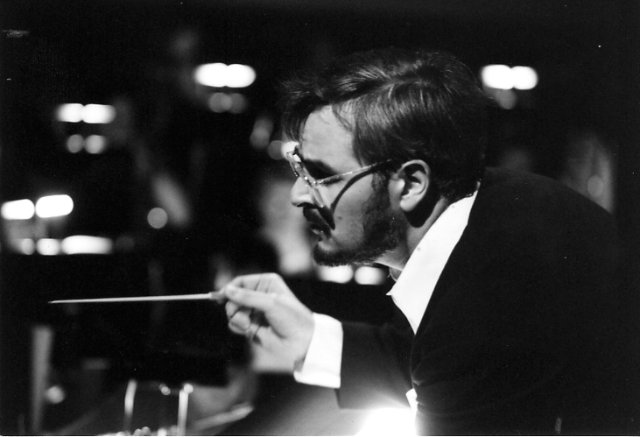
Just weeks after the end of the 2026 winter opera season, DeRenzi will return to the podium to lead the Sarasota Orchestra in a special centennial concert at 1:30 p.m. April 11. It will feature Sarasota Opera singers including soprano Virginia Mims, mezzo-soprano Lisa Chavez, tenor Rafael Davila and baritone Jake Stamatis. They will share the stage with performers from the Westcoast Black Theatre Troupe, the Circus Arts Conservatory and The Sarasota Ballet, all of which have their own connections to the building.
The concert will be followed by a centennial dinner celebration at Michael’s on the Bay at
At 12:30 p.m. April 12, there will be a free screening of “The Sarasota Opera House: A Centennial Celebration,” a documentary that traces the history of the building. It will be preceded by a talk about the building led by Marty Hylton, president of Architecture Sarasota. The documentary also will be screened on WEDU/PBS on April 9.
Attendees also will be able to purchase LaHurd’s new book “The Sarasota Opera House: A Century of Entertainment,” which is being published by the Sarasota Opera. community members also have been invited to share their own photos and stories about the building at sarasotaopera.org/centennial.
Tickets for the 1:30 p.m. April 11 Centennial Concert are $25.75-$103. For information about tickets for both the concert and centennial dinner, call 941-366-8450, ext. 813. The April 12 documentary screening is free, but registration is requested at event.sarasotaopera.org/centennial-film. For more information about the centennial: sarasotaopera.org/centennial’
Learn more at ArtsBeat.org.