

MFA Opens New Contemporary Galleries
Gift of Wyss Foundation
By: MFA - Dec 13, 2025
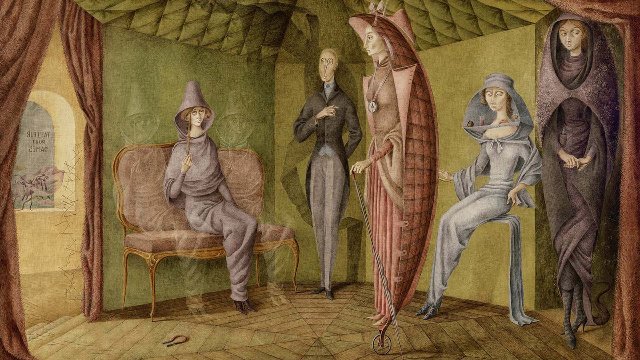
The Museum of Fine Arts, Boston, has announced that a suite of new galleries dedicated to modern art will open to the public on December 13. Four new spaces will be unveiled on the first floor of the Museum’s Evans Wing, each showcasing works from the 20th century that include highlights from the MFA’s collection, new acquisitions, and rarely seen loans from private holdings. Together with a second-floor gallery dedicated to 20th-century sculpture, which opened in June 2025, these new spaces represent the MFA’s first re-envisioned presentation of modern art in a generation. This major renovation project was made possible by a $25 million gift from the Wyss Foundation, which also funded two new staff positions for a curator and conservator of modern art.
“Opening these new galleries marks an important moment for the MFA. The spectacular installation showcases a previously underrepresented area of the Museum’s collection and encourages new and exciting ways of thinking about modernism,” said Pierre Terjanian, Ann and Graham Gund Director. “We’re looking forward to welcoming visitors into these new spaces so they can make meaningful connections—from bold 19th-century precursors to the 20th-century explorations that created the foundation for today’s contemporary art. We’re grateful to Hansjörg Wyss and his Foundation for supporting the project and bringing it to fruition.”
The new galleries feature nearly 60 paintings, sculpture, and drawings from about 1900 to 1970. In addition to 24 works from the MFA’s collection—including six new and recent acquisitions by Gertrude Abercrombie, Jorge Camacho, George Minne, Piet Mondrian, and Remedios Varo—the opening installations feature 33 loans, 31 of which have not been shown at the MFA before. These include four paintings by René Magritte as well as works by Alexander Calder, Alberto Giacometti, Wassily Kandinsky, Paul Klee, Henri Matisse, Joan Miró, Francis Picabia, and Mark Rothko.
“These spaces consider modernism across geographies, introduce our visitors to new narratives, and recontextualize collection favorites,” said Claire Howard, Hansjörg Wyss Curator of Modern Art. “They offer a range of ways of understanding this dynamic period.”
Two of the new first-floor galleries are organized thematically, one offering an exploration of color and spirituality in modern art and the other focusing on the Surrealism movement. The opening installations in the additional galleries—on view through June 2026—present unique dialogues between two pairs of artists: Giacometti and Rothko, and Calder and Klee. In June 2026, new rotations will focus on international Cubism and postwar abstraction.
Three galleries—including the gallery dedicated to modern sculpture, which opened earlier this year—are named after Hansjörg Wyss and his late wife, Rosamund Zander. The philanthropist, who is an Honorary MFA Advisor, attended Harvard Business School and established the Wyss Foundation in 1998, providing support in areas including conservation, economic opportunity, medical advancements, education, and the arts. Zander was an artist, best-selling author, environmentalist, and lifelong MFA visitor.
Gallery Overview
Beyond Reality: Surrealism in the 20th Century
Rosamund Zander and Hansjörg Wyss Gallery (Gallery 145)
Surrealism was an interdisciplinary movement that upended reality by turning to dreams, chance, and the unconscious for artistic inspiration. Begun in Paris in the wake of World War I, it quickly spread around the world, and artists, writers, and thinkers adapted its ideas to their specific contexts. As the paintings and sculpture on view in this gallery demonstrate, Surrealist artists never adopted a single visual style. Instead, they shared an interest in making visible repressed or otherwise hidden meanings and desires, and revealing the unexpected in the everyday. Works by Max Ernst, René Magritte, and Remedios Varo suggest a mysterious world filled with symbolic objects and unexpected juxtapositions. Paintings by Jorge Camacho, Arshile Gorky, Matta, and Joan Miró encode imagery within abstraction. Full of surprises, and sometimes confusing or even disturbing, these works invite visitors to look anew at the world around them.
Color and Spirituality in Modern Art
Rosamund Zander and Hansjörg Wyss Gallery (Gallery 146)
In the early 1900s, artists working in Europe and the Americas continued the break with depictions of the visible world begun at the end of the previous century. Instead of creating lifelike images using carefully blended colors, modeling, and perspective, they used non-naturalistic color and flattened, simplified, or distorted forms to express emotional or spiritual states. Featuring paintings by Paul Gauguin, Ernst Ludwig Kirchner, and Henri Matisse, among others, this gallery explores the ways in which artists used color to express their feelings with directness and authenticity. Works by Wassily Kandinsky, Piet Mondrian, and Agnes Pelton demonstrate how artists’ interest in representing an invisible, higher reality rather than the material world led them toward abstraction.
Alberto Giacometti and Mark Rothko: An Imagined Dialogue
Gallery 152 / on view through June 2026
This gallery takes inspiration from an unrealized 1969 commission for the UNESCO headquarters in Paris, which would have paired new paintings by Mark Rothko (1903–1970) and sculpture by Alberto Giacometti (1901–1966). Both artists’ explorations of the human condition resonated in a world that had recently witnessed tragedies like the Holocaust and the atomic bombings of Japan. Rothko declined the commission, but it may still have inspired him: the gray, brown, and black palette of his final works, including the 1969 painting on paper in this gallery, resonates with that of Giacometti portraits such as Head of Diego (1961). This imagined dialogue between Rothko’s mediative canvases and Giacometti’s alienated figures underscores the power of their work and its search for meaning in the aftermath of World War II.
Taking a Line for a Walk: Alexander Calder and Paul Klee
Gallery 154 / on view through June 2026
With distinctive styles all their own, Alexander Calder (1898–1976) and Paul Klee (1879–1940) each abstracted forms from nature and everyday life. Inspired by Klee’s 1925 description of artistic creation’s starting point as “an active line on a walk,” this gallery looks at how both artists explored the principle in their different mediums, and with varying degrees of distance from their natural references. Klee produced colorful, highly personal, and often abstracted landscapes that attempted to represent his individual, theoretical understanding of the natural world. Calder encountered Klee’s work and ideas in the late 1920s—an experience that shaped his experiments with abstraction. His kinetic sculptures suggest living organisms or environments through evocative shapes and recognizable titles.
Twentieth-Century Sculpture
Rosamund Zander and Hansjörg Wyss Gallery (Gallery 258)
During the 20th century, developments in culture, politics, and technology catalyzed revolutionary approaches to art making. Artists expanded traditional models—or dispensed with them entirely—while experimenting with new techniques, forms, and materials. This gallery explores the choices made by sculptors working in the United States and Europe that challenged the boundaries of expression. It bridges displays of the Museum’s European art with new installations of the contemporary collection, and presents work by artists including Jean Arp, Louise Bourgeois, Alexander Calder, Alberto Giacometti, Louise Nevelson, Isamu Noguchi, and Pablo Picasso. Visitors are invited to explore the trajectory of three-dimensional art, from Auguste Rodin at the end of the 19th century to Simone Leigh in the present.
About Hansjörg Wyss
Hansjörg Wyss is a philanthropist, entrepreneur, and conservationist whose commitment to innovation, education, and nature has significantly impacted multiple fields. Originally from Switzerland, Mr. Wyss moved to the United States more than four decades ago, where he built Synthes USA into one of the world’s leading medical device companies. He has since shifted his focus to philanthropy, directing resources toward the arts, biomedical research, environmental conservation, and education.
Through the Wyss Foundation, Mr. Wyss has supported groundbreaking initiatives that bridge disciplines and address pressing global challenges. His philanthropic efforts include providing scholarships and fellowships in the arts and music, medicine, business, and conservation across continents.
Mr. Wyss continues to dedicate his resources to advancing discovery and creativity, supporting institutions and initiatives that aim to improve lives and inspire future generations. Learn more about Mr. Wyss and the Wyss Foundation’s philanthropic investments in the arts and education by visiting www.wyssfoundation.org/discovery.
About the Wyss Foundation
The Wyss Foundation is a private, charitable foundation dedicated to supporting innovative, lasting solutions that improve lives, empower communities, and strengthen connections to the land. The Foundation’s philanthropic efforts include land, ocean, and wildlife conservation along with support for economic opportunity, medical advancements, education, and the arts. Since its establishment in 1998, it has helped governments, Indigenous communities, and other charitable organizations protect more than 120 million acres of land and more than 3.2 million square kilometers of ocean. These lands and waters are now conserved in perpetuity for current and future generations to enjoy and explore. For more information about the Wyss Foundation, visit www.wyssfoundation.org.