
Carla Munsat, 1938-2026
Co Founded Art New England
By: Charles Giuliano - Mar 18, 2026
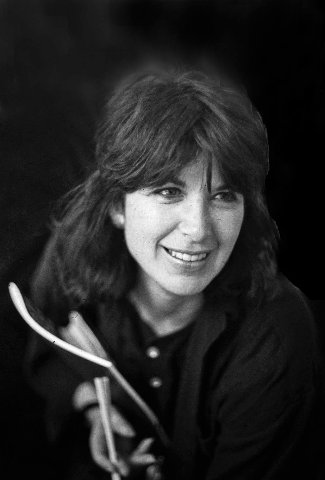
In 1975, with no prior experience in journalism, Carla Munsat and Stephanie Adelman founded Art New England. It was modeled after California’s Art Week. Two years later they started Art New England Camp during summers on the Bennington College Campus. Carla focused on the publication, which struggled, while Stephanie managed the camp which thrived financially. Initially, they worked out of their Newton homes but later moved operations to an office in Brighton.
Carla Ann Hoffman was born in Los Angeles. She dated Robert Redford in high school. At UCLA she studied the fine arts and later moved to New York to study acting. There she met and soon married Ted Munsat a physician. They moved to California where she continued with acting.
When they settled in Newton she wisely surmised that fine arts coverage was underrepresented. The Globe critic, Edgar Driscoll, Jr., excelled at covering the Copley Society and not much else. When a committee of emerging artists demanded change the Globe responded by hiring within. Feature writer, Robert Taylor, a seasoned journalist, was a step up but out of tune with the fast changing art world.
For a time I wrote weekly for Boston After Dark. When I left for the Herald Traveler the Christian Science Monitor critic, Ken Baker, replaced me with great distinction. He was followed by the memorable David Bonetti.
Initially, Art New England faltered in finding a graphic look and editorial identity. When I joined as a columnist (Perspective) there were endless discussions about the most basic and obvious changes. She resisted putting headlines on the cover as it would interfere with the design. Such changes occurred all too gradually. Or she hired designers more interested in how an article looked than its readability.
Through trial and error ANE settled into a cohesive and effective format. The core of the publication formed around several editor/ contributors. In addition to Perspective, Daniel Ranalli wrote Forum which explored artists’ issues, Mark Favermann, covered design and architecture, George Fifield, the founder of the Cyber Arts Festival, expounded on art and technology, while Lois Tarlow interviewed artists.
That allowed Musat to deal with features and themes for issues. She was always open to ideas and welcomed guest editors. I enjoyed that opportunity on a number of occasions. For one cover story I wrote about the emerging Starn twins, another was an interview with poet, Gerard Malanga, about his working relationship with Andy Warhol.
At its peak ANE was respected and had a major impact on the arts community. That’s when Carla was more often away on exotic trips with her husband at conventions and speaking engagements. It meant delegating more of the oversight. Miles Unger was brought in as managing editor. While Carla was fun to work with, generally, he was not. This assessment was shared with other contributors.
My column engaged all the major New England museum directors. Alan Shestack of the MFA threatened to sue. The quote was accurate and in context as well as confirmed on tape and in notes. Much to her credit she stood behind me and other writers. It’s a testament that ANE, unlike most art publications, represented truth to power.
As with other contributors our relationship to ANE was personal and entailed a bond with Carla as friend and editor. That ended when the publication was sold. It was impossible to work with Carl Belz as editor and I drifted off. The publication has had different iterations since then. It turned fifty in 2025.
What follows are appreciations from Daniel Ranalli and Mark Favermann.
“I first met Carla in 1982. I remember being in my dark room and having this long phone conversation with her about my writing for Art New England. We must have spoken for half an hour, as she explained that the magazine needed somebody to write about the political situation in the art world. I agreed to give it a try and remember putting together my first column. It was about the National Endowment for the Arts and how little attention was being paid to individual artists. She liked what I wrote, and we went from there. We decided to call the column Forum, and it was generally highly regarded by artists but sometimes offended folks at various arts institutions. Carla only worried about that once when she was threatened with a lawsuit (which had no merit). In the early days I would physically bring the typewritten articles to the office, and over the twelve years of writing the column our friendship and mutual respect grew deeper. She was an amazing woman – smart, a great editor, eager to get the best from all of us and generous with her time. I have seen her a number of times over the past few years, and we always laughed about the fun we had in the early days of the magazine. Bringing Art New England into the Boston art world was an enormous contribution on her part. I will miss her dearly.” Daniel Ranalli.
”A beautiful and charming brunette Californian, Carla added greatly to the cultural atmosphere of Boston and New England. When she arrived, there was little substantive coverage of the visual arts. Conservative academic institutions and museum eccentricities seemed to rule the region. A gap existed that needed to be positively filled. Contemporary visual arts were made more important and certainly more current by Art New England. My nearly two decades of ANE critical articles and opinion columns explored many aspects of the built environment as well as specifically architecture, design, craft and public art. Perfectly imperfect (some of her staff hires and later business choices weren’t great), Carla was a benevolent and positive publisher open to new ideas and different perspectives. She was a lovely person who saw a strategic need and solved it. The last time that I saw her was at the Rothko Murals Exhibit at the Harvard Art Museums in 2014, and she had become a blonde.” Mark Favermann.