
Artists CinemaCraftDanceGalleriesMuseumsMusicTheatreLodgingDineShop
Ads by BFA
Share

Flushing Out The Museum of Fine Arts

Twenty-one Artists Hang work in MFA's Rest Rooms

By: David Bonetti - 06/16/2011

Click to Enlarge
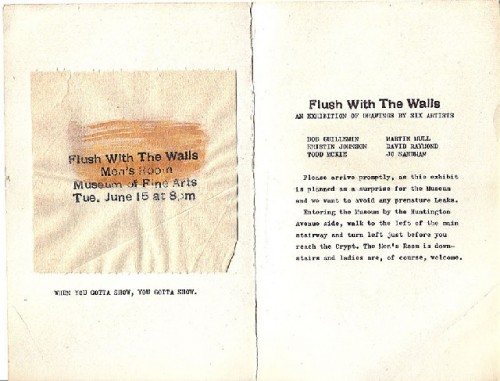
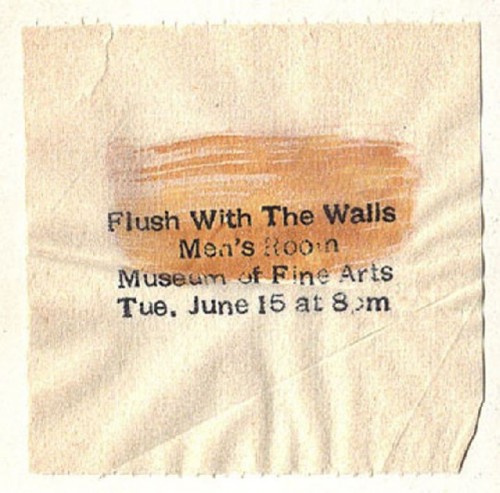
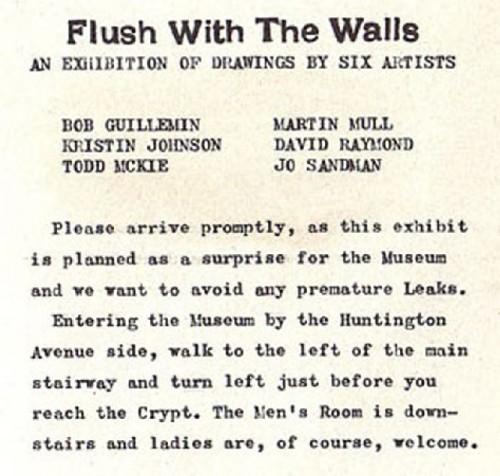
The invitation to the exhibition some forty years ago to the day.
The invitation was printed on a square of toilet paper.
The original participating artists two of whom, Guillemin and Sandman, participated in the reenactment.
Not long after Flush with the Walls the MFA director Perry T. Rathbone appointed Kenworth Moffett as curator of contemporary art. Giuliano photo.
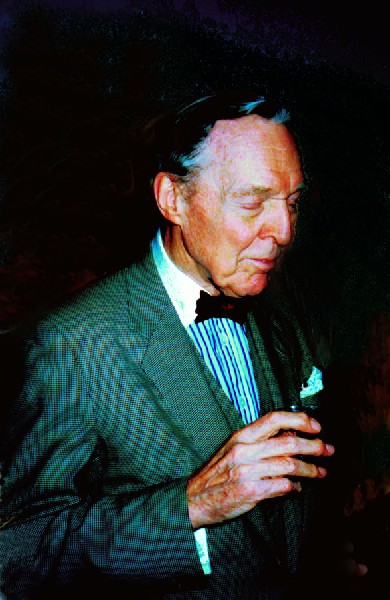
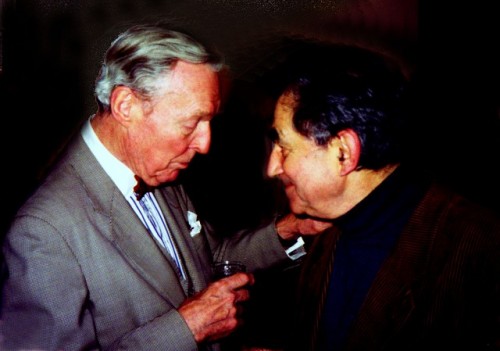
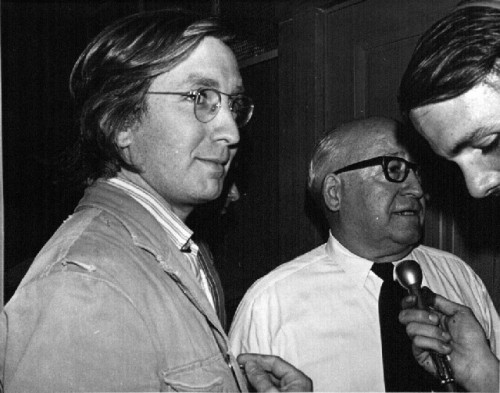
Rathbone in conversation with sculptor Dmitri Hadzi.
Boston Phoenix critic, Greg Cook, staged the anniversary event in the rest rooms of the MFA.
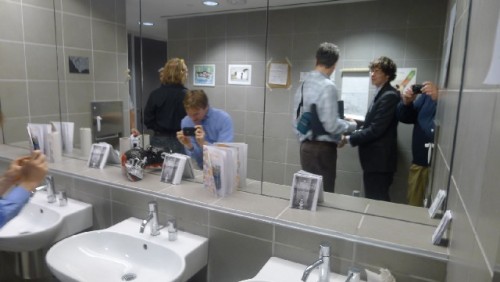
Installation View of Flush With the Walls II, photo by Mark Favermann
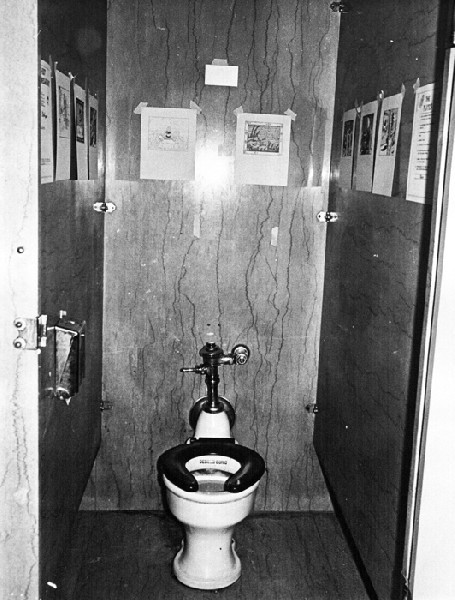
Image of the original Flush installation.
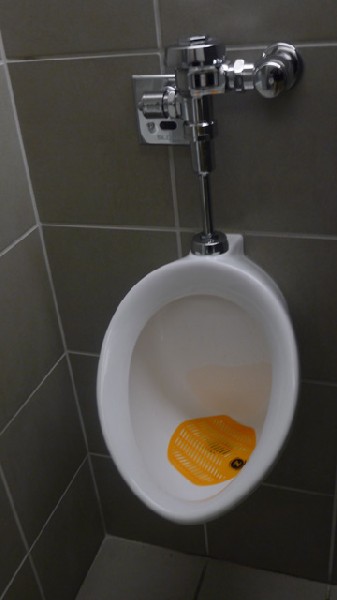
Reproduction of  Fountain signed "R. Mutt" by Marcel Duchamp, functional urinal, photo by Mark Favermann
Reproduction of Fountain signed "R. Mutt" by Marcel Duchamp, functional urinal, photo by Mark Favermann
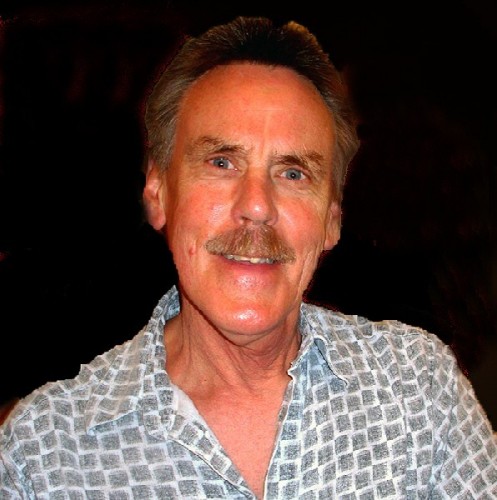
Robert Guillemin forty years ago.
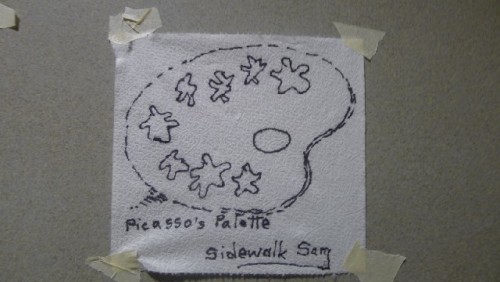
Drawing by Sidewalk Sam in Men’s room at MFA.
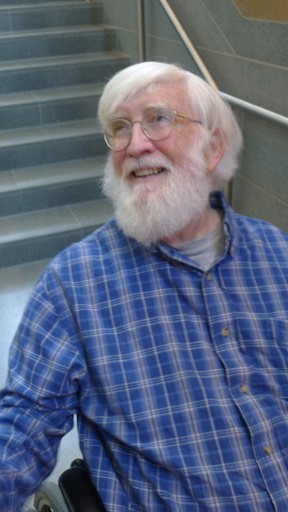
Bob Guillemin aka Sidewalk Sam at 40th Anniversary of Flush with the Walls, photo by Mark Favermann
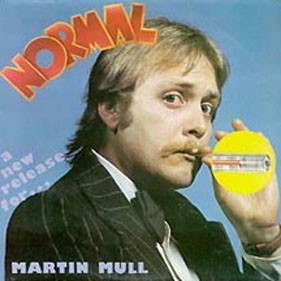
Marty Mull moved from Boston to Hollywood.
Todd McKie opted not to participate in the anniversary event. Giuliano photo.
Artist Paul Laffoley participated in the event.  Photo by Mark Favermann
Artist Paul Laffoley participated in the event. Photo by Mark Favermann

“Best of Boston 40-ennial: Celebrating the 40th Anniversary of ‘Flush with the Walls’ ”
Museum of Fine Arts Boston
June 15, 7:00 to 7:30 p.m.
Geoff Edgers in the Boston Globe

“History repeats itself, the first time as tragedy, the second as farce.” – Karl Marx

Forty years ago, six Boston artists clandestinely installed their work in the men’s room of the Museum of Fine Arts, calling their “exhibition” “Flush with the Walls.” (I remember those old marble-walled men rooms. I could think of worse places to show your art.)

The act was a salvo: the only place a living Boston artists could show at the MFA was in the loo.

There are those, including Charles Giuliano, Berkshire Fine Arts’ founding editor, who maintain that it was the signal event in establishing the modern Boston art world, which has continued through at least two generations since that date.

Maybe they’re right.

In any case, soon after, museum director Perry Rathbone, who had already shown his openness to modern and contemporary by purchasing works by Pablo Picasso, Constantin Brancusi – where is it????? - Ernst Ludwig Kirchner, Oskar Kokoschka, Emil Nolde, Max Beckmann, Giorgio Morandi and Nicholas de Stael, among others, established a department of contemporary art.

(Incidentally, with precious few exceptions, those were the last significant purchases of modern art the museum made.)

Unfortunately, Rathbone appointed the wrong curator to head the new department: Kenworth Moffett had taste narrower than the proverbial needle’s eye. Never mind camels: even mites couldn’t pass his scrutiny, unless they adhered to the gospel of the Rev. Clement Greenberg. And might few did do. (Jackson Pollock was one, and Moffett proposed the purchase of his important “Lavender Mist,” which the board of trustees shot down, so Moffett is not entirely to blame for the museum’s dismal collection of mid-century American art.)

Those who have followed the hapless development of the museum’s contemporary department understand Marx’s reference to tragedy. (See above.)

Greg Cook, the Boston Phoenix’s art critic, decided to commemorate the epochal event by restaging it on its anniversary - to the day. He rounded up 21 local artists – itself a sign, I suppose, of the art inflation that has occurred over the past 40 years. Two of the original participants – Jo Sandman and Robert Guillemin, better known as Sidewalk Sam – showed up for the opening and contributed new work. And in the spirit of gender equality, Cook took over both men’s and women’s rooms.

The event was high-spirited in the way guerrilla art events often are. Let there be more such spontaneity in our august institutions!

However, you can’t help but look at the event as a farce of sorts.

Times have changed; circumstances have changed.

In 1971, the MFA, despite Rathbone’s tentative moves – although his 1964 acquisition of Picasso’s “Rape of the Sabine Women” the year after it was painted was anything but tentative – did not have a contemporary department. The “Flush with the Walls” action helped to bring one about.

Now the museum has a contemporary department and is preparing to open in September a vast set of galleries devoted to art since the 1970s. Fingers are crossed – can an institution that has gotten so much wrong finally get it right?

So what was the point of the Wednesday evening action? If it is a plea for inclusion of local artists in the museum, that is, I’m afraid, an old and tired song. In a globalized art world, there is no “local” art. The MFA shows lots of art made in Boston and its environs, mostly photography.  Maybe the artists who showed their work in the loo aren’t happy with that. They want their own work shown. That’s the way artists are.

But just because an artist lives in the metropolis that stretches from Portland, Maine to Providence, Rhode Island, and west beyond Worcester, the MFA has no obligation to show their work. It has to be good at an international level. I can’t offer an evaluation of the work in yesterday’s show – it was up so briefly and the rooms were so crowded that I couldn’t really look at much.

But that wasn’t the point. The event was the point, and it showed admirable spunk.

By the way, when the guards shut the show down and removed the work, they missed (at least) one work. I won’t say what it is because I hope it remains in place for a long time. One of the artists, who presents himself anonymously, created a work that so closely mimics the MFA’s own design that it passes unnoticed – until, that is you actually look at it. Then it unfolds a subversive and funny surprise. Congratulations to one artist who shows that s/he might actually deserve to be shown officially in the museum!

WBUR Coverage

Berkshire Fine Arts Review by Sarah Hwang

Reader Comments
From "david bonetti"
06-19-2011, 04:48 am
oh, charles, lighten up. my response was intended to be as witty as was mr. favermann's original comment. he seems to have understood that, but since you utterly lack a sense of humor, you missed its subtlety. one would have thought that 50 years in the criticism biz might have thickened your skin a bit. if you can't handle the exchange of opinions what the hell are you doing editing a critical blog, excuse me, digital magazine?
From "Charles Giuliano"
06-18-2011, 10:19 am
Oh David. Come now. Mark was being witty. Your response is not. It has been some time since I read Calvin Thompkin's wonderful bio of Duchamp. But as I understand it the Hopps exhibition in 1963 reverberated with Rauchenberg and Johns and their work with Merce Cunningham and John Cage. Duchamp, who had lived for years in obscurity, was celebrated after 1963 until his death in 1968. The Flush event occured in 1971. The artists were surely aware of Duchamp's "Fountain." Whether it speficically inspired them only they may answer. But it was an icon illustrated in all of the standard art history texts. The decision to stage the event in and around all those urinals doesn't seem like a coincidence. Also Mark hardly "insinuated" himself into the event. I asked him to attend as well as Sarah Hwang. I asked them both to cover the event. I tipped you off by forwarding Greg Cook's press release. You were not "assigned" but wrote a piece "on spec" which we posted. I have also urged Mark to write on the event but he has declined. Although, since you don't appear to have a camera, Mark, as a BFA editor, added some images and captions to flesh out the piece. By the way Mark and I were on the scene in 1971 and you arrived somewhat later. So we are both more informed of the zeitgeist of the era and its seminal events. Neither of us attended the original Flush event but I actually received an invitation. I have been kicking myself ever since.
From "Mark Favermann"
06-18-2011, 09:06 am
For Mr. Bonetti to say that the six original artists of Flush to the Walls were ignorant of Marcel Duchamp (Nude Descending A Stairway and his other edgy works) is his own self-deception. All studied art history before becoming artists. But, perhaps, self-deception was the point: the Boston MFA thought that it was providing a great visual art and cultural experience while not including much contemporary art in their programming and few if any local artists. Mr. Bonetti himself may not have known about Marcel Duchamp, but certainly others did. That notion of no-nothing underscores the MFA's view of contemporary art as well. This is a full flush!
From "david bonetti"
06-18-2011, 04:53 am
i'm afraid that mr. favermann might be exhibiting a sort of retroactive corrective-historicism in his reference to r. mutt's urinal in relation to the original "flush with the walls" performance/action/exhibition. marcel duchamp, mr. mutt's american representative, was largely forgotten by the art world until walter hopps organized a retrospective of his work for the pasadena museum of art in 1963. in those long-ago days news traveled slowly, and anything that happened in california was dismissed on the east coast as not serious. (indeed, there are still those who consider duchamp unserious.) the important moma/philadelphia duchamp retrospective didn't take place until 1973, 2 years after "flush with the walls." it's entirely possible that none of the 6 artists who organized the historical mfa exhibition had ever heard of duchamp, never mind r. mutt. of course, maybe they did, and if they were asked today, most would probably say that of course they knew all about readymades and that r.mutt's masterpiece was crucial in their decision to hang their work in the loo. but in 1974 a large majority of americans denied voting for richard nixon even though he had won the presidency in a landslide only 2 years earlier. so, unless it's in writing from those far-off days, we will never know. still, it was a nice attempt by mr. favermann to insinuate himself into the proceedings.
From "Mark D. Gottsegen"
06-16-2011, 11:31 am
Excellent number! I lived on Hemenway Street in 1971, near Forsythe Way and the Huntington Ave entrance to the MFA -- a ripe spot to watch the fun with "Flush the Walls". Mark D. Gottsegen
From "Mark Favermann"
06-16-2011, 08:55 am
The best pieces were missed by Mr. Bonetti: these were the reproductions of Marcel Duchamp's "R. Mutt" urinals. Oh, I guess they were real urinals! The whole thing was Shakespearean in that Flush to the Walls II was "much ado about nothing."
And just to be sure you're human, please finish the simple math problem below.
click on the image to reload it Click to reload image
* Email address required for verification and does not appear with comments. - (Comments may not show up immediately)