

The Dishwasher Dialogues: Museums
The ladies of Wichita
By: Gregory Light and Rafael Mahdavi - Aug 10, 2025


Rafael: So, tell me, my friend, was Chez Haynes Paris or vice versa?
Greg: Back to philosophy, eh?
Rafael: Could that restaurant have been anywhere? I don’t think so.
Greg: Aside from a month or so when I first arrived in Paris, and a couple of weeks enforced furloughs, my four years of life in Paris coincided precisely with my working at Chez Haynes. I was there until the day I left. So, in some critical ways, Paris was Chez Haynes. It was a life-support system for living in Paris. It doubled as a supportive network for connecting and expanding into a wide range of what Paris had to offer. But, of course, Chez Haynes was not Paris. Just like the Eiffel tower is not Paris; nor are Les Invalides or even the Seine. Chez Haynes is like Les Deux Magots restaurant, full of Parisian culture and history. But under the radar. Like us. Admittedly, the latter is still open. Nevertheless, Chez Haynes shares a unique place in the culture and history of Paris.
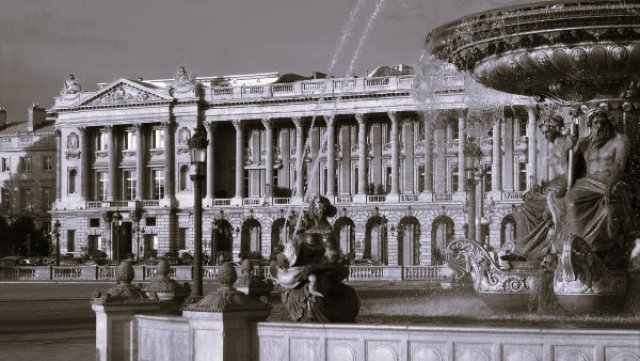
Rafael: The bar and the dish water were part of my Paris years, tightly bound to that city for me. There was the Faubourg Saint Honoré with expensive stores, there were the back streets around the Bastille, where there were cheap goods to buy for my apartment. There were brothel hotels in Barbes, and L’Hôtel Crillon on the Place de la Concorde, not far from the American Embassy.
Greg: I never spent any time in the hotels of Barbès, but I did stay over one night in L’Hôtel Crillon. With an attractive acquaintance Bentley introduced me to from New York City. The hotel was all plush historic extravagance on the Place de la Concorde. It was certainly a far cry from my chambre to bonne, despite the latter’s access to the latest in Turkish toilets and fold-out showers on the living room door.
Rafael: Chez Haynes made the city easy for us in many ways, we lived under the radar. But if I were to give a piece of advice to youngsters who come to Paris, I would say that Paris is tough, a hard place to crack, and the French authorities make it difficult to survive legally if you don’t have money––that was the way it was then in the seventies.
Greg: I think I have a slightly different perspective. But then I was not looking to ‘survive legally’. I barely knew what that meant. To just ’survive’ was sufficient, and all the little cracks and recesses and niches of Paris, coupled with the gift of personal freedom embedded in Parisian indifference made life heady enough. I suspect the pervasive use of technology would make it much more difficult to live under the radar today. The ‘radar’ has become much more sophisticated and threatening. But the curiosity of youth has a way of seeking out and negotiating its own cracks and recesses and niches anew.
Rafael: Instead of money you need a vision to survive, hope as big as the ocean, and dreams to light up the sky. Such states of mind will give you drive and strength to not only survive in Paris, but you will thrive in it. You will chuck aside the many inconveniences like the lack of phones, the third world plumbing, the nasty Parisians, and the incredibly hard language you will never learn well.
Greg: The basics are attainable. Communication with Parisians is possible. For all my grumbles, they were excellent teachers. With myriad perspectives on their fabulous city and how to live in it. On good days my emerging grasp of the language would allow me semi-sensible discussion and conversation. And conviviality. And friendships. After four years, I knew that city better than any place I had ever lived. I loved it.
Rafael: Not even Parisians speak French perfectly, nobody does. If you are lucky enough to wander off the beaten paths and away from the tourist haunts you will find Parisians, usually working people, who will take you as you are, who don’t give a damn what your skin color is, where you’re from or if you believe in God and can’t speak French. Paris has a rough hide; you’ll scrape your heart on it. And anger will get the better of you many a day. You’ll tell yourself that the Louvre or the Opera or other cultural centers of pilgrimage are all very well, but the cold in your apartment is still very much there.
Greg: And the cold look in your exchange with the madame selling you a baguette leaves you wondering if you will ever fully understand the city and its people.
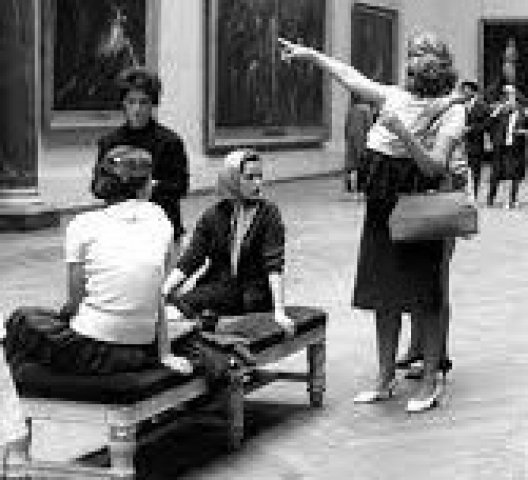
Rafael: Then on a Sunday afternoon, you’ll be queuing for the Louvre, and you’ll start chatting with a lady from Wichita, Kansas, and she’ll ask you all sorts of questions. How do you know so much about Paris? Are you a professor or something like that? And I’ll say no I’m a bartender and a painter.
Greg: And you realize you have learned all sorts of stuff from Paris and Parisians. Wonderful stuff. Then along the way, for multiple different reasons, it becomes a preoccupation and must be shared. And you realize that Parisians are not half bad people given half a chance. And you start giving half a chance.
Rafael: Or another day I’ll be walking by the Seine, and I’ll stop and say half out loud, ‘hey you idiot, look at that view over the sparkling golden Dome des Invalides’. And my anger will dissipate, and I’ll feel that my life is damn good right then. It sounds banal. Doesn’t matter. As I stand by the Seine my anger ebbs and rises. To hell with the phonies and la-dee-da jerks, they’re a dime a dozen.
Greg: Maybe it sounds banal. But what the hell. You are sharing it with the river. Especially the rough stuff. Then you can forget it for a few days.
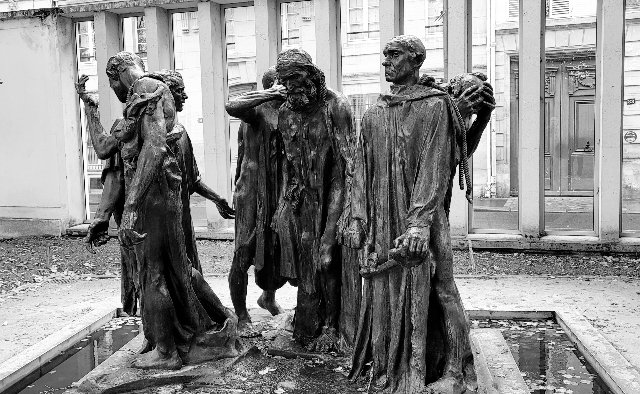
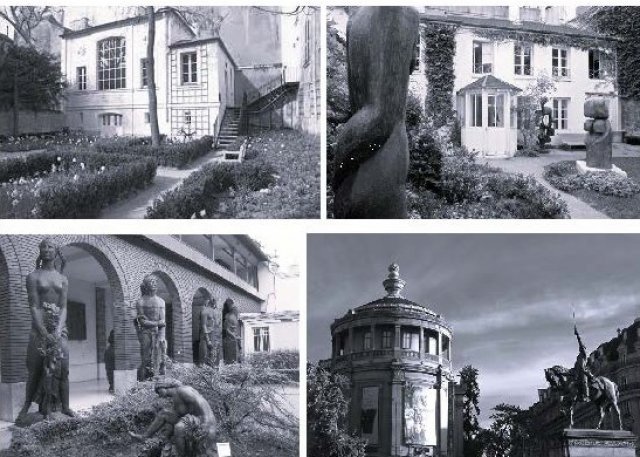
Rafael: And I did forget the inconveniences and haunted the museums, not only the big ones, but the small jewels as well; the Victor Hugo Museum on Place des Vosges where I discovered he was a fine draftsman. And the Zadkine Museum, the Bourdelle Museum, and I knew Bourdelle had worked with the Germans during the occupation; Museum of the Romantic Life; the Musée Guimet, and others. I couldn’t afford the catalogues, but I took notes and drew. On many a Sunday afternoon, I was the only person in these museums. What a luxury! I too was a millionaire and a prince, and in the late afternoon, I would wander from the Musée Delacroix on the Place Furstenberg to the Rue de la Huchette and buy a hot merguez and half a baguette from a street vendor. And pommes frites too.
Greg: All the while learning, taking it in. And then sharing. In some way. To someone. Thank God for the ladies of Wichita.