

Christine McCarthy Worked Wonders
Director of Procvincetown Art Association and Museum
By: Charles Giuliano - Aug 15, 2025
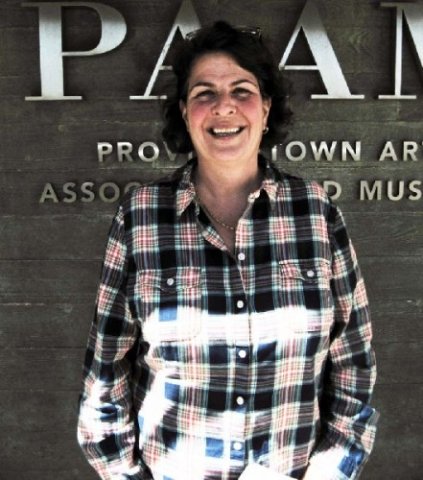
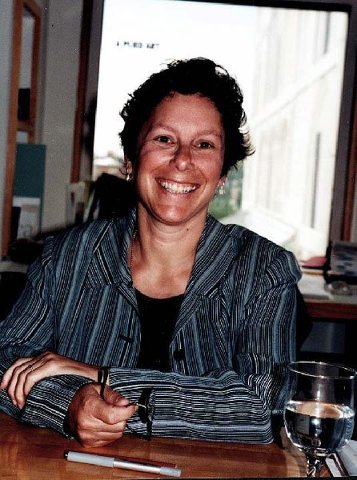
When the Institute of Contemporary Art mounted “Elvis and Marilyn” in 1994 it anticipated a blockbuster. Accordingly it hired additional staff including the young Christine McCarthy. That show fizzled and the expanded staff was let go. McCarthy stayed and soon proved to be invaluable as assistant to director Milena Kalinovska. When Milena left there was a long hiatus and McCarthy ran the museum with a skeletal crew until Jill Medvedow was hired. McCarthy remained as the ICA plotted a transfer from Boylston Street to Fan Pier. When the Provincetown Art Association and Museum courted her it was a mess. Taking a step back in salary and benefits she took the job on terms of a commitment for change. Her impact has been formidable.
This interview occurred in 2013.
Charles Giuliano Before Provincetown you were with the Institute of Contemporary Arts in Boston.
Christine McCarthy I was at the ICA from 1994 to 2001. I started with Milena Kalinovska, there was a lapse without a director, then under Jill Medvedow for two years. I was in six or seven different positions and ended as director of administration and planning. My final job was divided between operations and working on the new building. I worked on the lobbying for Fan Pier. That entailed politicians in South Boston and the Mayor’s office. I left right when the architects were hired. I was there during the search.
CG What was it that led you into arts administration?
CM I have a BA in Humanities from Providence College. I did my junior year in Florence. All of my classes were in the museums: The Uffizi and the Academia. My first three months were in Siena for intensive Italian language. When I came back from that year I definitely knew I wanted to do something related to art history and museums. I did an art history program at Syracuse. It was fine but it wasn’t doing it for me. Ironically, in my third semester Syracuse started a brand new museum studies program. Nobody signed up for it. They bribed the art history students and told us that if we took the museum studies courses we could get two Masters for the price of one; art history and museum studies. That meant staying for another semester. I was intrigued. Syracuse had just built an art gallery which was unbelievable. They had a wonderful print collection.
After Syracuse I did a one year fellowship at Yale. That was the clincher. I worked in prints, drawings and photography under Richard Field who was a genius. He taught me way more than I learned in my program. After that I moved to Boston and got a job at the ICA.
I did tons of internships and had worked in a couple of galleries. But this was my first job using my skills to see how museums work. In 1994 I was hired with the “Elvis and Marilyn” show to be the gallery manager and it ended up being a bust. It was huge in Graceland when they did it there. Boston just didn’t love the “Elvis and Marilyn” thing.
When that show closed they let a lot of people go. They assumed it would be a giant boost for the ICA. It wasn’t. I stayed on as the gallery manager but in six months I was upstairs part time in operations. Then I became the assistant to Milena until she left in 1999.
So I was with her in the director’s office for three years, then two years in the office by myself until Jill (Medvedow) was hired. That’s when I was moved to administration and planning and started working on the new building.
CG Under Milena, in addition to “Elvis and Marilyn,” it seemed that the ICA was chasing niche audiences. There was the “Malcom X” show which reached out to African Americans. There was a gay themed show.
CM On the flip side she did “Visible the Inside.” It was probably one of the best shows that the ICA has ever done.
CG That chased a feminist audience.
CM It did. But they came for it. I think Milena has a sixth sense about emerging artists. She would tell you which artists would hit it and she was usually spot on. Kara Walker was one of the first artists we showed there and Carolee Schneeman. The feminist artists who are huge now Milena was chasing when I was at the ICA.
CG Carol Rama! Claude Cahun (1894 – 1954) was one of the discoveries of that exhibition. Carol Rama (Italian, born 1918) was hardly an emerging artist. Later Milena gave her a one woman show. The work was interesting but so so.
CM True, but she was fabulous. The one who did portraits of all the models who weren’t pretty. Oh God, the name is escaping me.
(Rineke Dijkstra who was relatively unknown when the ICA mounted her exhibition. The ICA under Kalinovska also showed Holocaust artist Charlotte Solomon, the British sculptor, Rachel Whiteread, British conceptualist Olivia Parker, and other women artists.)
What was great about the ICA was that there was nobody there to hold your hand. Learn it or leave. Under Milena I got my Contemporary Art 101 and she taught me hook, line and sinker.
When Milena left there were nine of us running the ICA. There was no director. There was no director of human resources. There was no development director. There was no director of education. There was no director of operations. It was myself, a curator, gallery staff, an accountant, and maybe one other person. That was it for two years while they did the search.
CG What was the board doing?
CM Freaking out. They were trying to find a good director. It was at least a year and a half before Jill (Medvedow) was hired as director. There were interviews and a lot of different people being considered.
CG When Milena left I did an exit interview with her. I have tried to contact her in the past couple of years to fill in that gap of the ICA’s history. She’s at the Hirshhorn. It’s an important story which should be told.
(She returned to her native Czechoslovakia where she remains connected to the art world.)
Looking back David Ross couldn’t build a new ICA, Milena couldn’t. Jill finally did it.
CM She did it because there was really no other choice. The ICA was either going to close or build a new museum. That’s what happened with this place too (Provincetown Art Association and Museum). The same people were on the ICA board for a long time and they got frustrated. Then the opportunity of Fan Pier opened up.
CG Let’s step back a bit. Why couldn’t David Ross pull it off?
CM He didn’t care about a new building. He was interested in exhibitions. Milena was a curator. She wanted to do exhibitions. That wasn’t Jill’s thing. She was about expansion and growth. She’s a good fund raiser and the Fan Pier parcel came up. The ICA was in 11 different locations before where it is now. The other candidates for the parcel didn’t fit the bill. It made perfect sense.
Under Mayor Tom Menino, it would be the first new museum built in a hundred years. His administration saw that this would be a good thing for the City of Boston. At the time, the idea was that Fan Pier would all build up at once. It was going to be shops, hotels and restaurants. Everything was going to happen all at one time. Everything kept falling through. The ICA kept going because they were given a parcel of land at a dollar a year for a hundred years. You’re not going to blow that. You’re going to figure out how to do it.
CG How did that experience dovetail and carry over to here. What were the similarities and differences in coming to PAAM?
CM Someone sent me the job description for this museum. I had no intention of leaving the ICA and coming here. The job description was eight pages long. There was one other full time person and you basically did everything for no money. It was a lot. A typical job description is two pages.
I figured I would apply and if I got an interview I would come to Provincetown for the weekend. I got a call. So I grabbed my best friends and we jumped on the ferry and came to Provincetown. I came for my interview in June. It was unseasonably hot probably 90 degrees and a thousand inside.
The first question they asked me was “If you got this job where would you find a place to live?” Not, do you have a background in arts, museums, or whatever. One of the trustees was a real estate agent so I said “You’re going to find me a place to live.”
She looked at me and said “I like you.” In my head I said “good” because I’m not taking this job anyway. The interview went on for about three hours and it was so hot.
There was a giant hole in the roof over there where the rain used to come in. There were spiders and cobwebs everywhere. The walls had burlap on them. These floors were funky.
Looking around I said “How committed is this board to doing a renovation?” Half of them were and half of them weren’t. I said “Thanks a lot but until you are all committed to doing this it’s never going to happen. The only way that I would come and take this job is if you are committed to doing a building renovation.”
I stayed over at Ruth Hebert’s house and we stayed awake until three or four in the morning. She taught me about Provincetown. Not about gay parties and drag queens. She taught me about the art colony. She told me about living here when artists came to Hofmann’s School. Maybe I read about Charles Hawthorne in art history but I didn’t know anything about this art colony. She was the one who clued me in on how potentially exciting this place could be.
Two days later I got the call “We want you to take the job.” I said why don’t I come back for a second interview and have it be more formal. Commitment? Are you going to pay me? Will I have to raise all my own money? Who is committed to doing this because if you’re not committed to doing a renovation, I won’t take the job. I’m not going to have bakes sales here. I’m done and over with that.
I came back for a second interview and it wasn’t as hot thank God. I still wore a suit though. We went through our whole thing. I got back to Boston and they said “We want you to start now.”
I was 34-years-old. If you are in the museum field your track is that you should finally make it to the point where you are a director. I couldn’t come up with a good reason why I shouldn’t take it.
This place is about 70% second and third home owners with a lot of cross over from Boston. It included a lot of people whom I knew from Boston.CG It has always felt like Provincetown is a New York summer colony not a Boston one.
CM No it’s quite a Boston summer colony, tons.
CG Is that a change?
CM In probably the last ten or fifteen years it is. It’s about a third Boston, a third New York, and about a third Cape Cod. That’s my board right now.
CG How many board members are there?
CM Twenty five.
CG Do they all give?
CM You’re damn right they do. They give very generously in many different ways.
The reason why there were so few is because nobody had ever asked those second and third home owners to be a part of this organization; on a governance level, or on a giving level.
I asked people from Boston, “We’re getting ready to do a capital campaign.” They said “Nobody has ever asked me before.” That’s how I raised $8 million to renovate this museum.
CG Over what time frame?
CM I started in 2001. It took a year to figure out who was who. What constituencies were serious about being a part of this museum and tweaking the board. In 2002 we were in a quiet phase. In 2003 we announced the campaign. We broke ground in 2003 and cut the ribbon in 2005. Pledges came in over five to seven years. We increased our membership three times. We increased our budget three times. We increased everything by three times. We doubled the square footage of the space. We didn’t have any storage space for art so potential donations were going to other museums.
When you tell people in this town that things that allegedly belong here are going somewhere else they don’t like that. People weren’t gifting their collections of Provincetown art. The works were going to other museums. They were going to auctions, because we didn’t have the right facility. Now we have one storage unit off site for really giant sculptures. Some 98% of the collection is on site. It’s top of the line.
CG Has that had an impact?
CM Oh yeah. Huge. Because people were waiting. When I started we had 1,000 works now we have 3,000. That’s in twelve years with promised gifts, estates, and planned giving. We have superior collections coming here in people’s wills and things like that.
CG You made the comment that the Provincetown Art Mafia (Long Point Gallery group) which I mentioned “has died.” That being the case what is the current status of Provincetown as an arts colony? (Current preferred term is arts community. Colony references colonialism.)
CM Today there are a handful of galleries still devoted to the historic art colony: Julie Heller, Berta Walker, Schoolhouse. Julie has two locations now. A lot of artists come and open their own galleries to show their work. There’s a lot of that. Some of them last and some of them don’t.
CG We see a lot of amateur work on your walls. Is Provincetown still a destination for serious artists?
CM It’s hard because it’s so expensive to live here. If you want to be here you have to figure out how to do that. You might have to work four jobs during the summer. You can paint all winter and do what you have to do. Yes, I think there is still a committed cadre of artists who come here.
We boast that we are America’s oldest art colony and home of American Theatre.
(The Provincetown Players began when a group of writers and artists who were vacationing in Provincetown, presented their plays July 15, 1915 on the veranda of Hutchins Hapgood and Neith Boyce’s rented ocean-view cottage. The two plays were Constancy by Neith Boyce and Suppressed Desires by husband and wife George Cram Cook and Susan Glaspell. Boyce had previously had a reading of her play in her home a few weeks prior and this caused Cook and Glaspell to add their play to create a social event for their friends.)
When I came here this facility was falling down and there was no theatre. The Library just did a renovation. The Fine Arts Work Center just did a renovation. I think that in the grand scheme of facilities we have all raised the bar. We had to.
CG I like the emphasis on “we had to.” Was there a community wide consensus that something had to happen?
CM I think so. For theatre you want to come and see a Eugene O’Neill play or Tennessee Williams. You had to go to the Provincetown Inn because there was no theatre. There used to be theatre in this building. There wasn’t going to be theatre anymore in this building so they had to build a theatre. It made sense because there wasn’t a viable venue to showcase and represent the legacy of American theatre in Provincetown. Which is huge.
The Fine Arts Work Center is bringing fellows from all over the place and the studios are falling down. There is an enormous historical legacy to those studios where Ross Moffett, Edwin Dickinson and so many others worked. Just for preservation purposes it needed to be renovated.
We got our acts together and got these facilities renovated and built. We couldn’t even get teachers for our program. We had a one room school house and nobody wanted to teach here. It was too dark and either too hot in summer or too cold in winter. Now we have four studios which have gorgeous light in them. We now have 80 teachers here on a year round basis.
CG Is anything degree granting?
CM We had an affiliation with Cape Cod Community College where credits transferred. We did it for ten years but it got dull. It was off the shelf Painting 101.
We don’t have an accredited program yet. It is something we would like to do. The Fine Arts Work Center has a low residency MFA program. They are affiliated with Mass College of Art. I don’t know the status of that. It’s been in process for four or five years. We do the thesis show here. Yeah, there are ways. U. Mass Dartmouth, we’ve had lots of conversations with them of how we can do this; transfer of credits.
Bottom line, if we build it will then come? Yeah. Will they take classes? Yes. Are they the Peter Busas and Robert Motherwells of that bygone era? I don’t think so. Not yet anyway. I don’t have the answers. I see people like Bob Henry and Selina Trieff who not only teach in the school but also exhibit in these shows. They have been on our board and I see them as the old guard because they studied with Hofmann and continue his traditions. I see people like Peter Watts and people in their 70’s and 80’s who are the respected artists of their generation who work and show in Provincetown.
CG What about younger ones?
CM That’s part of the issue how to get younger artists to stay here. The Fine Arts Work Center presents a beautiful cadre of young contemporary artists. The minute they’re done with their program, a few of them stay here, but most want to go to New York or Chicago. I can’t blame them. They’re the ones who want shows at the ICA. When I was there, and we did an Ellen Gallagher show, she had been a Fine Arts Work Center Fellow. There’s a huge number of Fine Arts Work Center alumni who have done very well in the contemporary art world. They love Provincetown and want to come and visit. Artists like Paul Bowen don’t want to stay here anymore. It’s really expensive to live here and it’s not the New York scene.
That’s different. I don’t think we want this to be New York. We love the connections we have to New York. We apply to the foundations in New York and they still support us because Provincetown was important in the careers of so many artists, like Wolf Kahn and Judith Rothschild, Hans Hofmann and his students. There’s wonderful foundations which support this institution because of the artist’s affiliation with Provincetown.
Provincetown is still a funky, nutty, wacky place. Because of the light and geography that still draws people here. There are people who want to paint, photograph, and draw it.
Yeah, I still see that. I do. Are they the best artists I’ve ever seen in my life? Well, who are the best artists? That changes on a daily basis. I go back and forth when I’m in New York looking at stuff. There are things that I love. There are a handful of things in this show (members) which I could pick out. And out of our collection as well.
I feel very strongly that this is a mission driven organization. We are a membership driven organization. People come in here and feel safe. We provide comfort; films, lectures. I still learn something here every day. No matter what we have here I learn something. This is a place that offers up something different for everybody all the time. It’s a community place. It’s regional. It’s community.
We’re not New York. People are given wonderful opportunities to show in a museum. They get picked up by galleries through showing here. They sell their work here. It’s a place where we don’t discriminate. We accept on all levels, race, faith, you name it. That makes people feel good about being here. That’s very important to me as opposed to, is it the best art we’ve ever seen? Is it the crème de la crème? It’s all subjective and that’s how I feel.
There are shows I’ve curated that people have loved and shows I’ve curated that people have hated. I do it because it’s work I feel connected to. That’s why we have a lot of guest curators. There’s not one style of anything here. There are so many people who are actually involved in the process. Curating, hanging and showing, that’s what makes this place funky and great.
CG How do you prioritize your programming? One assumes that there is a high season that starts at Memorial Day.
CM Yes and now it extends through October. We do one giant members show in July. We do one each summer for the entire membership. That’s why from May to October we have Elspeth Halvorsen, she does boxes. Jim Balla, he’s been here for 20 years and shows at the Albert Merola Gallery, paintings and abstract prints, Jim Peters has a show of mostly his figures. The Pioneers of Provincetown, that’s the big group summer show. That’s going to be in the Hofmann Gallery which is our largest space. A lot of the artists were Hofmann students so we want to have them in the named gallery.
CG I see them more as artists associated with the Sun Gallery.
(Yvonne Anderson, Bill Barrell, Robert Beauchamp, Gandy Brodie, Emilio Cruz, Red Grooms, Mimi Gross, Lester Johnson, Wolf Kahn, George McNeil, Jay Milder, Jan Müller, Peter Passuntino, George Segal, Tony Vevers)
CM Right. But when I applied to the Hofmann Foundation for funding I featured Beauchamp and Vevers, artists of the Hofmann ilk.
CG The Sun Gallery was a matrix for the dialogue about the return to the figure. That issue was ubiquitous among artists on the cusp of the apogee of abstract expressionism. It developed into a convergence of parallel streams that spawned the lesser known movement of figurative expressionism, and the era defining emergence of Pop art from the 1950s into the 1960s. The Pioneers of Provincetown, as I understand it through dialogues with the curator Adam Zucker, focuses on figurative expressionism. (I wrote an essay for the catalogue.)
CM We had a Sun Gallery exhibition of artists that focused on what they did then and what they do now.
(There was an earlier exhibition July 24 – August 30, 1981. In an interview Red Grooms discussed Hofmann’s influence and the Sun Gallery artists “I loved his (Hofmann’s) work. There was always this line about him that he was a better teacher than he was an artist, but I don’t think that was true, actually. He really was a great painter. His work has a strong position with Pollock, de Kooning, Kline, and Rothko. He’s right in there with them, I would say, at the top level of that great generation. But for some reason, he was a bit put down, I guess, by the success of his teaching. And, of course, he was so influential to a generation that’s a little older than mine, but a generation that influenced me, like Larry Rivers.
”The generation that I actually identify with was the generation in Provincetown who ran the Sun Gallery: Yvonne Anderson and Dominic Falcone. They were kind of the anti-Hofmann because their idea was more figurative. They were showing artists like Lester Johnson and Tony Vevers and Alex Katz and Jan Müller. They had this program that I liked and I fit right into, which eventually kind of went in a Pop Art direction.”)
Dominic and Yvonne came and screened some of their films. They ended up gifting some to PAAM. We have films of the exhibitions at Sun Gallery. We have a portfolio of photographs by Jules Aarons that he did of exhibitions at Sun Gallery. So we have a lot of that stuff in our collection.
CG Will the films and photographs be included in the show?
CM I don’t think so. Adam is very specific about what he wants to include which is primarily the figurative painters.
CG How is PAAM set up for scholars if one wanted to come and do research?
CM We have an archivist on staff (James Zimmerman). You call for an appointment and he will pull whatever you need.
CG That really didn’t exist in the past.
CM We get research requests all the time. We get them almost ever day. So we are set up for that. When Knoedler did Avery/ Rothko we provided most of the archival material for that catalogue.
(E.A. Carmean, Jr., 2002, curated for Knoedler & Company the exhibition Coming to Light: Avery, Gottlieb, Rothko, Provincetown Summers 1957-1961.)
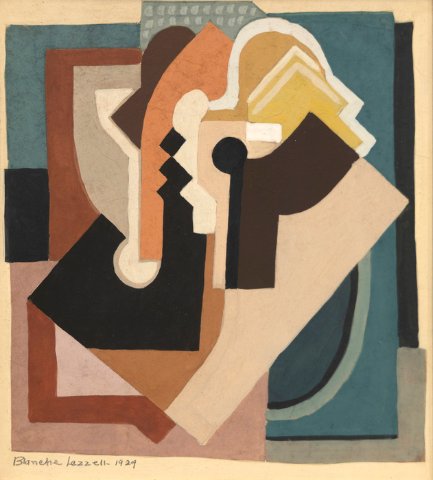
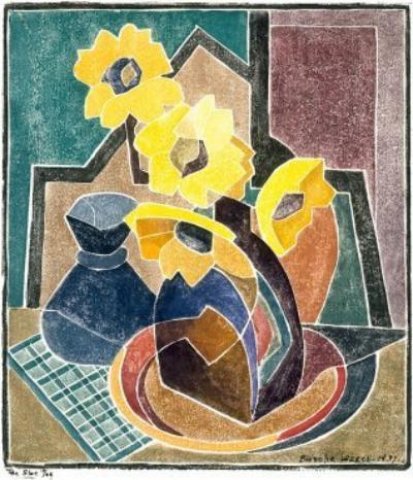
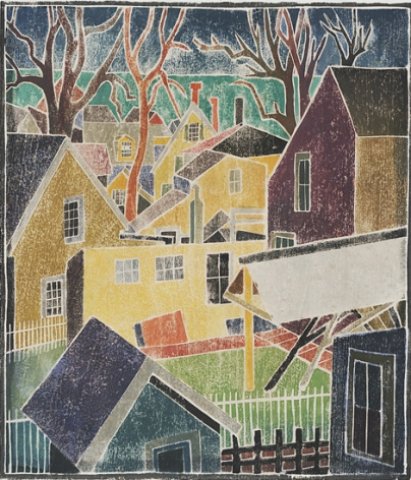
When the MFA did Blanche Lazzell in 2001 most of the research came from us.
(Blanche Lazzell: Becoming an American Modernist, is featured in the museum’s 2025 season.)
Research is a huge part of PAAM as we are gifted so many papers. My dream would be to get a graduate student here for a year to archive all of that material. Not all of it is digitized. Some is and some isn’t. We have so many wonderful vintage photographs and I would love to see them accessible on line. It’s a matter of getting people in here and a grant to do it. We were gifted from The Lillian Orlowsky and William Freed Foundation. They were students of Hofmann. They left a very large endowment to give scholarships to painters who are over 45, do not have gallery affiliations, and are in financial need.
CG That sounds like the Pollock/ Krasner Foundation.
CM Kind of. We just started four years ago and are now in the fourth cycle. We have jurors from all over the country who physically come to Provincetown. We give away $40,000 usually four $10,000 grants or two for $20,000. Whatever the jurors feel about people who deserve it. Then they have a group show here. I just love that we can give money away instead of always asking for it. This helps quite a bit and it was listed last year as one of the top twenty artists’ grants. We have over 400 applicants this year from all over the country.
CG It appears that the permanent collection which has grown from 1,000 to 3,000 objects on your watch is all gifted.
CM About 90%.
CG That means that you have no acquisition fund.
CM We have a small fund.
CG Have you considered growing that fund?
CM Absolutely. It’s a part of the Centennial.
CG What’s your target?
CM I’m not sure yet. When I started in 2001 there were two full time people including myself with three part time people. We now have a staff of six full time and six part time employees. There are 230 volunteers. We have increased staffing but need more major positions. I never want to make it seem that a curator is the be all and end of deciding what’s on the walls here. I like the community interaction that we have. At the same time, this is a person (curator) who could be out looking at studios. I do that periodically but I just don’t have the time to be looking at what people are doing and discovering that next great Motherwell. That piece is missing as far as I’m concerned and we need that position. To look at what people are doing on the Cape. Because the Cape is large. There are a lot of people living here year round who are making work we don’t know about.
CG What is the status of the Reggie Cabral (1923 to 1996) collection?
(The colorful owner of The A House often accepted works of art to settle bar bills. He was secretive about letting critics and art historians see the collection which was said to include questionable works. But he also acquired many superb works including some of the original white line Provincetown print blocks.)
CM I have no idea. Nothing. It could be in a warehouse for all I know.
CG I heard that it went to his daughter April. Reggie had a major Bob Thompson which we borrowed for the “Kind of Blue” exhibition at PAAM. Thompson was a major Provincetown artist but is not represented in the PAAM collection.
CM True. We have a major work by Lester Johnson.
CG One can think of many major Provinctown artists not represented in the collection. What is sadly true is that the longer museums wait the more expensive the works become. To the point where it becomes impossible to fill gaps. That’s the dilemma of the MFA which stuck its head in the sand for too long. The ICA has only decided to collect in the past few years. Between those two major institutions, with the exception of Harvard and Brandeis, Boston is a major city with mediocre modern and contemporary museum collections. The collectors are aging. You talked about the great collection of Ruth Hebert who you stayed with when you first came for an interview.
CM That’s an example of a collection that we got.
CG What is the possibility of filling the gaps with the acquisition of works by major Provincetown artists? Have you compiled a punch list?
CM We definitely have. Edward Hopper was one of those people. Even though there is the Hopper dilemma. (His antipathy as a Truro resident to any involvement with PAAM and Provincetown.) We had a Jo Hopper but not an Edward Hopper.
I lecture a lot about this place and its position in art history. I was doing a lecture and I said that one of the things we don’t have in our collection is an Edward Hopper. Everyone wants to see our Hopper and I tell them it’s not here yet. I jokingly said if anyone has one let me know. I got a call from Herman Merrill’s son. He said that “My mother has a Hopper that he (Herman) traded with him for a nude figure and our foundation wants to give it to PAAM.”
It’s a beautiful, beautiful drawing and Herman Merrill inscribed it on the back as a gift to his wife.
So yes we are compiling a hit list and our Centennial strategy is a hundred acquisitions of significance to fill in gaps in our collection. Our collections committee is in the process of putting that together.
We have a number of collections that are being left as in kind gifts here. I am trying to see if those gifts can be accelerated. Can we get those pieces now so we have them for the Centennial? Even though they might want to have them on extended loan for awhile so we can get them in the building. I think actually we will do quite well in that realm.
We have a big beautiful (Jack) Tworkov from the show that we did a couple of years ago. That’s on extended loan as an intended gift.
(“The collection’s painting is typical of Tworkov’s work in the 1950s: a colored expanse against which fiercely brushed linear strokes hide or cast a veil across the surface. Jack told me once how he yearned to paint a landscape directly in nature, and I’ve always seen these pictures of his as evocations of Cape marsh-grass or reeds. But in point of fact, this work is a preview of what was to become the magisterial painting of the last years before his death in 1982.” Tony Vevers)
CG Perhaps I don’t understand the tax code but I understood that the loophole had been closed for donations of works of art. That the donors don’t get the full value of the work as a deduction.
CM If an artist donates they don’t but if a collector does they do.
With the Hopper, for example, we had an appraisal done and the donor is going to get a write off of the full value of the work.
If an artist donates they get to write off the value of the materials. That stinks and needs to be changed. That’s an issue that goes back and forth.
CG So there is an incentive to donate.
CM No question about it. Also, knowing that it is going to a facility that is now capable of taking care of it and will exhibit it.
CG That also seems to equate with a mandate in programming to function more as a museum. If you do ambitious shows and publications you get major loans which leads to important acquisitions. It’s all a part of the quid pro quo. Also having a collection provides leverage in working with other museums.
CM That’s true. We now get more loan requests than ever before. The fact that we’ve been accredited and now have a good history of borrowing has really worked in our favor.
One of the great stories comes from when we did the (Edwin) Dickinson show here and we borrowed from a private collector “The McMillan Pier in Wintertime.” It had been on extended loan to the Philadelphia Museum for fifteen years. When the donor came and saw the piece here he said this has to stay here. This is where it belongs. I said “Will you tell that to the Philadelphia Museum?”
For me having that exhibition with a major publication and getting that piece is why we need to be doing this kind of work. It brings things back which were created here.
CG It’s interesting that you mention Dickinson because beyond our immediate circle people don’t know who he is.
CM Nobody does. The Albright Knox did a major traveling show of Dickinson. But people don’t know who the hell he is.
CG For the Dickinson show we posted several articles by various contributors to Berkshire Fine Arts. We now have an enormous archive and we get a lot of Google searches for that material. On a consistent monthly basis we get significant traffic for the Dickinson articles. So people are indeed interested in the artist.
CM How about Blanche Lazzell? Nobody knew who the hell she was until the MFA did that show. Nobody knew who she was. I know you did. But the average person didn’t know her work.
CG She’s in the famous photo of Forum 49. There’s Blanche sitting on the bench along with Karl Knaths, Weldon Kees, and the other artists.
CM With her cardigan sweater on. We have two white line Blanche Lazzell prints gifted here. A donor said “I have two and I want to gift them to you. Do you want to know where I got them? In a flea market hanging on the back of a van. Marked down ‘second day.’ ” She bought them for $20. They have been appraised at $80,000. That’s crazy.
We did a small show in 2001 which was before the renovation. The MFA had done the show and we had a few Lazzell’s up. We borrowed a few from Napi. We had a couple in the collection. After we did that we got the two colored prints and a whole portfolio of studies and sketches for the blocks.
So that happens a lot when people know what you don’t have. They help you fill in the blanks.
CG This past winter I have been reading the history of jazz, blues and rock. I came across a reference to Weldon Kees (1914-1955). It just popped up out of the blue. Of course I knew him as the artist who organized the seminal, summer long project Forum 49. But here I was encountering him in an entirely other context as a part of music history and theory.
CM We have a great archive for Forum 49.
CG It all comes full circle. At that time it seemed like Provincetown was the summer home of Tenth Street. The artists came and argued. Some of the topics, by today’s standards, were off the wall. Like the role of psychoanalysis in art.
Walking down Commerical Street to PAAM today we passed a building which I remember from when I first came here as a student in the 1960s. I recall that as the Kootz Gallery. That became HCE which Nat Halper ran. I recall seeing a Bruce Conner relief sculpture in a summer space run by Ivan Karp. There were a number of important galleries and dealers at that time. There was a serious presence.
The artists came here, hung out, talked, looked at each other’s work.
CM Knaths, Avery, Merrill. They all went to each other’s studios. They sat and talked to each other all day long. They went to the East End to a place now called The Patrician which was a soda fountain. They would sit there and talk and talk and talk.
CG Is that dialogue happening now?
CM We have a lecture series which is pretty well attended. We get a hundred people for every lecture.
CG Do they fight and argue?
CM When John Grillo (Born 1917) did his lecture he was in his 90s. When he started talking about the reason he had so many affairs was because of his big. That certainly caused controversy because he was 95-years-old. That kind of thing still happens occasionally. It’s not fighting and screaming. I would say it’s more intellectual conversations which are stimulated.
We do a series of art films and there is always a good argument after. It’s a winter thing we do that’s really well attended.
CG We are on the cusp from the past hundred years to the future. When we think of the past we envision a place where artists could come and get a cheap rental for a shack, dig clams on the beach, and make their work. Now when you drive around the prevailing sense is that everything is quaint and cute. All of the homes have been renovated. Those simple cottages and waterfront condos are just prohibitively expensive. We go from funky to cute to what?
CM When Provincetown is fun and funky is February. We go clamming in February then have a fantastic dinner party that goes until three in the morning. Talking about all kinds of stuff. There are now less than 4,000 people here year round. I don’t want to hang out with the 60,000 people who are here in August. I’m so glad that they come into this museum and support it. But are these the people I sit around and have clams with? No, because they blow in and blow out. People who really live here and appreciate Provincetown, like my friend Jimmy, who just got back from a dune shack where he painted for a week. We just had some clams and talked about the dune shack. He lives here year round. He starts his restaurant job next week and will work his ass off until September. Then he’ll get back into it again.
It’s so expensive and hard to live here. There are like just a few jobs with benefits. It’s hard to live here. People get discouraged and they move somewhere that they don’t have to work four jobs just to pay their rent. Or live in a place with off season rent for five months and then have to move out.
CG How has that worked for you?
CM When I came here the first year I had a summer rental which cost as much as I paid for my Boston apartment for the year. I had a kick ass apartment in the North End (of Boston). I loved it. I lived on Garden Court Street and I thought I would be buried there. I couldn’t believe that I was paying four times what I paid for my beautiful North End apartment for a dump. It was a dump. It was like the size of this bench. But where else was I going to live?
That fall I moved, which is the bi polar nature of Provincetown in many ways, to a winter rental on the water, from October to May, and it was the most beautiful house I ever lived in. It was cheap as a winter rental but then I had to be out again.
I don’t like moving so I found a condo on the other side of Route 6, away from the riff raff, and I’ve owned it now for eleven years. I couldn’t do the back and forth stuff. The opportunity to live in that house on the water for the winter was magical.
CG One would think that the board provides lodging for the director.
CM Yes. The Fine Arts Work Center provides its director with a house. When I moved here the board members were giving $40 a year and they thought that was all they should be giving.
CG I take it that it’s more than that now.
CM I have a much more sophisticated board now.
(President, Judyth Katz, Vice President, James Bakker, Treasurer, Joy McNulty, Secretary, Marian Roth; Lennie Alickman, Ellen Burbank, Arthur Cohen, Paul Dart, Doug Dolezal, Charleton Dukess, Sharon Fay, Joe Fiorello, Stephen Fletcher, Ruth Gilbert, Terence Keane, Brian Koll, Lise Motherwell, Jane Paradise, Anne Peretz, William Rawn, Irma Ruckstuhl, Stewart Tabakin, Carol Swarshawsky, Gail Williams)
When I was hired here my salary was 50% of what I was making at the ICA. So I spent my savings to move here.
CG Why did you do that?
CM Because I got to be the director of a museum. Look what I built. It was the biggest risk I ever took in my life. My board has done well by me. I took a huge risk.
CG Did it pay off?
CM Huge. I’m so proud of this. The space, the programming, and the many people who participate.
CG Will you be buried in P’Town?
CM I was raised Catholic but I don’t practice. I went to Ciro’s funeral at Saint Peter’s. I’m going to tell you it was the most beautiful funeral. Sal got up and sang an Italian song. This lady got up who had been a childhood friend of Ciro’s kids. She talked about what it had been to be a kid wandering in and out of Ciro’s life. There was a fire at St. Peter’s so they’ve renovated it. There’s stained glass windows. The altar is a giant rock. It’s a huge rock. It’s the Catholic church up on Prince Street near the Monument.
As I was listening to this I thought, Oh My God, I definitely want to be cremated. But I want to have my service here at St. Peter’s Church. I want part of my ashes spread here and part of my ashes spread in Old Saybrook, Connecticut where I grew up. I grew up on the shore and have an affinity for the shore which is where I have spent the best times of my life.
As far as this place I could never have gotten this far in my career unless I was handed something and told to figure it out and do it. The ICA helped me to do that. It was in such turmoil and transition for so long that you had to be proactive in figuring out who is going to help you. How are you going to get to them? What can you do for them? That’s very much how I operate.
I still keep in touch with many, many people in Boston. I teach at BU in the arts administration program. I have been there for eleven years. One of the best collectors in Boston comes to my class each year. She still does this for me.
I went to the 75th anniversary celebration for the ICA last year. I was sitting there and they had a slide show going. You were looking at images of when the ICA was on Soldier’s Field Road. Then they did the years when I was there. I was looking at the exhibitions and thinking I’m so proud of this.
I’m very proud of my career track. I’ve been working in the arts now for 25 years. I don’t know anything else. This is what I know and this is what I love. I love that we can do so much for so many people here.
Whether you’re an artist or a kid who is being bullied at school. Kids can come here and be safe. People can say what they want to about the programming and content of what goes on here but I know what it takes to go from a building that was falling down to a major competitor in the field of small American museums.
If you compare us with our sister museums- Bennington, The Farnsworth, Newport, New Britain- we’re right up there. We all collaborate. We lend to each other and talk to each other. We were accredited because we run a “best practice” and that’s what I’m very proud of.
CG What is your endowment?
CM In the bank we have about $3 million. In the pipeline there is about $8 million. We would like to endow my position and that of a curator. We would like to build an acquisitions fund. And support education like the programming for kids. We’re not going to get NEA funding forever or Mass Cultural funding forever. So we want to build up reserves for the education programming because I could never get rid of them. I want to make sure we have the youth programs here.
(This is one of 22 chapters in my book Provincetown Artists: An Oral History which is available through Amazon.)