

Dishwasher Dialogues Back to the Beginning
A Fresh Start
By: Gregory Light and Rafael Mahdavi - Aug 24, 2025
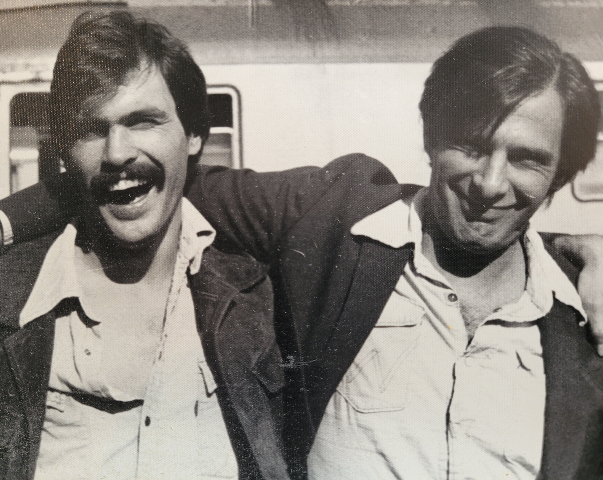
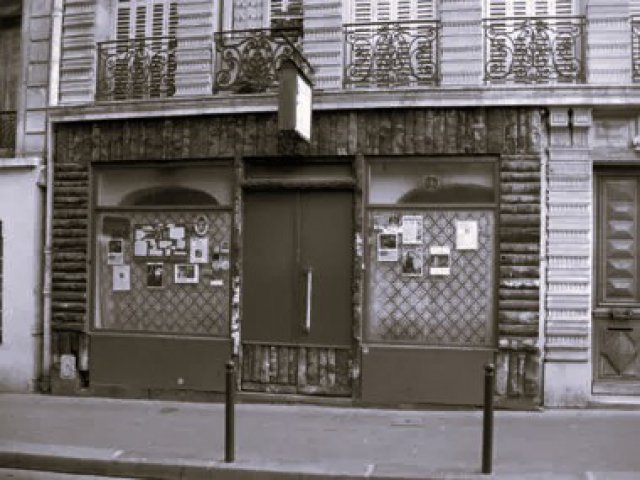
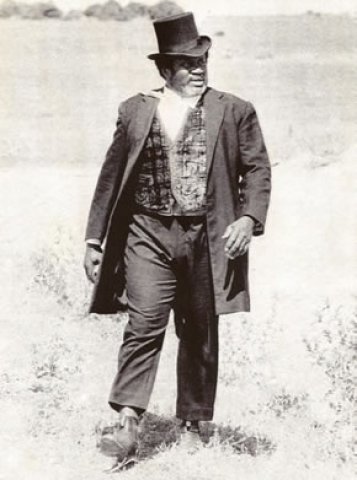
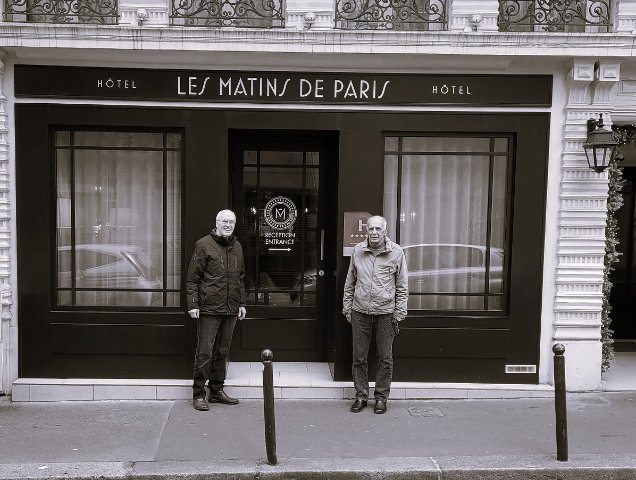
What are The Dishwasher Dialogues?
If you have visited Paris, dreamed of Paris, been enthralled by more than the grandeur of its history and architecture, streets and bridges, museums and galleries, restaurants and cafes which comprise its glorious facade, you know that is not everything. Beneath the façade there are real experiences. Some good and some not so good. And, as its art, literature and music attests, a great city only comes alive in the human experiences it elicits.
The Dishwasher Dialogues traces one such set of human experiences in the Paris of the nineteen seventies. In a series of lively exchanges between two young expat artist/writer-dishwashers, it reveals a city at the end of an era. When the trains had wooden doors, and the streets had public toilets. There were no computers, credit cards or copying machines. Most apartments had no phones, heating, or indoor toilets.
Each week a new ‘dishwasher dialogue’ recounts their extraordinary experience, and the events that emerged from the legendary soul food restaurant Chez Haynes hidden away on the edge of the red-light district of Paris. Like many young expats of the day, the restaurant staff were dreamers, writers, painters, actors, dancers and photographers. The clientele was a mix of American and French célèbre - James Baldwin, Memphis Slim, Paloma Picasso, Johnny Halliday. We all survived and thrived thanks to the legendary African American Leroy Haynes, who knew everybody from the mayor to the call girls deluxe.
It was an intoxicating time. There were the big spenders in sable coats and Ferragamo shoes, the daily scolding from waiters in bistros and shopkeepers, and the clochards dying of the cold at the closed metro gates. But freedom beckoned everywhere. The cops left you alone, the authorities looked the other way, and the metro (plus a cheap carte orange) took you to every nook and cranny of the city. There may not have been much equality or fraternity, but liberty ran rampant. And so did we.
Preface
Our dialogues resemble a cadavre exquis, a French term invented in 1925 by the Surrealists describing a game played by two or more people creating a mutual composition. The first player draws an image or writes a phrase on a blank sheet of paper. Then folds the paper. The next player adds to the story or image after seeing only a fragment of the previous contribution. And so on, like these dialogues, which, when unfolded and read, reveal our story. Our cadavre exquis is set in nineteen-seventies Paris, when we worked for Leroy Haynes in his legendary American soul food restaurant, Chez Haynes, near Pigalle. https://www.facebook.com/share/v/vjoobSWF5thKgqZy/
We talked about this project for many years, almost since the day that era came to an end. Year after year, then decade by decade, we came back to thinking about those days and, somehow, chronicling them. Our memories were shuffled away, then brought out and dusted off, then shelved once more. We met in London on several occasions and talked and visited museums and art galleries. And talked some more.
Then, in 2020, the global Covid-19 Pandemic arrived and is still killing. Restrictions restricted. Lockdowns locked down. For the first six months, it looked like it would not be that bad. The hard autumn came, and the memories of Leroy and Chez Haynes and those years came back with more urgency. The memories began to stick. No excuses left. The fickleness of time was suddenly evident. We had to write about the Chez Haynes years. Crazy, intense, creative, thriving on freedom and a carte orange. We plunged in. Always aware that, as that mother of all gossipers Marcel Proust said, remembrance of things past isn’t always of things as they were.
Of course. What else would you expect? Certainly not precise dialogue or exact descriptions. But close enough.
Enough to start. An email exchange began between us, between two islands: one of us on the Greek island of Paros and the other on Miramichi Island north of Toronto. Start writing, and I will cut in, one of us said. Our brains assured us there were more of these unknown knowns just over the memory horizon. We’d splice our writing into a dialogue, trusting the exchange and a font change would preserve our different voices as they were back then, and continue in some form today. Sometimes successfully. Sometimes less so … well, you dear reader, be the judge.
This project would morph into stories and conversations about nostalgia, melancholia, women, friendship, art, death, comedy, and more. We refer to our exchanges as the dishwasher dialogues after our work at Chez Haynes.
We met in Paris exactly a year after we started this cadavre exquis. To conclude it. We walked, talked, refreshed our memories and, of course, brought many more memories back from the dead. But those will have to wait for another day. That is how it started. And was completed.
The seventies were a surreal, exhilarating decade in Paris; it was a city still reeling from the social upheaval of the sixties. We belonged to a self-confident generation; everything was possible in our lives, and we lived under the radar, or to be honest, we survived illegally. Nobody asked us for working or residence papers, and if the police stopped us in the metro, we just told them we were on our way to Belgium, Italy, England, or Spain, and they let us go.
We were undoubtedly lucky our youth came at that time. Paris was synonymous with freedom, then. Even the Parisians’ irritated gestures and comments about the smallest request or interaction—touching a pear for ripeness in a market, refusing to change a five-franc coin—was like a breath of fresh air: any behavior was permissible because all behavior was somehow incorrect. But it wasn’t regulated. Those were the days when a student visa or carte de séjour was an accessory, not an obligation. Jobs and rooms came and went. Travel in Paris was essentially free. And you could get a full Chinese meal next to the metro Odéon for five francs. In 1975 five French francs were roughly worth one dollar.
A final note: In these dialogues, we unashamedly drop names of the eminent, famous, and once-famous. It is not profuse, but it is overt. It is not to decorate or impress. At least not all the time. These people were there and carried celebrity and, therefore, curiosity. While we have no embarrassment about identifying them, neither do we reveal anything shockingly, or even tediously, new about them. Be assured we have forgotten many brushes with celebrity, and to those who are missing from our reminiscences, we apologize. Not that they would ever know.
Our more fascinating friends and comrades, who shared these times and events with us—often exhaustively and intimately—we have left respectfully unidentified. When that was not possible, we used pseudonyms. They know who they are. We hope we have given them plausible deniability. Besides, they know the truth. And accuracy and veracity have a nasty habit of meddling with story and memory. To them, we owe the best of times and a share of the worst of times. It is also to them we dedicate this story.