

Berlin Philharmonic Opens Its Season
Kirill Petrenko Compels
By: Susan Hall - Aug 31, 2025
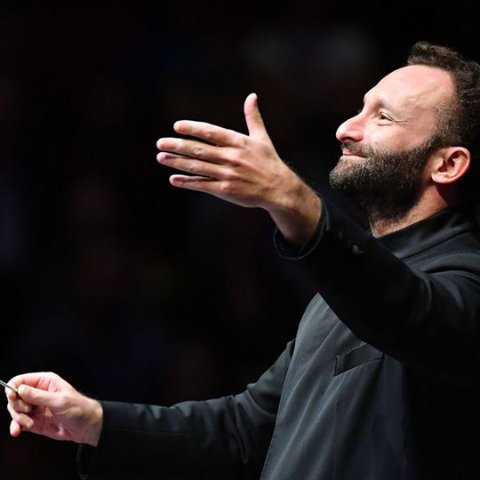
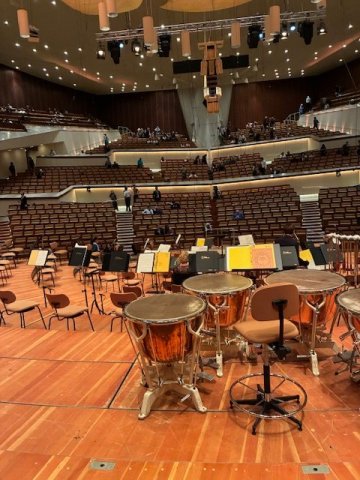
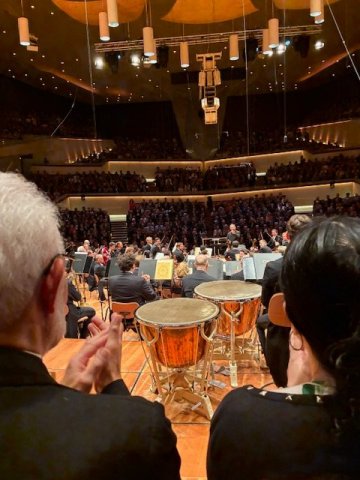
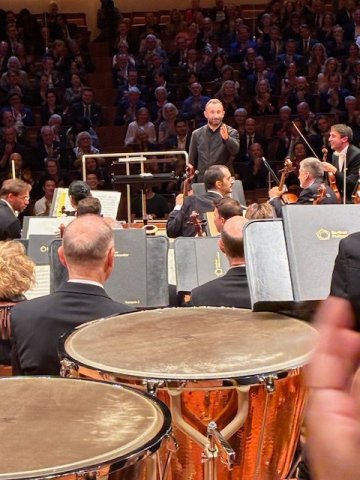
The Berlin Philharmonic launched its 2025–26 season with a program that set Schumann, Zimmermann, and Brahms in conversation across a century of musical upheaval. Under Kirill Petrenko’s direction, the evening unfolded less like a sequence of works than a drama in three acts.
Clara Schumann once wrote of her husband’s overtures: “The idea of writing overtures to the most beautiful tragedies filled him with such enthusiasm that his genius is again boiling over with music.” Her words could have been a description for the performance of Manfred.
Petrenko opened the prologue briskly before driving the orchestra upward into Byron’s Alpine landscapes. The Maestro has observed that the Bernese mountain of Schumann's work is the very mountain on which Brahms would compose.
Flutes and clarinets flickered with color, brass cut through with sharp accents, and timpani punctuated the score with steady powerful beats. The orchestra gave a sense of torment never fully resolved—a tragedy left open-ended.
That tension found its echo later in the Brahms First Symphony. Like Schumann, Brahms now revealed in his music an inner torment. The work’s initial phrases move up and down, tearing open musical wounds. Yet where Schumann sinks into resignation, Brahms claws his way toward a burst of joy and triumph. Petrenko took the Brahms at a brisk pace, but it never felt hurried.
Hearing the two works in one evening,it was hard not to imagine the young Brahms, who once received an overture from Schumann “to accept with love,” wrestling for two decades with the shadow of Beethoven hovering over him before finally shaping his own monumental First symphony. Petrenko’s reading leaned into that struggle: surging, tidal phrases that split open to reveal moments of clarity and warmth, the timpani ever ready to drive forward.
Between these two well-known composers came Zimmermann’s kaleidoscopic score, a concerto for Oboe, a whirlwind of fragments and collisions. This was the second time Mayer and Petrenko had collaborated on the Concerto, the first over two decades ago.
From the turbulent sound-world, Albrecht Mayer’s oboe emerged again and again with its bright, clear tones cutting through the din like a voice of reason amid chaos. Mayer played Bach for his encore,beautiful moments that reminded us of modern music’s foundation.
What made the evening compelling was Petrenko’s ability to balance sweep with detail. He sculpted great arcs of sound while letting individual lines bubble up and recede, inexorably sweeping and swelling.
Leonard Bernstein once suggested that Brahms, having settled in Vienna and grown his formidable beard, finally felt safe enough to reveal his true self. That same sense of exposure lingered in this concert: music as confession, sometimes anguished, sometimes radiant, but always human.