
Dishwasher Dialogues Anon
Happiness Was the Enemy
By: Gregory Light and Rafael Mahdavi - Oct 15, 2025
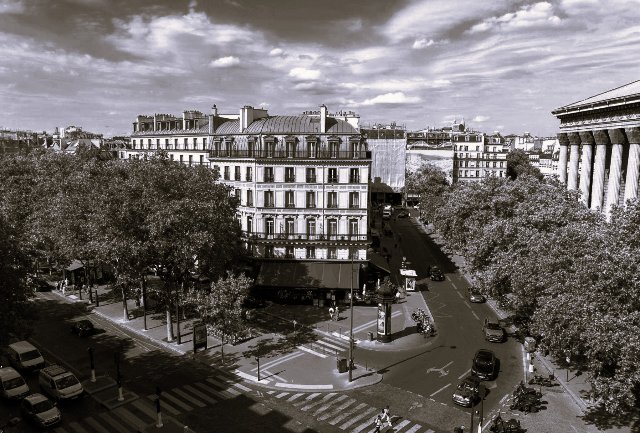
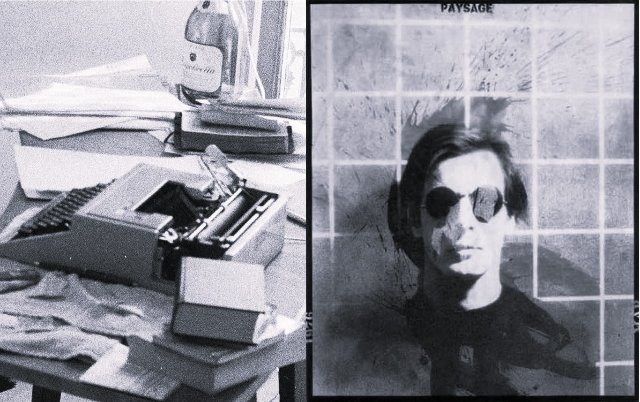
Rafael: The Sunday dinners in the Latin Quarter, how can we forget them?
Greg: Sundays Chez Haynes was closed. Which was a break of sorts, but it meant finding somewhere else to eat our main meal of the day. Somewhere central. Somewhere cheap.
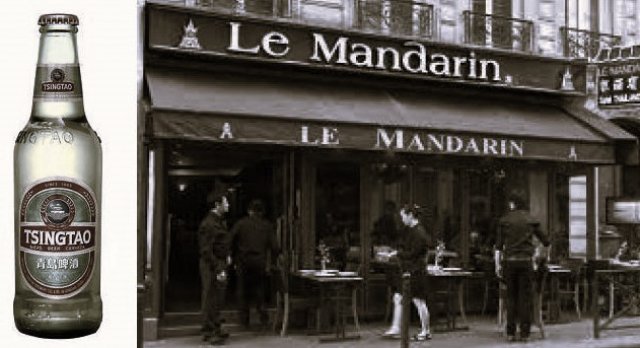
Rafael: We looked around for a while, stopped outside the Chinese places and stared at the lit-up menu outside. And we found a place—Le Paradis Mandarin—behind the Odéon metro station. Five francs, including bread and one Tsingtao beer, and the bottles were bigger than the French ones.
Greg: It was a great deal. Even better than the eight Franc steak frites lunch specials in the cheaper cafes along the side streets of the Left Bank.
Rafael: Sunday Chinese dinner became a ritual where we solved the world’s problems, including those about art, women, love. We talked about theatre, you were also writing plays, along with your poetry. We discussed the theatre of the absurd at great lengths. Some Sundays we broke our rule of one beer only and went for two or three. This paradis was well-heated too, and that mattered in those wintery days.
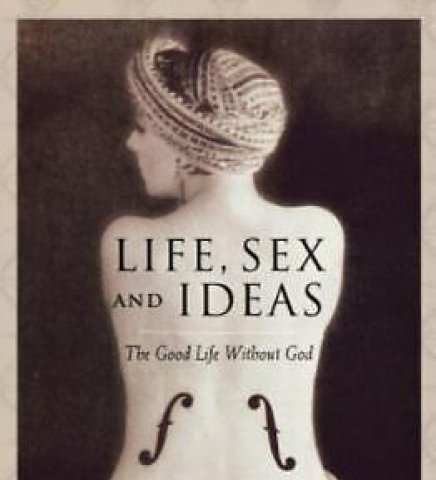
Greg: I don’t remember the one-beer rule unless it was because we couldn’t afford it (which we couldn’t) and didn’t want to break the rule of law by running out on the bill. I do remember the talks about life and art and sex.
Greg: I recall one evening casually throwing the concept of ‘happiness’ into the life-art-sex mix. You immediately reacted. Your head snapped back, and you looked at me like I had put a dog turd on your plate.
“Happiness?” you bellowed at me. “What has happiness got to do with anything?”
I think I tried switching to a definition defense. “Well, it depends on what you mean by happiness.”
“No, it doesn’t! Happiness has nothing to do with what we are doing here! In Paris.”
It was almost as if ‘happiness’ was the enemy. Which maybe it was. Although we got a lot of laughter out of raising that incident over the years. I believe I half-heartedly ceded you this point. And then, over the years, I came to agree with it. Well, for the most part. Certainly, the very mention of it had made the bowl of noodles sitting before me in that little Chinese restaurant near the Odeon look sad and forlorn.
Rafael: I sure sound like I was a pain in the ass sometimes, on my hifalutin high horse.
Greg: Not at all. It’s what I needed.
Rafael: Talk about dime store intellectual. Back to food. Outside Chez Haynes, I at least didn’t eat too well.
Greg: ‘You at least’? You thought I was secretly feasting?
Rafael: I wasn’t interested in food. I was not and am not a gourmet. The glitzy food shops like Fauchon by the Madeleine and the fancy restaurants, I had no interest in them.
Greg: Mais, mon vieux, what about ‘the Paris-Brests, the pains aux raisins, the croissants aux amandes, and the congolais’?
Rafael: There were more important things in life for me, like love and children and human suffering and intellectual challenges. I had no idea about what nutritious food was, what was good or bad for me. Despite being in France, where everybody, and I mean everybody, usually went on and on about la grande cuisine française, I hated cooking; it was a waste of time, what with the chopping and the sautéing and the rigmarole of the spices. I didn’t like shopping in the open-air markets either; the sellers asked me what I was going to cook, and I had no idea. I was just buying some vegetables, and when I asked for ground meat the boucher asked if it was avec graisse, that is to say with fat for the dog or sans graisse for pasta or burgers, and I would say I’m the dog, look at me, don’t I look like a healthy dog? And she would laugh with some bewilderment in her eyes.
Greg: The ground meat for the dog was the cheapest. There were many days early on when I dreamed of a meal with meat, even ‘avec graisse’. I didn’t bark or anything, but I would have rolled over.
Rafael: And in the supermarkets, I would simply walk down the aisle with my basket and grab the stuff off the shelves, pasta, rice salt, olive oil, canned this and canned that. I didn’t inspect every item for the best price. A can of beans is a can of beans, how much could the price difference be? I rarely bought potatoes because I’d forget about them and before I knew it the spuds would sprout hairy warts under the sink. The truth was that I rarely cooked at all. I nearly always ate on the move, in the street.
Greg: Street food was delicious but not always affordable. ‘Frites’ usually were. I loved potatoes. Now I call them ‘carbs’ but back then they were a staple. I think I rivalled you for lack of knowledge and enthusiasm for the complexities of flavor which Paris celebrated. Remember Thomas? Midwest Thomas? He was studying to be a chef at Le Cordon Bleu Paris. One day he showed up to work in the kitchen with Don for a few months. I think he needed an internship for his studies and Leroy was a sucker for people in need. In addition, Thomas needed a place to stay. I told him about the empty chambre de bonne on my floor. That chambre had a built-in shower. He was totally into flavor and made some amazing food for his school assignments which he would bring back and share. I remember one evening he was describing the different ingredients and recipes he was working with at some length. After ten or fifteen minutes, I finally interrupted him and said “it all sounds great, Thomas, but you are talking to the wrong guy. At this stage in my life, when it comes to food, I just look for grease and bulk.” He was horrified. “Grease and bulk!!” he shrieked back. He cared deeply about food, and I had just ‘knifed’ him. Metaphorically.
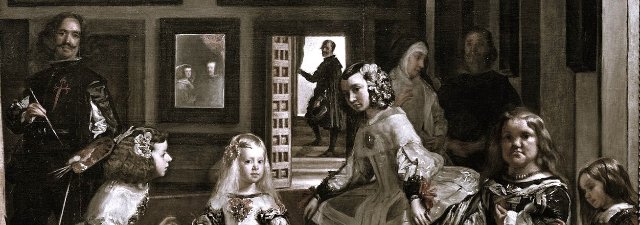
Rafael: What I cared about was painting and having money to buy canvas and paints and books. I wanted to own the books I read. I don’t know why. I rarely used the public libraries in Paris. I’ve kept all the books. I never bought stretchers for the canvases though, they were so expensive; I stapled the canvas to the wall and painted, and when I was done, and the canvas had dried, I rolled up the work and stored it in a corner. Art historians never talk about storage problems for painters, but after a year of painting on stretched canvases, the unsold pieces—and that always meant everything you painted—took up a lot of room. The point was to paint, not to stretch and prime the canvas in order to paint. I wasn’t picky about where I painted, I didn’t need good natural light. A good painting could hold its own under any kind of light. Diego Velazquez holds up perfectly well in the basement by candlelight or on a terrace by bright sunlight.
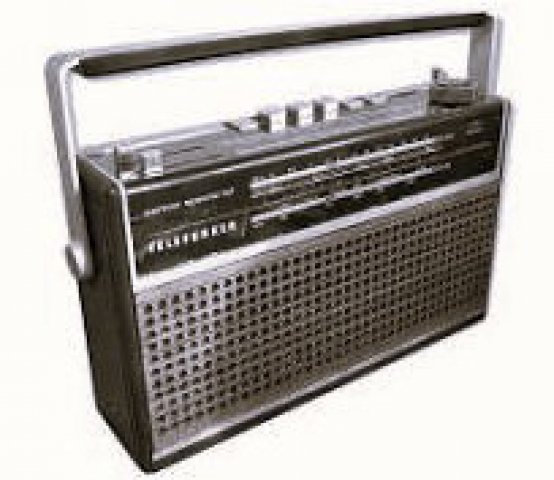
RAFAEL: I didn’t need the right music either. I have known painters who just had to have music, the right kind of music, their special kind of music. Who could afford a decent sound system anyway? Just turn on the radio, which I did later when I acquired a little one, a Telefunken I think it was. You get more variety on the radio anyway, even if the French love talking on the music programs.
Greg: I remember we debated the practical differences between painting and writing. You complained about the money it cost to paint. The canvas, the paint, the tools, the storage, the actual space to lay a canvass down and swing a brush. Writers just needed paper and a pen (or typewriter) and a desk. I agreed but I also pointed out that after you had completed your toil, you had a finished work, ready to go to market—which in your case soon became the many bona fide galleries in which you exhibited. After I finished with paper and pen, there was no finished product. Just paper with words on it—and the hope of a publisher or producer to finish it off. And finish it off they usually did. Which is why we found alternatives. Not that it mattered. The money was not there either way. Although, usually enough to buy a pen.
Rafael: Yeah, I spent money on essentials for painting, and essentials for clothes. And food. Except for Sundays when you and I splurged on Chinese food and Tsing Tao beer. Sometimes two beers, my friend.
Greg: Yes, we did have that. And, as you reminded me, ‘happiness’ was not important anyway.