

The Demon of the Book
By: Cheng Tong - Oct 27, 2025
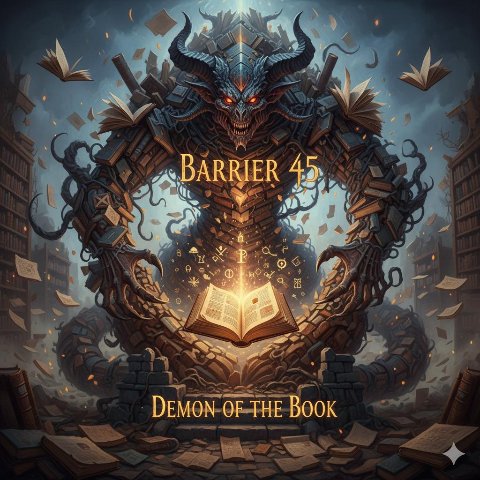
In the journey toward understanding the Dao, the written word is both a priceless gift and a potential prison. The shelves of our libraries and the scrolls of ancient masters hold invaluable wisdom, offering us maps drawn by those who have walked the path before us. We are encouraged to study them, to absorb their lessons, and to appreciate their theoretical knowledge. Yet, within this very act of devotion lies a subtle and formidable obstacle, what the Daoist sages call the 45th barrier: The Demon of the Book. This is the perilous trap of mistaking the map for the territory, of clutching the finger that points to the moon so tightly that we never see the moon itself. Overcoming this demon requires a profound shift from intellectual accumulation to embodied wisdom, a journey that is impossible without the humility to seek a living guide.
The Nature of the Trap
The Demon of the Book does not dissuade us from learning; on the contrary, it thrives on our love for it. It tempts us to believe that by memorizing scriptures and mastering doctrines, we have mastered the Dao itself. This barrier turns knowledge into a gilded cage. We collect concepts, quotes, and philosophies, building a fortress of intellect that feels safe and impressive, but which ultimately cuts us off from direct experience. The text warns that a student’s grasp of a text is not a measure of the text’s hidden wisdom, but rather a simple reflection of their own current level of cultivation. Without this awareness, we become proud of our intellectual cage, forgetting that its purpose was to be a temporary shelter, not a permanent home.
This concept is the very foundation of the Tao Te Ching. In its opening lines, Laozi states, “The Tao that can be told is not the eternal Tao. The name that can be named is not the eternal name.” The words, the names, the scriptures—they are pointers, echoes of an ineffable reality. The Demon of the Book convinces us that the echo is the original sound. It preys on our desire for certainty, offering the finite comfort of a definition in place of the infinite, lived mystery of the Dao.
The Indispensable Guide
If the book is the map, then the teacher is the guide who knows the terrain. The 49 Barriers text makes it unequivocally clear that escaping the Demon of the Book is impossible without a master. The 36th barrier, Masterlessness, is the Demon’s closest ally. It warns that without an “upright master, one’s ideals can become empty and unreal,” leading a student to “walk easily into the side doors, wasting many years of their time”.
A true teacher does more than simply interpret the words on the page. They have walked the path and can see the pitfalls. They provide the essential “confirmation of each step” on the journey toward understanding. They can look at a student and see where their understanding is merely intellectual and where it has begun to flower into embodied wisdom. While scriptures provide the “theoretical knowledge,” it is only through the “explanation by a master” that this theory can be safely put into practice. The teacher’s role is not to give us answers, but to help us ask the right questions and to guide our personal experience, ensuring we don’t mistake our own Conjecture and Opinion (Barrier 18) for profound truth.
The Internal Allies of the Demon
The Demon of the Book finds fertile ground in the soil of our own internal weaknesses. It is empowered by other barriers that reinforce the illusion of self-sufficiency. Arrogance (Barrier 7) is perhaps its greatest friend. The arrogant student, armed with extensive book knowledge, “praises oneself, and thinks of themselves as always right”. This intellectual pride makes it impossible to “bow their head” and seek the guidance of a teacher who could reveal the vastness of their ignorance.
Similarly, Complacency (Barrier 22) sets in when a student “relies on one’s own cleverness and education” and “no longer seek[s] to improve”. They read a profound text, feel a flicker of understanding, and mistakenly believe they have arrived at the destination. They settle for the satisfaction of “knowing” and abandon the arduous path of “becoming.” This leads directly to False Conviction and Misunderstanding (Barrier 31), where a student “feigns high understanding, in the end they know nothing”. They have become so possessed by the Demon of the Book that they can no longer distinguish the truth of the Dao from their own ideas about it.
The Path Beyond the Page
The true path of the Dao honors the book by daring to live beyond its pages. It uses the text as a starting point for practice, a catalyst for transformation, not a substitute for it. You cannot learn to swim by reading a manual; you must enter the water. Likewise, you cannot understand Wu Wei (effortless action) by analyzing the concept; you must practice until the struggle ceases and action flows from a place of deep stillness and connection.
This is the cultivation that a teacher oversees. It is the work of transforming the body, mind, and spirit so that the words of the sages are no longer foreign concepts but living realities. It is through this diligent practice—in meditation, in Qigong, in every moment of life—that we elevate our level of cultivation. As we change, the texts themselves seem to change, revealing deeper layers of meaning that were previously invisible to us. The book remains the same, but we are no longer the same reader.
Ultimately, the scriptures are a gift, but the journey is our own. By embracing humility, seeking an enlightened teacher, and committing to diligent practice, we can exorcise the Demon of the Book. We learn to hold our knowledge lightly, to honor the map but to love the journey more, and to finally lift our gaze from the pointing finger to the luminous, silent moon.