

Harry Callahan at the Museum of Fine Arts
Photographs on View Through July 3
By: Charles Giuliano - Nov 13, 2009
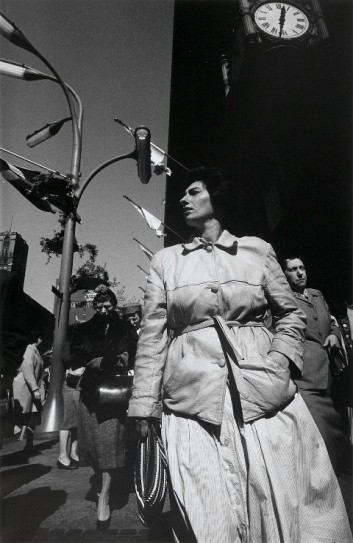
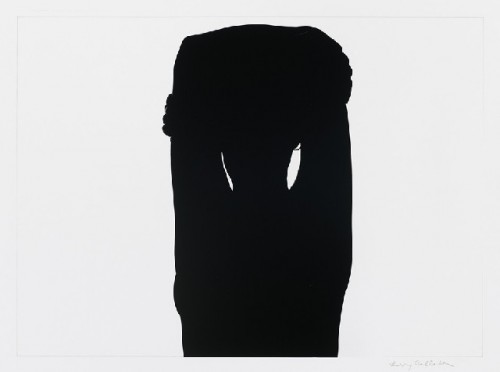
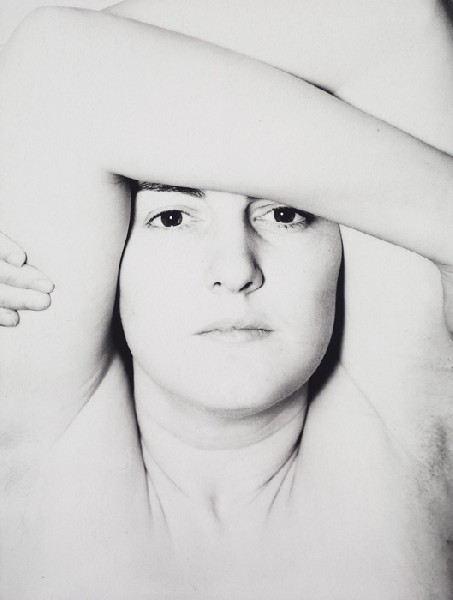
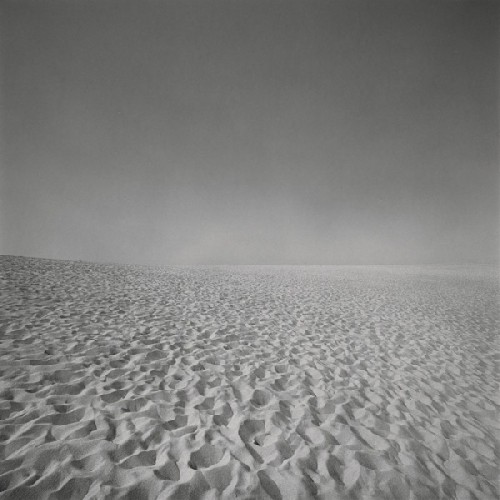

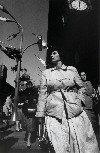
The brilliant graphic sensibility of Harry Callahan (1912-1999), a major figure in American photography, is the focus of Harry Callahan: American Photographer at the Museum of Fine Arts, Boston (MFA). Debuting November 21, the exhibition features approximately 40 photographs that survey the major visual themes of the artist's career. It celebrates the Museum's important recent acquisitions––by both purchase and gift––of Callahan's photographs and showcases significant examples of his artistry from the collections of friends of the MFA. The many sensitive pictures that Callahan made of his wife Eleanor, his depictions of passers-by on the street, his carefully composed landscapes and close-ups from nature, and experimental darkroom abstractions reveal a wide-ranging talent that was enormously influential. Harry Callahan, on view in the Herb Ritts Gallery through July 3, 2010, is presented with support from the Shelley and Michael Kassen Fund.
"Harry Callahan was one of the most innovative photographers working in America in the mid 20th-century" said Malcolm Rogers, Ann and Graham Gund Director of the MFA. "His elegantly spare, introspective photographs demonstrate his lyricism and the originality of his sense of design."
The Detroit-born photographer, whose career spanned six decades, became interested in the camera in the late 1930s while working as a Chrysler Corporation shipping clerk. He was largely self-taught, and attracted admiration early on for his originality. By 1946, Callahan was hired as a photography instructor by the Hungarian-born artist László Moholy-Nagy for the Institute of Design, a Bauhaus-inspired school of art and design in Chicago. In 1961, Callahan was invited to head the photography program at the Rhode Island School of Design (RISD), where he was based until retiring to Atlanta two decades later.
"Callahan's approach helped shape American photography in the second half of the 20th century" said Anne Havinga, Estrellita and Yousuf Karsh Senior Curator of Photographs, who organized the exhibition. "His way of seeing inspired countless followers and continues to feel fresh today."
Callahan concentrated on a handful of personal subjects in his work, exploring each theme repeatedly throughout his career. These include portraits of his wife Eleanor, depictions of anonymous pedestrians, expressive details of the urban and natural landscape, and experimental darkroom abstractions. The MFA exhibition is organized into five themes: Eleanor, Pedestrians, Architecture, Landscapes, and Darkroom Abstractions.
In 1936, around the time that Callahan began to explore photography, he married Eleanor Knapp, who served as one of his first and most frequent subjects. Callahan's portraits of his wife, characterized by their intimate yet detached poetry, have become a landmark in the history of photography. In the photograph Eleanor (about 1948), Callahan portrays his wife in a private interior setting, facing away from the camera. After the birth of their daughter Barbara in 1950, she too entered these family pictures, which capture the intimate moments of daily life as seen in the photograph, Eleanor and Barbara (1953).
Callahan photographed the natural landscape throughout his career, focusing on its evocative forms and textures. In images such as Aix-en-Provence, France (1957), he explored the visual effects that he could create either through high contrast or closely related tonalities.
He utilized a range of different experimental darkroom techniques—from photographing the beam of a flashlight in a darkened room, to developing one print from multiple negatives. Many of his multi-exposure pictures were made by superimposing images from popular culture onto studies of urban life. Callahan's openness to experimentation was stimulating for the many students who worked with him.
Callahan made many of his best known images during his 15 years in Chicago, where he also began his role as an influential teacher. During the 1950s, the photographer embarked on a series of close-ups of anonymous pedestrians in the streets of Chicago, most of them women. Using a 35mm camera with a pre-focused telephoto lens, he captured passersby unaware of his presence, resulting in snapshot-like images that record unsuspecting subjects absorbed in private thought or action, such as Chicago (1950), a close-up of a preoccupied woman's face. Callahan returned to this theme frequently, working in both black and white and color.
The artist was repeatedly drawn to architectural and urban subjects. Prior to moving to Chicago, he explored the spaces of Detroit, photographing the formal patterns he discovered there. In Detroit (1943), Callahan depicts a street scene, with the people in transit appearing as a pattern. He experimented with color in these pictures as early as the 1940s, but he worked more extensively in color later in his career, from the 1970s onward.
To enhance appreciation of the exhibition, photographer Emmet Gowin, emeritus professor of visual arts at Princeton University, will give a lecture on Wednesday, March 24, 2010, at 7 p.m. in the MFA's Remis Auditorium. Titled ?Emmet Gowin: A Talk in Honor of Harry and Eleanor Callahan—My Own Life in Photography,? the lecture highlights Gowin's years as a student of Callahan's (1965-1967), which informed Gowin's own view during his 48-year career as a photographer and teacher. Tickets are $10 for MFA members, seniors, and students, and $13 for non members. For more information, or to order tickets, please visit the Museum website at mfa.org or call the Remis Auditorium Box Office at 617.369.3306.